
Key Takeaways:
- Automated tools significantly reduce network configuration errors, leading to fewer outages and improved operational efficiency.
- The integration of AI and machine learning into network management enables predictive maintenance and real-time monitoring.
- Implementing automation in inventory management improves real-time data accuracy, enabling better decision-making and customer satisfaction.
Efficient network inventory management has become indispensable for modern organizations aiming to ensure optimal performance and resilience across digital operations. The rise of automated tools is reshaping network oversight, delivering unprecedented gains in accuracy and productivity. By leveraging network inventory management software, organizations can streamline their processes, minimize human error, and drive smarter resource allocation that aligns with the demands of today’s rapidly evolving technological environment.
Gone are the days when manual tracking and updates were sufficient for dynamic IT infrastructures. Automated systems provide IT teams with constant visibility into device inventories and network configurations, all while slashing downtime and improving organizational compliance. These digital advancements not only enhance daily operations but also underpin proactive and predictive management strategies, cementing their critical role in the digital workplace.
The Shift Towards Automation In Network Management
Traditional approaches to network management have often relied on time-intensive manual processes, leading to inefficiencies and increased error risk. As networks grow in complexity and scale, the margin for error only widens, making automation a necessity rather than a luxury. Automated tools are helping bridge this gap by orchestrating network changes, ensuring device inventories are accurate, and synchronizing updates across all touchpoints. Solutions that seamlessly integrate with major platforms stand out in simplifying device inventory and configuration management, bolstering governance and regulatory compliance for enterprises.
Another transformational benefit of automation is the reduction of configuration errors. Studies have shown that misconfigurations account for a substantial portion of network outages, leading to significant operational and financial consequences for businesses. Integrating intelligent, AI-driven solutions could dramatically reduce misconfigurations, as these systems learn from every interaction and continually refine their processes for optimal uptime and reliability.
Reducing Configuration Errors With AI-Driven Tools
Network misconfigurations are not just a technical hiccup, they translate directly into lost productivity, disrupted services, and diminished trust. Research suggests that misconfiguration issues are linked to over 40% of all outages, potentially costing companies up to 9% of annual revenue. Introducing robust, AI-enabled automation systems ensures consistency and accuracy across network environments, as algorithms proactively detect and correct potential errors before deployment.
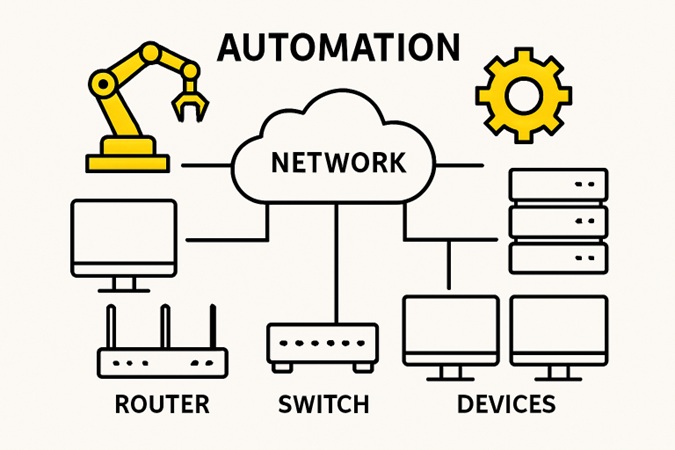
By leveraging machine learning, modern toolsets adapt to unique network behaviors, providing predictive insights that further minimize human oversight. This ability to identify configuration drift and remediate emerging issues ahead of time offers a proactive approach that fundamentally shifts the network management paradigm from reactive firefighting to strategic optimization.
Enhancing Real-Time Monitoring & Predictive Maintenance
One of the most valuable capabilities introduced by automation and AI is real-time monitoring paired with predictive maintenance. Automated platforms can continuously analyze network traffic, device health, and system dependencies to pinpoint anomalies that precede failures quickly. Early detection allows IT teams to troubleshoot and resolve issues before they escalate, reducing downtime and improving service availability.
This shift to advanced monitoring is reshaping how organizations allocate resources and plan their network expansions. Predictive maintenance empowers IT departments to schedule upgrades and interventions based on actual equipment performance data rather than waiting for a failure to impact the business. As this approach becomes more prevalent, companies can look forward to increased cost savings and improved performance insights.
Improving Data Accuracy & Decision-Making
Automated inventory management ensures up-to-the-minute data accuracy across distributed network environments. Inventory tools track devices, licenses, and consumables, helping organizations avoid costly overstocking or shortages. This real-time information supports more informed, strategic decisions, driving customer satisfaction through prompt, accurate responses to service requests.
AI-powered dashboards further enhance visibility, offering customized reports and analytics that help managers anticipate needs and respond effectively to swiftly changing usage patterns.
Integrating Automation With Existing Systems
Implementing automation in a legacy network environment presents unique challenges. Successful integration requires careful mapping between new automated inventory solutions and existing systems to ensure data consistency, reliability, and security. Best-in-class solutions showcase the effectiveness of automated synchronization, streamlining the entire lifecycle of device management, from onboarding to decommissioning. Such integrations are crucial for reducing redundancy and promoting sustainable, scalable IT operations.
Future Trends In Network Inventory Automation
The future of network inventory management will see the emergence of even more advanced AI and automation technologies. Innovations like zero-touch networking enable systems to configure, monitor, and even remediate themselves without human intervention, a trend that’s particularly vital as networks become more decentralized and complex. Intelligent audit systems and self-healing capabilities are on the rise, providing IT teams with tools to withstand increasing operational demands and security threats.
Final Thoughts
The widespread adoption of automated tools is revolutionizing network inventory management—delivering real-time monitoring, minimizing costly errors, and empowering smarter decision-making at every level. As organizations brace for continued digital transformation, embracing cutting-edge automation remains the cornerstone for resilient, efficient, and future-proof network operations.