Navigating Regulatory Frameworks For Chemical Waste Disposal
Managing chemical waste responsibly is a critical task for any facility that handles hazardous materials. It is far more than just compliance; it is about protecting people, the environment, and avoiding significant financial and legal risks. Inadequate or incorrect handling of hazardous waste can lead to serious accidents, environmental contamination, and hefty fines.
Proper Chemical disposal labeling is the first and most vital step in this complex process. Clear and accurate labels ensure that waste is correctly identified, handled safely, and processed in accordance with strict federal and state regulations. Without proper labeling, hazardous waste poses an elevated risk to everyone involved, from generation to final disposal.
This extensive guide will navigate the intricate world of hazardous waste labeling. Readers will learn about the primary regulatory bodies, the specific information required on labels, when and how to apply them, and best practices for on-site accumulation. The guide also delves into personnel training and the consequences of non-compliance, offering a comprehensive overview of safe, compliant chemical waste disposal.
The landscape of hazardous waste management is governed by a complex web of federal agencies, each with distinct but often overlapping jurisdictions. Understanding these regulatory bodies is fundamental to achieving and maintaining compliance with chemical waste disposal regulations. The primary entities include the Environmental Protection Agency (EPA), the Occupational Safety and Health Administration (OSHA), and the Department of Transportation (DOT).
The Environmental Protection Agency (EPA), primarily through the Resource Conservation and Recovery Act (RCRA), sets the standards for hazardous waste management “from cradle to grave.” This includes defining what constitutes hazardous waste, establishing generator categories (Very Small Quantity Generators (VSQGs), Small Quantity Generators (SQGs), and Large Quantity Generators (LQGs)), and dictating requirements for accumulation, treatment, and disposal. EPA regulations, primarily in Title 40 of the Code of Federal Regulations, directly affect hazardous waste labeling, particularly after a chemical is designated as waste. You can explore these regulations in detail at the eCFR Title 40 and through the RCRA Online database.
The Occupational Safety and Health Administration (OSHA), through its Hazard Communication Standard (HazCom), focuses on protecting workers from chemical hazards in the workplace. HazCom primarily addresses the labeling of hazardous chemicals in use, ensuring employees are aware of the risks associated with materials they handle daily. This often involves Safety Data Sheets (SDS) and specific container labeling requirements for chemicals that are still part of a process or product. More information on OSHA’s HazCom program can be found on their official website: OSHA HazCom Program.
The Department of Transportation (DOT) regulates the safe transport of hazardous materials, including hazardous waste, across public roadways. Once hazardous waste is prepared for off-site shipment, the DOT’s Hazardous Materials Regulations (HMR) apply, specifying specific packaging, marking, labeling, and placarding requirements. These regulations ensure that emergency responders and transporters can quickly identify the hazards associated with the materials being moved.
Understanding The Impact Of Improper Chemical Waste Disposal
Failure to comply with these stringent regulations carries severe consequences that extend beyond mere inconvenience. Improper or missing hazardous waste labeling can lead to:
- Significant Fines and Penalties: Regulatory agencies impose substantial financial penalties for non-compliance, which can quickly escalate based on the severity and frequency of violations. These fines are often a direct result of inadequate labeling, as it is a foundational element of proper waste management.
- Adverse Health Effects and Safety Risks: Unlabeled or mislabeled containers pose immediate dangers to workers, emergency responders, and the public. Without clear hazard identification, personnel may inadvertently handle incompatible chemicals, leading to fires, explosions, chemical burns, or toxic exposures. This can result in serious injuries, chronic illnesses, and even fatalities.
- Environmental Contamination: Incorrectly managed hazardous waste can leak or spill, contaminating soil, water, and air. This not only harms ecosystems but can also lead to costly and extensive environmental remediation efforts.
- Increased Disposal Costs: When waste is improperly identified or labeled, waste disposal facilities may refuse it or charge significantly higher fees for identification and re-labeling services. This adds unnecessary expense to an already costly process.
- Legal Liability: Companies found in violation of hazardous waste regulations can face legal action, including civil lawsuits and criminal charges, particularly in cases of gross negligence or environmental damage. This can severely damage a company’s reputation and lead to long-term legal battles.
- Operational Disruptions: Regulatory inspections and enforcement actions can result in temporary shutdowns or operational restrictions, affecting productivity and profitability.
Proper labeling of hazardous chemicals and waste is extremely important for reducing exposure, preventing accidents, and minimizing additional disposal costs.
To illustrate the distinct focus of OSHA and EPA labeling, consider the following comparison:
Feature OSHA HazCom Labeling (Chemicals in Us,e) EPA RCRA Labeling (Hazardous Waste, Primary Purpose) Worker safety and hazard awareness for chemicals being used. Safe management, tracking, and disposal of materials designated as waste. Required Information: Product identifier, signal word, hazard statements, pictograms, precautionary statements, supplier information. “Hazardous Waste,” waste description, primary hazards, accumulation start date, generator name/address, EPA ID number. Timin:g When a chemical is received and throughout its use in the workplace. Immediately upon adding waste to a container. Regulatory Basis 29 CFR 1910.1200 (Hazard Communication Standard) 40 CFR Part 262 (Standards Applicable to Generators of Hazardous Waste) Key Distinction Focus on immediate chemical risks to workers. Focus on long-term management and environmental protection for discarded mats. Third-party syands, such as HMIs and NFPs, are often used as supplementary hazard communication tools. May use characteristic labels (e.g., ignitable, corrosive) as hazard indication. Understanding these differences is crucial for effective hazardous waste compliance. For a deeper dive into the specific requirements for your facility, particularly concerning your generator status, refer to our guide on How Generator Status Impacts Hazardous Waste Collection.
Essential Labeling Requirements For Hazardous Waste Containers
The label on a hazardous waste container is its identity card, providing critical information for safe handling, storage, and disposal. According to EPA/RCRA regulations, specific details must be included to ensure comprehensive hazard communication.
Standardized Information For Regulatory Compliance
Every hazardous waste label must clearly and legibly display the following information:
- The Words “Hazardous Waste”: This is the most fundamental requirement, immediately identifying the container’s contents as regulated waste.
- Accurate Description of the Waste: The label must include a clear and concise description of the waste. This often involves listing chemical constituents by their full names, rather than just chemical formulas or abbreviations. For example, “Halogenated Waste: Dichloromethane 60%, Chloroform 30%, Water 10%.” While precise percentages are important, regulatory guidance often indicates that accurate percentages are less critical than listing all chemicals; a ± 5% concentration is generally acceptable. Constituents present at levels below 1% can be listed as “trace.”
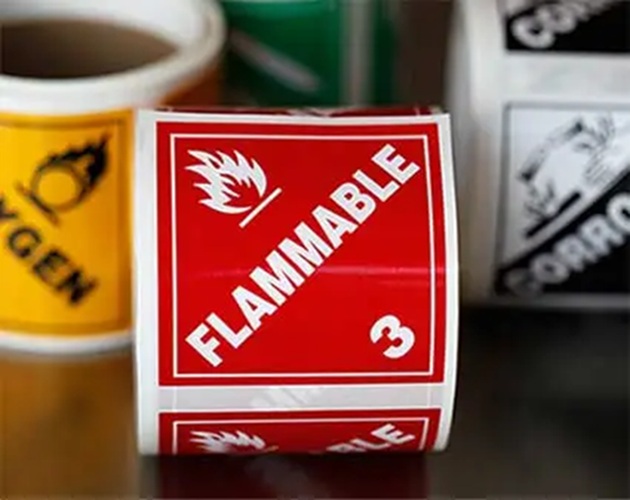
- Primary Hazard(s) Present: The label must indicate the primary hazard characteristics of the waste. These typically align with RCRA characteristics: Ignitable, Corrosive, Reactive, or Toxic. Other hazard warnings, such as “Poison” or “Flammable”, are also common.
- Accumulation Start Date: The date waste was first added to the container. This date is critical for tracking accumulation time limits, which vary depending on the generator’s status (VSQG, SQG, LQG).
- Generator’s Name and Address: Identifying the facility that generated the waste.
- Generator’s EPA Identification Number: A unique identifier assigned by the EPA to hazardous waste generators.
- Manifest Tracking Number: This number is added when the waste is prepared for off-site transportation, linking the container to its manifest document.
- EPA Hazardous Waste Number(s): The specific RCRA waste codes (e.g., F001, D001) that apply to the waste.
All chemical waste, regardless of where it is stored or how it is managed, must be properly labeled as soon as waste is added to a container. This “point of generation” labeling is crucial to prevent unknown wastes, which are often more expensive and difficult to manage. For a visual breakdown of these components, consult our detailed guide on the Anatomy of a Hazardous Waste Label.
Physical Characteristics of Labels: Labels must be legible and prominently displayed. Beyond the content, the physical characteristics of the label itself are important:
- Durability: Labels must withstand the environmental conditions of the storage area (e.g., moisture, temperature fluctuations, chemical spills) without degrading.
- Chemical Resistance: The label material and ink should be resistant to the chemicals being stored, preventing smudging or fading that could render the information illegible.
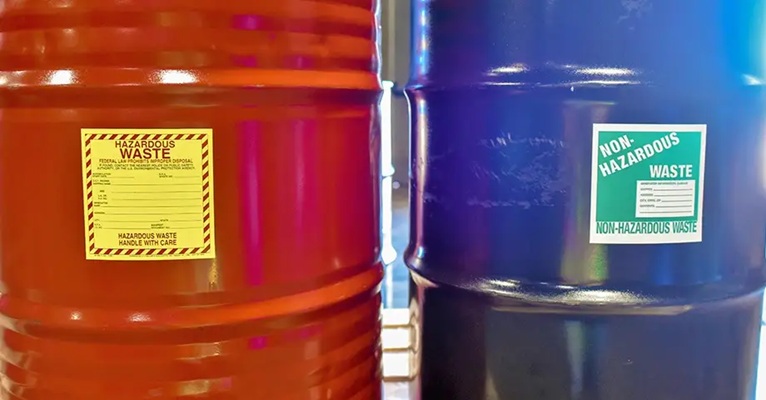
- Size and Color: While there isn’t a universally mandated size or color for all hazardous waste labels, they should be large enough to be easily readable and often feature contrasting colors (e.g., yellow background with black text) to stand out. DOT labels and placards for transport have specific size and color requirements, as detailed in 49 CFR part 172. For example, hazardous waste markings are typically yellow, while non-hazardous waste markings are green, providing an immediate visual distinction.
Third-Party Labeling Systems: Systems such as the Hazardous Materials Identification System (HMIS) and the National Fire Protection Association (NFPA) 704 Diamond are widely used to communicate chemical hazards in the workplace. However, it’s important to differentiate:
- HMIS and NFPA are hazard communication systems for chemicals in use, primarily for worker safety and emergency response within a facility. They are not, by themselves, sufficient for RCRA hazardous waste labeling, which has specific regulatory content requirements.
- Regulatory hazardous waste labels (EPA/RCRA) are designed for the legal tracking and disposal of waste. While the hazard information on a hazardous waste label might be derived from similar hazard assessments as HMIS/NFPA, the format and required content are distinct.
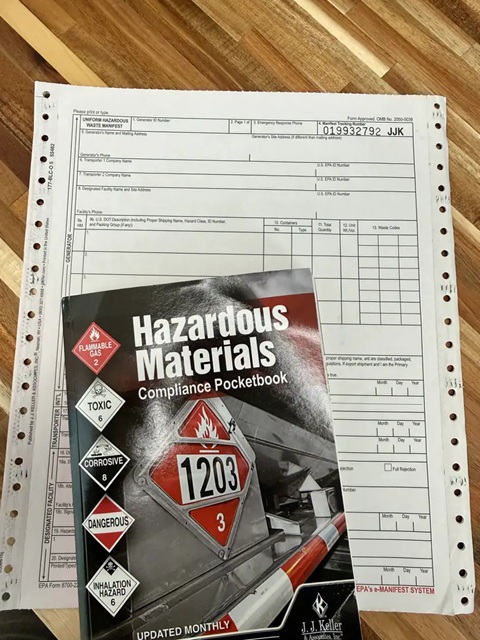
For instance, when preparing hazardous waste for transportation off-site, each package must be labeled in accordance with Department of Transportation regulations on hazardous materials (49 CFR part 172), as stipulated in 40 CFR § 262.31 Labeling. This involves specific DOT diamond-shaped labels and, potentially, placards, which differ from a standard RCRA accumulation label. Similarly, universal waste has its own specific labeling requirements, as outlined in 40 CFR § 273.34 Labeling/marking, often requiring phrases like “Universal Waste—Battery(ies)” or “Universal Waste—Lamp(s).”
Labeling Empty Containers for Reuse: If an empty container will be repurposed for hazardous waste accumulation, it must be clearly identified as such. It’s a good practice to label it “Empty – For Hazardous Waste” or a similar label to prevent accidental misuse and ensure it’s ready for proper hazardous waste labeling once waste is added.
Best Practices For On-Site Accumulation & Storage
Effective hazardous waste labeling extends beyond simply applying a sticker; it’s an integral part of a robust on-site accumulation and storage strategy. Adhering to best practices ensures not only compliance but also the safety of personnel and the environment.
Implementing Effective Chemical Waste Disposal At The Point Of Generation
The moment a material becomes a waste, the clock starts ticking, and regulatory requirements begin.
- Immediate Labeling: All chemical waste containers must be labeled immediately after waste is added. This prevents the accumulation of “unknown” wastes, which can be dangerous and costly to identify later. The label should include the words “Hazardous Waste,” an accurate description of the waste, its primary hazards, and the start date for accumulation.
- Labeling Secondary Containers: If hazardous waste is transferred from one container to another (e.g., from a small beaker to a larger accumulation drum), the new, secondary container must also be immediately and properly labeled with all required information.
- Empty Container Identification: Empty chemical containers can often be reused for hazardous waste accumulation. When doing so, clearly mark them as intended for hazardous waste, and then apply the full hazardous waste label once waste is introduced. Consider recycling empty containers whenever possible, but ensure they are “RCRA empty” before recycling.
- Container Compatibility and Condition: Always use containers compatible with the waste being stored and in good condition, free from leaks, dents, or corrosion. Containers should be kept closed at all times, except when adding or removing waste, to prevent spills, evaporation, or reactions.
- Waste Stream Segregation: Never mix incompatible hazardous wastes. This can lead to dangerous reactions, fires, or explosions. Segregate different types of hazardous waste (e.g., acids from bases, oxidizers from flammables) using secondary containment or separate storage areas. This is particularly important for specific waste types, such as halogenated waste (which cannot be incinerated with non-halogenated waste) or universal waste (which has streamlined but distinct management rules). Our article on What are the different types of waste streams? offers further insight into this.
Satellite Accumulation Areas (SAAs): SAAs are crucial for managing waste at its point of generation, such as in laboratories or workshops. These areas allow the accumulation of small amounts of hazardous waste (up to 55 gallons of non-acute hazardous waste or 1 quart/1 kg of acute hazardous waste) at or near the process that generates the waste, under the operator’s control.
- Labeling in SAAs: Containers in SAAs must be labeled with the words “Hazardous Waste” and an indication of the hazards of the contents (e.g., flammable, corrosive). Unlike central accumulation areas, federal regulations do not require an accumulation start date on SAA containers until the volume limit is exceeded or the container is moved to a central accumulation area.
- Volume Thresholds: Once the 55-gallon or 1 quart/1 kg limit is reached in an SAA, the container must be dated, and the excess waste must be moved to a central accumulation area within 3 consecutive calendar days.
- Inspections: Federally, weekly inspections of SAA containers are not required, provided other SAA provisions (good condition, compatibility, closure, labeling) are met. However, regular checks are a best practice to ensure safety. For more details on SAA regulations, refer to 40 CFR § 262.15.
Central Accumulation Areas (CAAs) and Storage Time Limits: Once waste leaves an SAA or is directly generated into a larger container, it moves to a CAA.
- Accumulation Time Limits: Generators have strict limits on how long they can store hazardous waste on-site without a permit:
- Large Quantity Generators (LQGs): Up to 90 days.
- Small Quantity Generators (SQGs): Up to 180 days (or 270 days if the treatment, storage, or disposal facility is 200 miles or more away).
- Labeling in CAAs: Containers and tanks in CAAs must be clearly labeled with “Hazardous Waste,” an indication of the hazards, and the accumulation start date.
- Weekly Inspections: LQGs and SQGs must inspect containers in CAAs for leaks and deterioration.
- Universal Waste: This category includes commonly generated hazardous wastes, such as batteries, lamps, mercury-containing equipment, and aerosol cans. Universal wastes are subject to streamlined management standards under 40 CFR Part 273, including specific labeling requirements (e.g., “Universal Waste—Battery(ies)”). Our comprehensive Universal Waste Recycling page provides further details.
Personnel Training & Emergency Preparedness
A robust hazardous waste labeling system is only as effective as the personnel who implement and maintain it. Comprehensive training and emergency preparedness are paramount to ensuring safety and compliance.
Roles and Responsibilities: Every individual involved in hazardous waste management, from the point of generation to final shipment, has a role to play.
- Generator Personnel: Those who generate waste must be trained to identify, characterize, and immediately label waste containers properly. They are typically responsible for applying the initial hazardous waste label and indicating hazards.
- Accumulation Area Managers: These individuals oversee SAAs and CAAs, ensuring containers are correctly labeled, stored, and moved within accumulation time limits. They are also responsible for weekly inspections in CAAs (for SQGs and LQGs).
- Shipping Personnel: Before hazardous waste leaves the facility, personnel responsible for preparing it for transport must ensure all DOT labeling, marking, and placarding requirements are met. This often involves re-labeling or adding DOT-specific labels.
Effective Training Programs: Training programs must be tailored to personnel’s specific responsibilities and the types of hazardous waste handled at the facility.
- For Large Quantity Generators (LQGs): Training requirements are stringent. LQGs must have a formal training program to ensure facility personnel can respond effectively to emergencies. This includes familiarizing them with emergency procedures, emergency equipment, and systems. Training must be reviewed annually, and detailed records must be maintained, including job titles, descriptions, and documentation of training completion. These requirements are outlined in 40 CFR § 262.17(a)(7).
- For Small Quantity Generators (SQGs): SQGs must ensure that all personnel managing hazardous waste are thoroughly familiar with proper waste-handling and emergency procedures relevant to their responsibilities during both normal operations and emergencies. While federal regulations do not mandate specific recordkeeping for SQG training, it is a best practice to document all training provided. 40 CFR § 262.16(b)(9)(iii) details these requirements.
- For Satellite Accumulation Area (SAA) Personnel: Although RCRA does not federally require specific training for personnel working only in SAAs, it is a critical best practice. These individuals are at the forefront of waste generation and must understand how to identify hazardous waste, apply initial labels, keep containers closed, and recognize when accumulation limits are met. They also need to be familiar with the hazards of the chemicals they handle to respond appropriately to spills or other emergencies.
- DOT Training: Any personnel involved in preparing hazardous waste for shipment, including those who sign the manifest certification, must also comply with the DOT hazardous materials training requirements. This ensures they have “first-hand knowledge” of the information on the manifest and the applicable transport regulations. More on this can be found in RCRA Online Memo #14687.
Essential Training Program Elements:
- Identification and Characterization: How to determine if a material is hazardous waste and its specific characteristics.
- Labeling Procedures: Step-by-step instructions on how to complete and affix labels, including when to apply them and what information is mandatory.
- Container Management: Proper container selection, closure, and handling.
- Segregation of Incompatibles: Understanding which chemicals cannot be stored or mixed.
- Emergency Procedures: What to do in case of spills, leaks, fires, or other incidents, including alarm systems, spill control, and decontamination.
- Regulatory Overview: A basic understanding of the applicable EPA, OSHA, and DOT regulations.
- Documentation and Recordkeeping: How to maintain accurate records related to waste generation, accumulation, and disposal.
Regular training, coupled with clear Standard Operating Procedures (SOPs), reinforces the importance of proper labeling and equips employees with the knowledge to act safely and compliantly. For insights into preventing common errors, refer to 6 Common Hazardous Waste Handling Mistakes and How to Avoid Them.
Frequently Asked Questions About Chemical Waste Disposal
Navigating the complexities of hazardous waste labeling often leads to common questions. Here are answers to some frequently asked questions:
What information must be included on a hazardous waste label?A hazardous waste label must include:
- The words “Hazardous Waste.”
- An accurate description of the waste (chemical hazard ingredients by full name, not abbreviations)
- The primary hazard(s) present (e.g., Ignitable, Corrosive, Reactive, Toxic)
- The accumulation start date (when waste was first added to the container)
- The generator’s name and address
- The generator’s EPA Identification Number
- The EPA Hazardous Waste Number(s)
- The Manifest Tracking Number (when prepared for transport)
When should a hazardous waste container be labeled?All hazardous waste containers must be labeled immediately upon waste being added. This applies regardless of whether the container is full or still accumulating waste. This “point of generation” labeling is crucial to prevent the creation of “unknown” wastes.
How should trace amounts of chemicals be handled on a waste label?When listing chemical constituents on a hazardous waste label, those present at less than 1% can typically be listed as “trace.” While accurate percentages are preferred, a ± 5% concentration is generally considered acceptable for the primary constituents. The key is to list all significant components and their associated hazards.
Conclusion
Effective hazardous waste labeling is not merely a regulatory burden; it is a cornerstone of responsible, safe operations. From protecting personnel and the environment to avoiding crippling fines and legal liabilities, the diligent application of labeling requirements under EPA, OSHA, and DOT regulations is indispensable.
By understanding the distinct roles of these regulatory bodies, meticulously adhering to labeling content and timing, implementing best practices for on-site accumulation, and investing in comprehensive personnel training, facilities can cultivate a robust safety culture. This proactive approach not only ensures compliance but also significantly mitigates risks, fosters environmental stewardship, and ultimately contributes to a more sustainable future. Prioritizing clear, accurate, and durable labeling is the first, most critical step in the safe journey of hazardous waste from generation to final, compliant disposal.