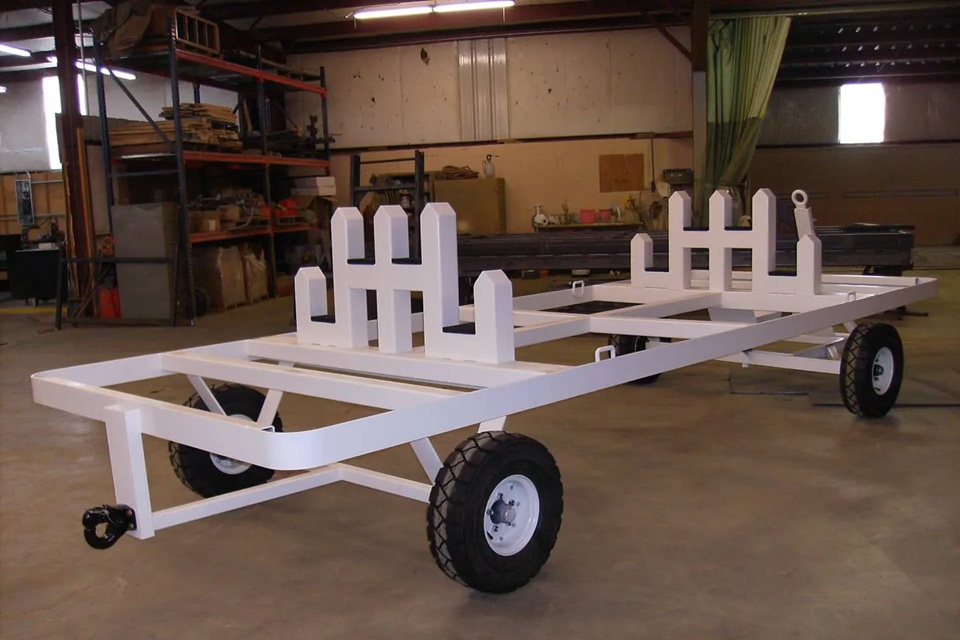
Modern logistics rely heavily on efficiency, adaptability, and speed to meet ever-growing consumer expectations. The transformation of supply chains is underpinned by advancements in material handling equipment (MHE), which has redefined how industries transport, store, and manage goods. As new technologies emerge, businesses push for smarter solutions. These innovations, such as Worksaver equipment, are setting new standards for performance and reliability in warehouses and distribution centers, helping companies stay competitive in a rapidly changing market.
Material handling solutions streamline workflows, minimize errors, and boost productivity while making workplaces safer for employees. With cutting-edge machinery and digital systems, companies are now better positioned to address pressing demands, drive sustainability efforts, and ensure operational success. This rapid evolution is not just changing logistics but also shaping the future of global commerce.
For logistics leaders, understanding the key trends in material handling technology is critical. From automation and robotics to IoT-driven data and AI-powered warehouse management, the sector is in the midst of a technological revolution. The following sections explore how each of these trends is influencing modern supply chains and why material handling equipment now plays a central role in logistics operations.
These shifts demonstrate why investing in innovative material handling solutions is no longer optional for businesses seeking resilience, scalability, and long-term growth. Market leaders across industries are leveraging these advancements to achieve greater accuracy, faster delivery times, and improved customer satisfaction.
Automation & Robotics Integration
In the past decade, the adoption of automation and robotics has significantly improved logistics efficiency. Automated Guided Vehicles (AGVs), robotic arms, and intelligent conveyor systems have reduced reliance on manual labor, reducing errors and speeding up warehouse workflows. As a result, companies are processing orders more quickly and with heightened accuracy. In fact, industry predictions suggest that over half of all warehouse facilities worldwide will be using advanced robotics by 2030 to keep up with shifting market dynamics. These technologies provide instant scalability and flexibility needed for modern fulfillment operations, which can be critical during peak seasons or unexpected surges in demand.
Sustainability & Energy Efficiency
Environmental responsibility is now a driving factor in the design of material handling equipment. Modern logistics operations are prioritizing battery-powered forklifts, solar charging stations, and energy-saving conveyor systems. This approach not only reduces carbon emissions but also helps businesses comply with stricter global regulations. Companies report a sizable shift in procurement towards green equipment and processes as stakeholders increasingly demand sustainable supply chains. With nearly 40 percent of new forklift sales being battery-powered, it is clear that logistics professionals are committing to sustainability as part of their core values.
Internet Of Things (IoT) & Data-Driven Insights
The rise of IoT is connecting every piece of equipment, from pallet jacks to heavy-duty cranes, enabling real-time data collection and equipment monitoring. Smart sensors monitor equipment health and usage, enabling businesses to anticipate maintenance needs, avoid costly downtime, and prolong the lifespan of their assets. These data-driven insights enable a more proactive management style, giving operators the tools required to optimize workflows and maximize throughput. The result is a smarter, safer, and more predictable material handling environment.
E-Commerce & Warehousing Demand
The explosive growth of e-commerce has revolutionized expectations for warehouse and distribution center efficiency. Consumers now expect rapid fulfillment and accurate order delivery, placing immense pressure on logistics operations to perform seamlessly. Automated storage and retrieval systems (AS/RS), high-speed conveyors, and state-of-the-art sorting machines have become essential infrastructure for coping with the high volumes and complexity of online orders. These advanced systems are helping businesses meet customer expectations in an era where speed and precision are vital to brand reputation.
Focus On Worker Safety & Ergonomics
Employee well-being remains a top concern for logistics companies, prompting significant upgrades in material handling design. Ergonomic innovations, such as height-adjustable workstations and user-friendly controls, reduce repetitive strain injuries and cut lost workdays. Lightweight, well-balanced tools prevent fatigue, while machine safeguards reduce the risk of accidents on the job. These improvements directly impact workforce retention, ensuring employees remain healthy and engaged, which ultimately supports organizational growth and efficiency.
Customization & Modular Design
Flexibility and adaptability are now crucial in logistics environments that serve multiple industries. The trend toward modular, customizable handling equipment enables organizations to quickly adapt to new workflows, product sizes, or market opportunities. With tools tailored to specific operations, businesses are more agile and better positioned to handle shifting customer needs or seasonal variations. Modular systems can be reconfigured or expanded without large capital expenditures, representing a smart investment for scalable logistics strategies.
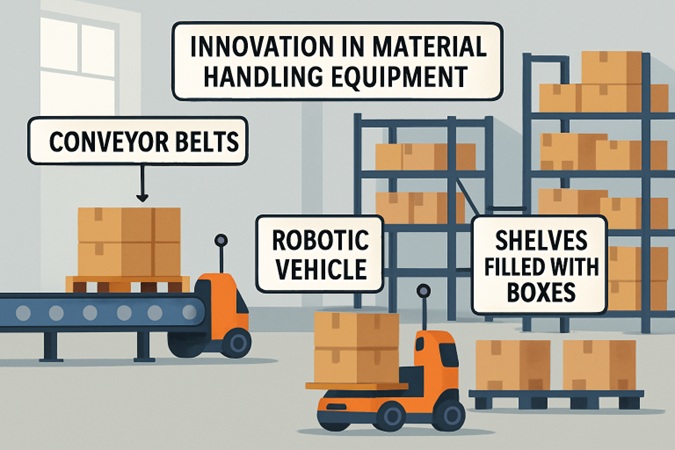
AI-Powered Warehouse Management
The application of artificial intelligence in warehouse management is optimizing every aspect of material handling, from inventory planning to labor allocation. AI engines predict demand patterns, optimize picking routes, and suggest continuous improvements based on real-time data. These intelligent systems ensure that assets such as forklifts and conveyor belts are used more effectively, maximizing productivity across facilities of all sizes. As warehouse management software becomes more sophisticated, AI is expected to drive even greater gains in decision-making speed and accuracy.
Conclusion
Material handling equipment has evolved into an indispensable element of modern logistics, fostering efficiency, resilience, and sustainability in global supply chains. As businesses adopt new technologies and smarter equipment, they position themselves to thrive in a competitive landscape. The innovations shaping material handling today are not only transforming warehouses and distribution centers, but also ensuring that businesses can continue to meet the needs of tomorrow’s customers.