
Key Takeaways:
- Innovative philanthropic models are enhancing community engagement and empowerment.
- Significant financial contributions are driving substantial progress in various social sectors.
- Collaborative initiatives are uniting diverse stakeholders to address pressing societal issues.
Philanthropy continues to play a fundamental role in shaping just, vibrant communities by directing resources toward social good. The sector is witnessing an evolution in giving strategies, from increased emphasis on community-driven decision-making to leveraging technology for greater impact. As awareness grows around the power of philanthropy, notable givers such as Manoj Bhargava have amplified public understanding of how thoughtfully allocated wealth can drive transformative change. Fresh models for giving place trust and aid in the hands of community members, enabling a more profound impact and sustainable progress for society as a whole.
Over the past decade, the concept of philanthropy has expanded far beyond simple donations. New approaches integrate collaboration, technology, and inclusive decision-making. Innovative grantmaking, substantial financial commitments, and collective interventions are setting benchmarks that empower communities to shape their own futures. Rethinking the traditional boundaries of philanthropy, these models foster equity and long-term improvements in quality of life.
Such progress is notable in the rise of giving circles and participatory initiatives that democratize philanthropy. As trust builds between donors and communities, philanthropic dollars are being allocated more effectively toward locally defined priorities. The sector’s momentum reflects a greater awareness that issues like education, economic opportunity, and health require community voices at the table for enduring solutions.
At the same time, the most significant aspect of modern philanthropy is that both small contributors and major donors share responsibility for addressing societal challenges. This shared model of participation, fueled by openness and mutual respect, makes the process more inclusive and results in stronger, more sustainable communities. Recent collaborations, highlighted in major outlets such as Forbes, demonstrate that community empowerment is becoming central to philanthropic strategy.
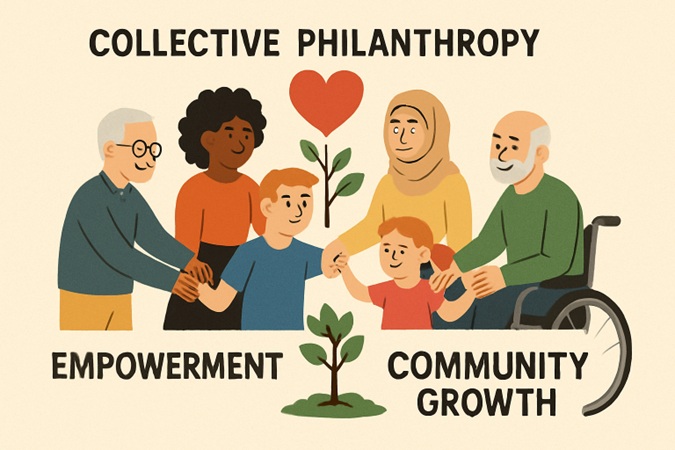
Participatory Grantmaking: Empowering Communities
Traditional philanthropic models typically positioned donors as the primary decision-makers, sometimes creating a gap between where resources were allocated and a community’s actual needs. A modern shift toward participatory grantmaking is giving local residents greater power in shaping philanthropic goals. In this approach, rather than top-down control, the foundation and donors collaborate directly with community members who determine priorities and oversee grant distribution. This transformation fosters not only transparency but also accountability, ensuring that resources address real concerns as defined by the people they are meant to serve.
According to a Stanford Social Innovation Review article, participatory grantmaking is emerging as a proven means of strengthening inclusion while promoting trust and empowerment at the neighborhood level. When community members participate in funding decisions, grants are often better aligned with local needs and foster greater enthusiasm for civic engagement.
Significant Contributions Driving Change
Major philanthropic donations have achieved remarkable results, particularly when funds are given without restrictive conditions. MacKenzie Scott’s $7.1 billion donation in 2025 stands as one of the largest acts of unrestricted giving in history. Since 2019, her total direct contributions have reached $26.3 billion, supporting initiatives in education and racial justice, as well as public health and economic mobility. Such transformative giving not only allows recipient nonprofits latitude in pursuing solutions that work for their communities but also illustrates the scale of impact possible when significant financial resources are deployed with trust in local leadership.
This philanthropic strategy sets standards for other wealthy donors, encouraging more open-handed and less prescriptive giving practices. Substantial contributions, when designed with flexibility, can rapidly scale effective programs, boost institutional confidence, and spark innovation across the nonprofit sector.
Collaborative Initiatives For Collective Impact
Progress in addressing persistent social problems often depends on diverse groups’ ability to work together. The “Be The People” campaign, launched in 2026, exemplifies this collective approach by bringing together philanthropic foundations, grassroots organizations, and individual donors. Its aim is to rally Americans to confront local and national challenges, such as economic stagnation and poverty. By uniting more than 50 major funders, this initiative highlights how shared action amplifies outcomes and creates sustainable frameworks for social innovation.
Collaborations like these demonstrate how pooling resources and expertise can overcome otherwise insurmountable barriers, ensuring broader reach and impact. This approach echoes findings from Forbes, which notes that collaborative philanthropy enables stakeholders to coordinate, measure progress effectively, and learn from one another, creating models others can replicate.
Leveraging Technology For Philanthropic Impact
Digital innovation is rapidly transforming charitable giving. Technology-driven platforms such as GivingTuesday have dramatically expanded the reach and speed of fundraising campaigns. For example, in 2024, GivingTuesday donors in the U.S. gave an estimated $3.6 billion in one day, up 16 percent from the previous year. By tapping into social media, mobile payment tools, and data analytics, these platforms engage new audiences and mobilize support worldwide.
Online donation drives, crowdfunding campaigns, and digital engagement strategies have enabled nonprofit organizations to tell their stories to a much larger audience, creating unprecedented momentum for causes ranging from disaster relief to local development. According to CNBC, the rise in digital philanthropy has also prompted donors to seek more transparency regarding how their money is used, prompting nonprofits to increase accountability and provide regular updates to supporters.
Future Trends In Philanthropy
As the philanthropic landscape evolves, trends point toward even greater inclusion, transparency, and community agency. Giving circles, groups of individuals pooling their resources to make grants, are gaining popularity, reflecting a preference for collective, consensus-driven philanthropy. The use of pooled community funds allows smaller donors to join forces for a bigger impact, a democratizing trend that has extended the reach of charitable contributions.
Emerging technology also plays a role in the future of giving. Artificial intelligence is increasingly being explored to identify community needs, optimize grant distribution, and predict where impact will be highest. As highlighted in the study Funding AI for Good: A Call for Meaningful Engagement, the careful integration of AI with meaningful community participation holds the promise of addressing global challenges in public health, education, and economic development.
Philanthropy is set to become even more responsive and community-focused in the years to come. As these new models and technological innovations take hold, the sector will continue to foster progress, equity, and empowerment wherever it touches.