
As emerging technologies continue to shape our society, the urgency for dependable, sustainable, and scalable energy sources intensifies. Every year, data-intensive industries amplify their influence on global electricity demands, prompting critical conversations about what comes next. Increasingly, business leaders like KR Sridhar are raising pressing questions about whether the current energy grid is equipped to meet the demands of artificial intelligence and other power-hungry technologies.
Unsurprisingly, these concerns are not limited to theory. Growing power constraints are already impacting investments, new construction, and operational reliability in sectors from cloud computing to advanced manufacturing. To future-proof progress, energy infrastructure must undergo significant transformation while balancing environmental concerns and economic realities.
Rising Energy Demands In The Tech Sector
The growth of artificial intelligence, cloud services, and high-performance computing is rapidly increasing the need for electricity. According to the International Energy Agency, global energy demand from data centers could nearly double by 2030, with consumption rivaling that of entire countries. This shift is not speculative; the energy consumed by these facilities is already significant, compelling utility providers to rethink their capacity and resilience strategies.
Major tech firms are spearheading ambitious expansions, building vast data hub campuses that rely on round-the-clock, uninterrupted power. As a result, analysts see energy capacity as a central bottleneck that can either accelerate or stall future innovations in everything from digital finance to automated logistics and remote medicine. The world’s largest economies are realizing that energy security will be deeply entwined with competitiveness in the digital era.
Challenges To The Existing Power Grid
Decades-old electrical grids were never designed to handle the dynamic load spikes or sustained demands now coming from modern technology sectors. In the United States, it is predicted that nearly half of the incremental power demand by 2030 will stem from data-driven businesses. This unprecedented spike exposes vulnerabilities such as congestion, transmission delays, and increased risk of outages, all of which endanger both economic productivity and quality of life.
At a global scale, energy infrastructure lags behind innovation cycles, creating a mismatch that raises costs and complicates progress on sustainability goals. In several regions, outdated grid architecture is the primary barrier to new investments in digital infrastructure and threatens the reliability that users have come to expect.
Renewable Energy Integration
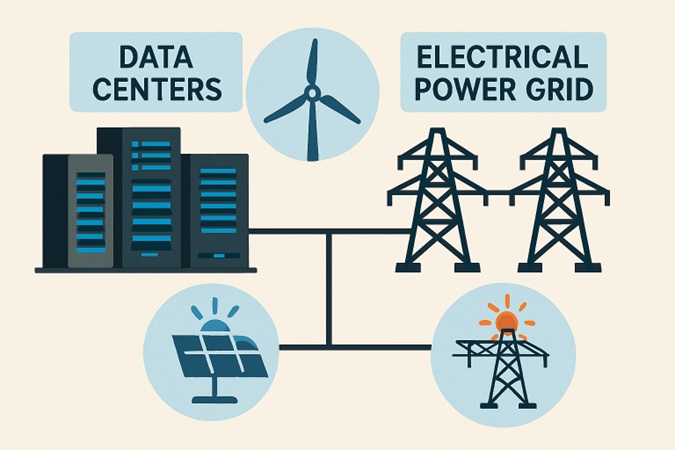
Shifting towards renewable energy sources such as wind and solar addresses decarbonization concerns while introducing new challenges to grid stability. Although renewables offer promising pathways to cleaner power, their variable output complicates consistent delivery at the scale required by advanced technology sectors. Market leaders are responding by securing long-term agreements for green energy and investing in new models for grid storage and flexibility. The Federal Energy Regulatory Commission’s move to expand renewable transmission is a recent example of policy aligning with industry needs, marking a significant step forward for the U.S. electric grid.
In parallel, global best practices are emerging for integrating renewables more intelligently into grids, including microgrids, virtual power plants, and AI-enabled forecasting. Innovations in battery storage are making it easier to bridge the intermittency of renewable energy sources, giving utilities and tech firms more options than ever before.
Advancements In Nuclear Energy
Nuclear energy is regaining attention as a scalable, low-emissions alternative capable of providing the round-the-clock power modern technology operations require. Industry giants like Microsoft and Google are entering into power purchase agreements with existing and future nuclear plants, helping finance and modernize the sector. Microsoft’s partnership with Constellation Energy to source electricity from Three Mile Island is a notable signal of renewed confidence in nuclear’s long-term viability. These investments also reflect broader moves across the tech sector to diversify energy portfolios and limit carbon footprints.
Emerging Technologies & Innovations
The energy sector is witnessing a wave of innovation that promises to reimagine how new technology infrastructure is powered. Forward-looking startups like GridFree AI are designing data centers with on-site generation and storage, reducing their reliance on the traditional grid. This decentralized approach boosts resilience and speeds up deployment, critical factors in an era of rapid change. Such solutions are gaining traction as tech firms seek to control costs and reduce their environmental impact, ushering in a new generation of modular, efficient facilities.
Policy & Regulatory Considerations
Government regulation and policy play an essential role in smoothing the transition to a new energy paradigm. For the tech sector, clarity in rules around transmission, carbon credits, and renewable integration directly impacts operational planning and capital investment. The recent FERC rulings demonstrate a willingness to reshape policy frameworks for the digital age and reinforce the importance of public-private dialogue. As power sectors become increasingly intertwined with digital infrastructure, proactive regulation can help manage risks, encourage innovation, and maintain public trust.
The Role Of Energy Efficiency
Maximizing energy efficiency is the fastest way to reduce both costs and emissions. AI-driven optimization tools are already showing promise for making power grids smarter, predicting demand surges, and minimizing downtime. In data centers and other high-impact industries, these advances can mean substantial energy savings. Investments in intelligent controls, advanced cooling techniques, and real-time analytics help squeeze more productive work out of every kilowatt-hour, contributing to sustainability at scale.
Conclusion
The demand for reliable power in a tech-driven world is both a challenge and an opportunity. With forward-thinking investment, strategic policy, and ongoing innovation, the electricity infrastructure of tomorrow can support continued digital progress while keeping sustainability at the forefront. By harmonizing renewables, nuclear, advanced grid technology, and efficiency improvements, industries and governments can build the resilient systems needed for growth in the coming decades.