
Key Takeaways:
- Emerging bio-based adhesives offer sustainable alternatives without compromising performance.
- Innovative adhesives with adaptive properties are enhancing efficiency in various applications.
- Technological innovations are expanding the use of adhesives in sectors like automotive and electronics.
Modern manufacturing industries rely heavily on specialized adhesives to streamline processes and optimize product performance. As industries face greater pressure to innovate and reduce their environmental impact, the evolution of adhesive technologies has become crucial. Providers are at the forefront of these changes, offering solutions designed for speed, reliability, and sustainability.
Spurred by increasingly strict regulations and growing consumer expectations for sustainable products, innovations in industrial adhesives signal a clear move toward higher performance, greater versatility, and lower environmental impact. Manufacturers across the automotive, consumer goods, and packaging industries are embracing advanced solutions—such as NXT Level Packaging Hot Melt Adhesive—to move beyond conventional bonding methods and streamline assembly and packaging processes. These next-generation adhesives support efficiency while helping brands meet sustainability goals without sacrificing strength or reliability. As new technologies continue to emerge, they highlight the critical role industrial adhesives play in delivering durable, eco-conscious solutions that strengthen global supply chains and support long-term innovation.
Understanding the evolution of these materials—particularly the rise of bio-based and innovative adhesives—helps businesses remain competitive and compliant with evolving market standards. Emerging adhesive technologies are not only boosting efficiency in production environments but also supporting efforts to reduce waste and utilize renewable resources. This article explores the most significant advancements shaping the industrial adhesive landscape today.
Bio-Based Adhesives: Merging Performance With Sustainability
One of the most prominent trends in the adhesives market is the transition towards bio-based formulations. These products are made from renewable resources, including plant oils, starches, and recycled materials. A groundbreaking example involves converting waste cooking oil into recyclable polyester plastics. This material demonstrates superior adhesive strength—reportedly powerful enough to tow a car—while leveraging cast-off oils that would otherwise become waste. Not only do these adhesives rival traditional petrochemical options in performance, but they also align with increasingly stringent environmental standards. By reducing reliance on fossil fuels and enhancing recyclability at the end of their life cycle, bio-based adhesives offer a more sustainable path forward for industrial applications.
These innovations are finding application in sectors ranging from woodworking and construction to automotive manufacturing. According to a Live Science report, some recent advancements allow manufacturers to maintain or even improve bond strength without increasing toxicity or cost. This change enables companies to meet regulatory demands while also appealing to environmentally conscious consumers.
Innovative Adhesives: Adapting To Environmental Changes
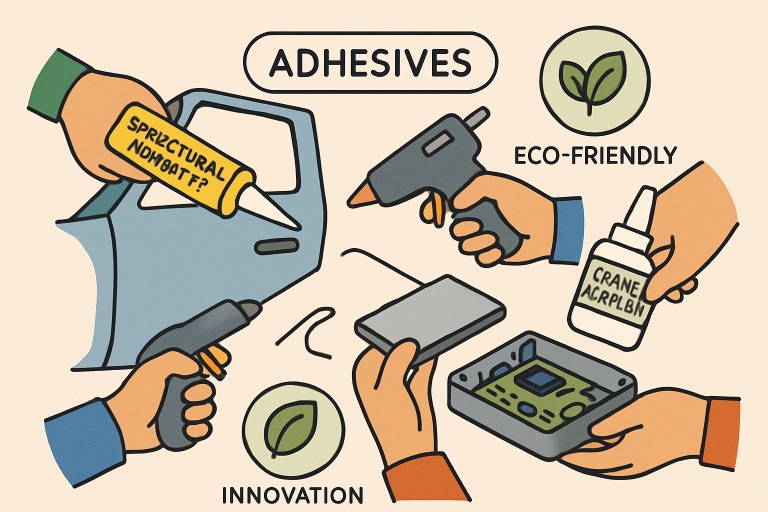
As industries demand greater flexibility in their processes, innovative adhesives are gaining traction. These adhesives are engineered to adapt to environmental stimuli, including changes in temperature, humidity, or pH levels. This adaptability enables precisely timed bonding or debonding, which is particularly useful in processes that require rework or recycling. For example, innovative adhesives allow automotive manufacturers to temporarily assemble parts, making it easier to disassemble vehicles for maintenance or recycling at the end of their life.
Innovative adhesives can also boost efficiency in industries such as electronics, where delicate or complex assemblies often require precise and temporary bonds. As highlighted in an Assembly Magazine article, these adaptive formulations are pivotal in manufacturing settings that must balance long-term strength with ease of disassembly for upgrades or repairs. By responding to environmental cues, innovative adhesives reduce waste and streamline complex workflows.
Technological Innovations: Expanding Applications
The scope of modern adhesive technology stretches far beyond traditional applications. Structural acrylic adhesives, for instance, are being engineered specifically for use in electric vehicles (EVs), where multilateral bonding is required to join aluminum, composites, and coated steel. These adhesives demonstrate remarkable fatigue resistance and have outperformed rivets and welds in simulated crash tests, underscoring their potential to revolutionize assembly lines and vehicle safety.
In electronics and consumer appliances, adhesive manufacturers are developing heat- and moisture-resistant solutions that can withstand the demanding conditions of next-generation devices. New UV-curable adhesives, for example, dramatically reduce assembly times and energy consumption by ensuring instant bonds upon exposure to ultraviolet light. Innovations like these enable manufacturers to automate production while maintaining high standards for durability and reliability.
Furthermore, the use of data-driven processes in manufacturing has accelerated the evolution of industrial adhesives. As Industry 4.0 technologies become more widespread, digital twins and real-time process monitoring enable the optimization of adhesive application, resulting in reduced material waste and improved product consistency. This trend supports the growth of smart manufacturing and predictive maintenance, further enhancing operational efficiency and sustainability. To learn more about recent advancements in this sector, refer to this Wall Street Journal overview on technology in industrial manufacturing.
Conclusion
As global industries face mounting pressures, including stricter regulations, sustainability mandates, and rapidly shifting consumer expectations, industrial adhesives are proving to be a vital enabler of progress. Advances in bio-based formulations, innovative bonding technologies, and high-performance chemistries allow manufacturers to maintain productivity while reducing environmental impact. These next-generation adhesives support the use of lighter materials, enhanced durability, and more efficient manufacturing processes across the automotive, construction, electronics, and packaging sectors. Beyond assembly, they are reshaping product design by enabling modular construction, easier disassembly, and improved recyclability. Continuous investment in research, paired with collaboration among material scientists, manufacturers, and regulatory authorities, is accelerating innovation while ensuring compliance and safety. As these partnerships deepen, industrial adhesives will continue to unlock new capabilities, enhance long-term performance, and drive sustainable manufacturing solutions well into the future across global markets and emerging sectors.