Key Takeaways:
- Rolling ladders offer significant safety and mobility advantages in work environments where elevated tasks are routine.
- Following OSHA compliance and regular ladder maintenance are key factors in accident prevention and longevity.
- Innovations in rolling ladder design continue to improve safety, comfort, and usability for workers in all industries.
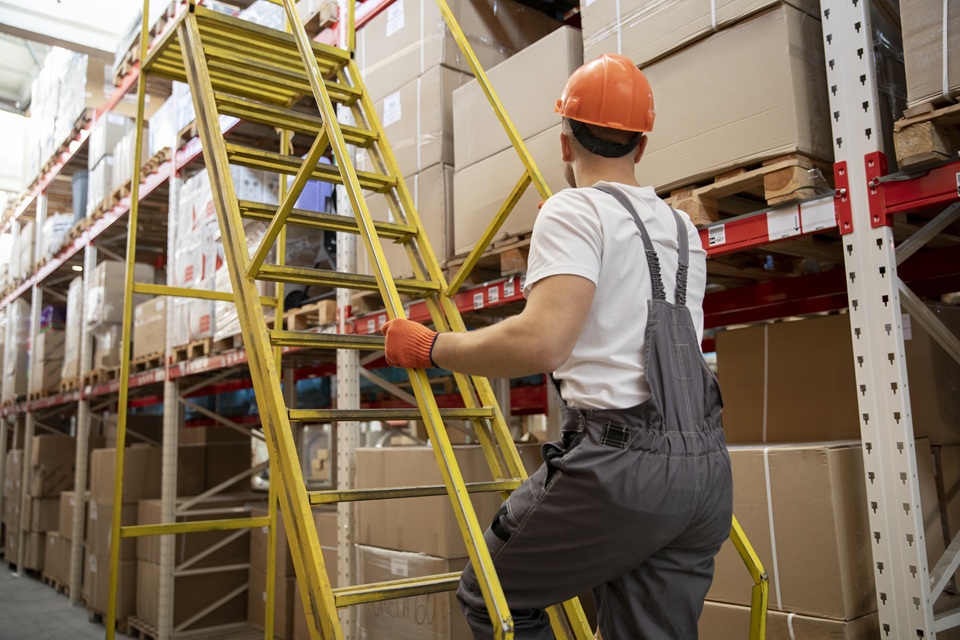
Workplaces across many industries have seen notable improvements in both safety and efficiency through the adoption of modern rolling step ladder solutions. Their portable design and robust construction enable seamless workflow transitions, providing workers with a secure platform for tasks that require elevation. Rolling ladders combine convenience and stability, essential for the fast-paced demands of today’s working environments. By pairing enhanced mobility with increased user protection, rolling ladders promise a safer, more productive workplace. Their adaptability makes them indispensable in settings ranging from warehouses to libraries, where the need to reach varying heights can arise frequently and unpredictably.
Understanding Rolling Ladders
Rolling ladders differ from stationary models thanks to wheels or casters that make it easy to move the ladder from one spot to another with minimal effort. This feature is especially useful in high-traffic work zones where repositioning is a daily necessity. Their framework is engineered to lock securely in place during use, providing workers with a solid footing and eliminating the instability found in makeshift climbing solutions. These ladders are widely used in commercial settings for tasks such as stocking, maintenance, or inspections, where frequent access to high shelves or equipment is vital. Their versatility, ease of maneuverability, and ability to service multiple locations quickly make them fundamental to maximizing workspace efficiency. According to OSHA, properly selected and maintained rolling ladders also play an essential role in reducing workplace injuries, a priority for any employer or safety manager.
Benefits Of Rolling Ladders
- Increased Productivity: Rolling ladders save time by minimizing the need to reposition fixed ladders. Workers can swiftly navigate large floor plans and reach targeted heights with ease.
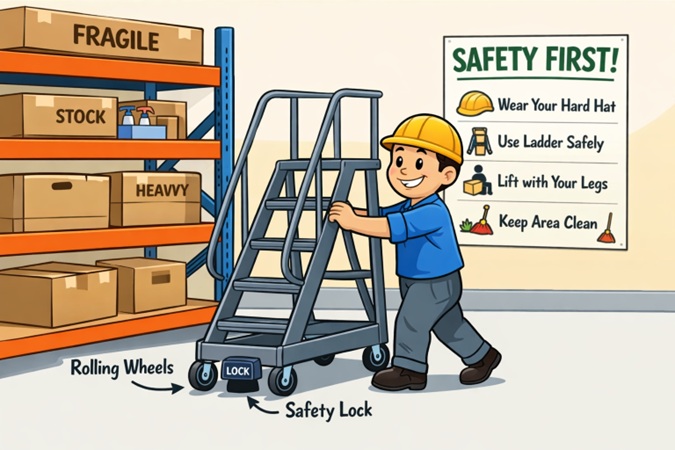
- Enhanced Safety: Most rolling ladders come with slip-resistant treads, guardrails, and locking wheels. These features directly reduce the chances of falls and workplace injuries.
- Space Efficiency: Many rolling ladder models are compact and built to nest neatly in tight storage areas, supporting overall facility organization and usable space.
Compliance With Safety Standards
Proper compliance with safety regulations is a cornerstone of the implementation of rolling ladders. OSHA requires that each rolling ladder be rated for the load it will carry and feature robust locking mechanisms that prevent unintentional rolling. In addition, ladders used for industrial purposes must be inspected routinely for repairs or structural weaknesses. Adhering to these standards is essential not only for user safety but also for minimizing the legal and financial liabilities that result from non-compliance.
Maintenance & Best Practices
- Regular Inspections: Look for structural deterioration, loose hardware, and uneven wheels. Addressing minor issues promptly helps prevent major repairs or workplace incidents.
- Cleanliness: Ladders should stay free from oil, dirt, or residue, as slippery surfaces can lead to accidents.
- Proper Storage: Keeping ladders dry and sheltered when not in use guards against rust and corrosion, which can compromise structural integrity.
Implementing a comprehensive maintenance schedule can significantly extend a ladder’s service life and protect your workforce from preventable hazards.
Innovations In Rolling Ladder Design
Rolling ladder design has advanced rapidly in recent years, integrating technology and ergonomic principles for greater safety and user comfort. Adjustable feet accommodate uneven or sloped floors, while automatic leveling systems keep platforms stable even on non-uniform surfaces. Modern safety gates and robust brake systems further improve protection, minimizing the risk of accidental movement while someone is elevated. Some of the latest models also feature cushioned grips and wider platforms, enhancing the user experience, especially for lengthy tasks.
Implementing Rolling Ladders In The Workplace
Assessing Needs & Selecting Equipment
Begin by analyzing the specific requirements of your facility: What are the most common elevated tasks? What is the maximum load a ladder must support? A thorough assessment will help you choose a ladder that matches your environment, load capacity, and floor space.
Training & Safety
Comprehensive employee training is an essential step. Workers should be educated on safe ascent and descent practices, proper braking procedures, and how to identify wear or hazards requiring maintenance. This ensures that ladders are used correctly and remain in safe working condition.
Conclusion
Rolling ladders are among the most effective solutions for addressing workplace safety and efficiency challenges in settings that require elevated work. By prioritizing OSHA compliance, embracing new design innovations, and maintaining diligent care protocols, organizations empower their employees and prevent costly accidents. Making rolling ladders a central part of your workflow strategy is a proactive step toward a safer and more productive workplace.