Key Takeaways:
- Upgrading to low-flow fixtures can substantially reduce household water usage.
- Regular maintenance and leak detection prevent unnecessary water waste.
- Implementing smart plumbing technologies enhances water efficiency.
Effective water management is increasingly vital as climate change and population growth put pressure on our water supplies. Modern, efficient plumbing systems offer a crucial solution for homeowners and businesses to reduce water usage significantly. Partnering with trusted providers for commercial plumbing services in Utah ensures the proper installation and maintenance of these systems, supporting long-term resource savings and environmental responsibility.
By switching to water-saving technologies and adopting proactive maintenance, households and commercial spaces can help conserve one of Earth’s most precious resources while also enjoying substantial cost savings. Understanding the features and benefits of efficient plumbing systems enables property owners to make informed decisions that benefit both the environment and their finances.
From simple fixture upgrades to the adoption of smart plumbing controls, there are practical steps every property owner can take. These efforts extend beyond lowering water bills; they also play a key part in protecting local water tables and easing demand on community infrastructure. As droughts and water regulations become more common, every gallon saved makes a meaningful difference.
Additionally, many cities now offer incentives or rebates for installing water-smart devices, making it easier than ever to invest in sustainability.
Low-Flow Fixtures: A Simple Upgrade
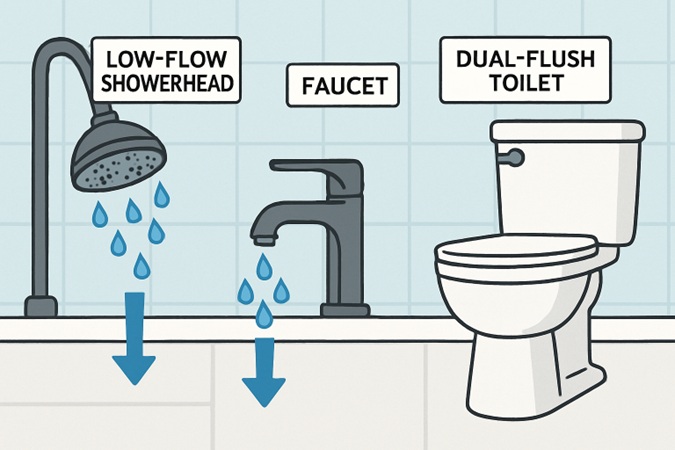
One of the most effective ways to reduce water usage is to upgrade your plumbing fixtures. Older faucets, showerheads, and toilets are often responsible for a significant portion of household water waste. Modern low-flow fixtures are designed to maintain performance while using far less water. For example, low-flow toilets use about 1.28 gallons per flush, compared to the 3.5 to 7 gallons typically used by older models. Over the course of a single year, this switch can save an average family more than 13,000 gallons of water. Showerheads and faucets that meet EPA WaterSense standards also help reduce water waste without sacrificing user experience. Low-flow upgrades can cut water consumption and associated costs by as much as 50% in some households.
Regular Maintenance & Leak Detection
Routine inspections and timely repairs are vital in preventing water waste. Even small leaks, such as a constantly dripping faucet or a silently running toilet, can add up to hundreds of gallons lost every year. Often, leaks go unnoticed until a sudden spike appears on the water bill. Proactive maintenance, including checking under sinks, behind toilets, and around appliances, is crucial for detecting leaks early. Hiring professionals to assess and manage plumbing issues ensures hidden problems, such as leaks within walls or underground, are detected and fixed. This not only saves water but also prevents potential water damage to property.
Smart Technologies In Plumbing
The integration of technology is revolutionizing water management in homes and businesses. Smart plumbing systems, equipped with sensors and Internet of Things (IoT) capabilities, provide real-time monitoring of water flow, pressure, and anomalies. These solutions can alert homeowners to leaks, automate water shut-off in emergencies, and suggest personalized water-saving actions. According to industry statistics, smart plumbing can reduce water waste by up to 25%. As plumbing systems become increasingly digital, property owners gain better control, faster response times, and enhanced water-use data, leading to more efficient behaviors and outcomes.
Efficient Water Heaters
Hot water accounts for a significant portion of household energy and water use. Traditional tank water heaters constantly heat and reheat a large volume of water, leading to unnecessary energy consumption and potential heat loss. Tankless or on-demand water heaters only heat the water as it’s needed, which can reduce energy usage by 30-35% compared to older tank-based systems. These heaters also respond more quickly, ensuring users don’t waste water waiting for it to warm up. Besides environmental benefits, investing in efficient water heaters can provide ongoing monthly savings on utility bills and improve the experience of laundry, bathing, and cleaning.
Eco-Friendly Plumbing Materials
The materials used in plumbing systems also impact water efficiency and environmental sustainability. Modern plumbing increasingly favors PEX (cross-linked polyethylene) pipes over traditional materials like copper or PVC. PEX pipes are easier and less wasteful to install, offering improved insulation that reduces heat loss and condensation. This translates into less wasted water as users wait for the tap to reach the desired temperature. Additionally, eco-friendly materials are often more durable, reducing the risk of leaks and the need for replacement, which further conserves resources over the long term. Green building standards and plumbing codes now encourage or require the use of sustainable materials in new construction and remodeling projects.
Conclusion
Adopting efficient plumbing systems is a straightforward and impactful step toward responsible water use. Upgrading to low-flow fixtures, adhering to a regular maintenance schedule, embracing smart technology, opting for high-efficiency water heaters, and selecting eco-friendly materials all contribute to substantial water conservation. With both environmental and economic benefits, efficient plumbing is a wise investment for any property owner seeking to secure long-term sustainability and resilience against rising water costs and environmental pressures.