Key Takeaways:
- Smart air conditioners incorporate artificial intelligence for adaptive, user-focused comfort and efficiency.
- Geofencing and remote features maximize energy savings and offer hands-off convenience.
- Air quality sensors and advanced filters directly improve indoor air health and well-being.
- Proactive maintenance notifications reduce unexpected breakdowns and extend equipment life.
Home comfort has reached new heights thanks to rapid advancements in smart air conditioning technology. With intuitive features such as AI-driven personalization, air quality monitoring, and predictive maintenance, modern systems not only maintain ideal indoor climates but also contribute to healthier, more energy-efficient living environments. For homeowners seeking reliable installation, Mississauga AC installation services can help ensure a seamless transition to smart climate control.
Traditional air conditioners often required manual adjustment, offering little adaptability or energy savings. Now, homeowners can experience unprecedented control and efficiency, responding to evolving lifestyles and concerns about sustainability and indoor health. By linking with smartphones, smart home hubs, and even weather predictions, these systems mark a transformative leap in how we cool and condition our living spaces.
Artificial Intelligence & Machine Learning Integration
Today’s smart air conditioners employ artificial intelligence (AI) and machine learning to deliver a new standard of personalized comfort. By continuously collecting and analyzing data regarding your habits, preferences, and even external weather conditions, these units optimize settings in real time. For example, a smart unit may recognize when you are typically active or asleep and automatically adjust the temperature, all while identifying energy-saving opportunities.
Some models refine these settings daily, integrating information about occupancy, humidity levels, or time-of-day temperature trends. As a result, the user not only benefits from custom-tailored indoor environments but also lowers overall energy consumption, contributing to both personal savings and environmental responsibility.
Geofencing & Remote Control Capabilities
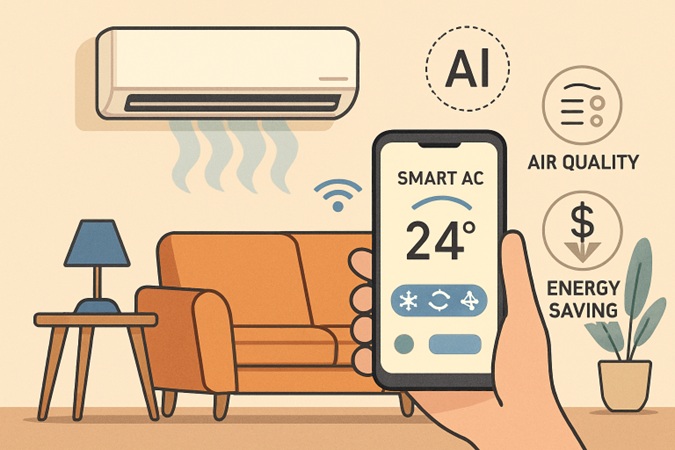
Geofencing technology elevates smart air conditioners by using your smartphone’s location services to detect when you are leaving or nearing your home. When you head out, the system can reduce usage to save power; as you return, it brings the space back to a comfortable temperature, all without you touching a button. This seamless adjustment means the days of accidentally cooling an empty house are over.
The convenience doesn’t stop there. With remote access via dedicated smartphone apps, users can change settings, set schedules, or activate vacation modes from virtually anywhere in the world. This flexibility is especially useful for managing unexpected schedule changes or weather events. Insights from CNET highlight how these smart features can significantly reduce monthly utility bills.
Enhanced Air Quality Monitoring
Besides keeping the temperature just right, many smart air conditioners now feature air quality monitoring and advanced filtration. With sensors that detect airborne pollutants such as pollen, dust, volatile organic compounds (VOCs), smoke, and humidity, homeowners receive real-time updates and automatic adjustments to ensure the healthiest air possible. Systems equipped with UV light can go a step further to eliminate many airborne pathogens.
The U.S. Environmental Protection Agency reports that indoor air may be up to five times more polluted than outdoor air, reinforcing the importance of integrating air quality tech into our daily comfort routines. This technology is not just a luxury; for those with allergies, respiratory issues, or young children at home, it is quickly becoming a necessity. For further insights, the New York Times Wirecutter offers an in-depth look at how improvements in filtration contribute to better home health.
Predictive Maintenance & Energy Efficiency
Predictive maintenance is one of the standout advantages of smart air conditioners. Through Internet of Things (IoT) connectivity, these systems constantly monitor their own performance. They look for early signs of wear or faults, automatically alerting homeowners before a minor issue escalates into a costly repair. This shift from reactive to proactive care can extend the unit’s lifespan and ensure it consistently operates at peak efficiency.
Energy consumption is closely tracked through detailed app interfaces or web dashboards, empowering owners to review past usage and make informed decisions about future savings. A smart system that alerts you when filters need replacing, or service is due, can make all the difference in preventing breakdowns during critical heat waves or cold snaps.
Integration With Smart Home Ecosystems
The ultimate goal for many homeowners is a connected, harmonious smart home. Smart air conditioners are designed to complement other automated systems, such as lighting, window coverings, and security platforms. Through voice assistants or centralized apps, users can adjust multiple aspects of their indoor environment with a single command or pre-set routine.
Imagine a scenario where your system dims the lights and lowers the shades while adjusting the AC as you settle in for a movie night. Or, linked to smart locks and cameras, the air conditioner adjusts settings only when occupants are detected. These interconnected actions streamline energy use and create a tailored, convenient daily experience.
Conclusion
Smart air conditioner systems have ushered in a new era of indoor comfort, combining technological innovation with practical features to enhance energy efficiency, health, and ease of use. As advancements continue to emerge, more households will discover the advantages of these integrated solutions. With features that go beyond basic cooling, the move to smart systems marks a significant step toward healthier, more responsive living environments for families everywhere.