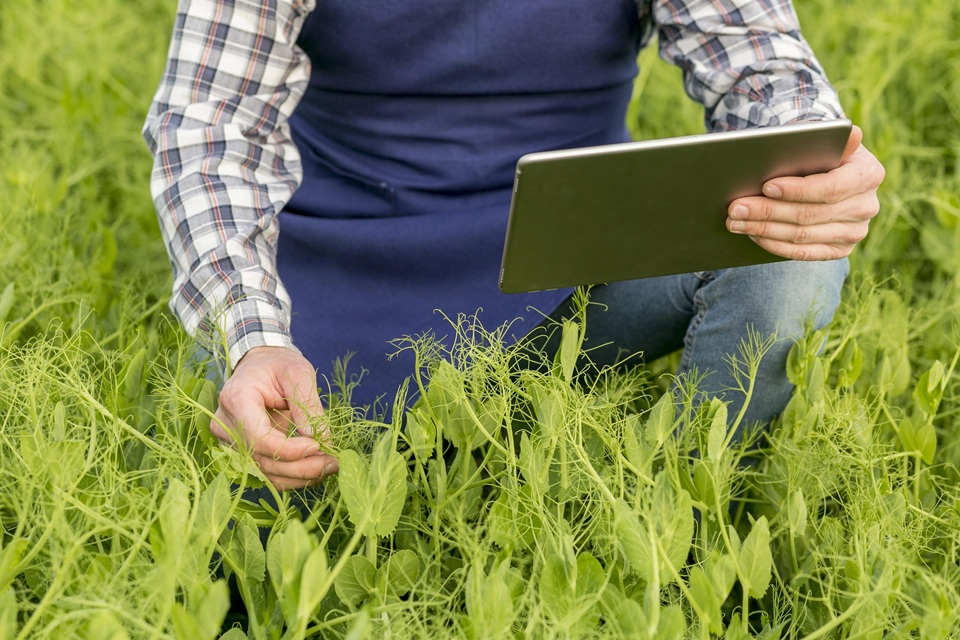
The future of agriculture hinges on ongoing innovation. Today’s farmers incorporate advanced methods and tools to enhance their land, increase yields, and protect natural resources. These shifts, from complex data analysis to integrating trees with fields, offer effective pathways to food security and profitability, particularly for those seeking expert advice from land professionals like Iowa Land Company. Transitioning to modern farmland management means balancing economic efficiency with sustainability. By embracing data-driven decision-making, digital records, and nature-based systems, farmers align with global goals for healthy ecosystems and resilient food production.
As authorities place greater emphasis on conservation and responsible land use, the agricultural sector faces mounting pressure to optimize every acre. Modern strategies aim to reduce resource waste, preserve soil health, and meet rising demand from a growing population.
Recent studies published by the Food and Agriculture Organization of the United Nations highlight the importance of sustainable innovations in preventing land degradation and maintaining productivity for future generations.
Precision Agriculture
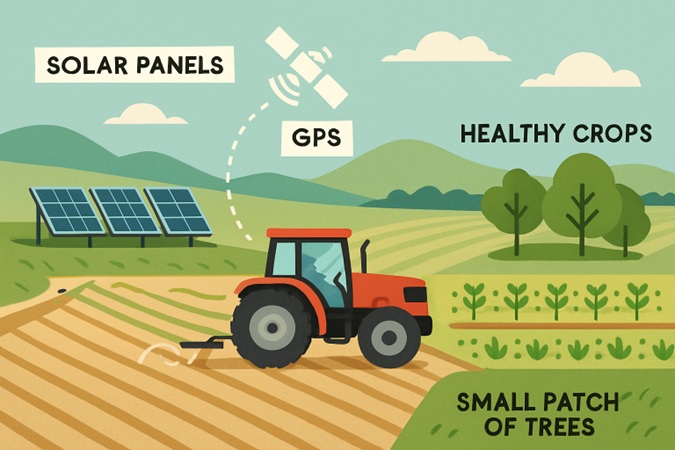
Precision agriculture is transforming how farms operate by using technologies like GPS mapping and variable-rate application equipment. These systems allow farmers to assess the unique characteristics of each field section and deliver inputs only where needed, maximizing efficiency.
Soil sensors, yield monitors, and satellite imagery combine to give producers unparalleled insight into crop performance. According to data from Successful Farming, precision agriculture has evolved into a data-driven powerhouse, resulting in yield bumps and input cost savings for operations large and small.
Benefits Of Precision Agriculture
- Reducing fertilizer and pesticide application lowers environmental risks and production costs.
- Increased accuracy in planting and harvesting improves yields and product quality.
- Efficient water usage through precise irrigation scheduling conserves water and energy.
AI Integration In Farming
Artificial Intelligence (AI) platforms process massive data streams from satellites, field equipment, climate forecasts, and market trends. AI helps farmers interpret this data to make intelligent decisions about when to plant, irrigate, or apply treatments.
Farmers now use AI-powered tools to rapidly identify pest outbreaks, automate machinery, and even forecast market conditions. AI-enhanced imaging reveals crop stressors invisible to the naked eye, allowing for precision inputs and timely responses that reduce losses and boost profits.
Examples Of AI In Action
- Automated pest identification and targeted treatment minimize crop damage and pesticide use.
- Yield forecasting based on current and historical data helps plan and market crops more effectively.
IoT Sensors & Smart Devices
The rise of the Internet of Things (IoT) in agriculture connects devices and sensors all across the farm, from fields to barns. Smart soil probes, weather stations, and livestock trackers stream data directly to farmers’ phones or computers, offering real-time insight into conditions and animal health.
With IoT-enabled controls, farmers can automate irrigation systems and monitor critical factors such as soil moisture and plant nutrition, helping them significantly cut water and fertilizer use while improving yields.
Major Impacts Of IoT
- Greater efficiency in labor and resource allocation through remote monitoring and automation.
- Early detection of equipment failures or environmental stress saves money and reduces downtime.
Drones & Aerial Monitoring
Drone technology gives producers a powerful perspective on their fields, making it easier to scout for disease, nutrient deficiencies, or water stress. Drones capture high-resolution imagery and videos, providing a bird’s-eye view that can uncover issues difficult to detect from ground level.
These devices also improve precision spraying, delivering pesticides or fertilizers only to affected areas and reducing overall chemical usage. Aerial monitoring enables faster, safer, and more frequent crop inspections, leading to earlier problem diagnosis and more confident decision-making.
Agroforestry Practices
Agroforestry combines trees or shrubs with crops and livestock, strengthening biodiversity and ecosystem resilience. By incorporating perennial vegetation, farms benefit from sheltered microclimates, improved soil stability, and additional revenue from timber or fruit.
This integrated method is especially effective in regions facing water scarcity or soil erosion. Agroforestry enhances wildlife habitat, supports pollinator populations, and bolsters long-term productivity through organic matter build-up and reduced erosion.
Agroforestry In Practice
- Tree windbreaks protect crops from storm damage and reduce evaporation.
- Fruit and nut trees diversify farm income streams and stabilize soils.
Blockchain For Land Management
Blockchain platforms are streamlining land management and ownership records. Through secure digital ledgers, transactions such as sales, leases, and easements occur faster and with more transparency, reducing fraud and disputes.
These systems automate contract enforcement and payments, while providing farmers, landowners, and officials with real-time access to verified documentation. Reducing paperwork and administrative delays speeds economic activity and builds trust in rural businesses.
Blockchain’s Role In Agriculture
- Smart contracts simplify lease negotiations and payments, safeguarding all parties.
- Immutable records improve property rights and encourage outside investment.
Sustainable Farming Practices
Farms adopting crop rotation, cover cropping, and reduced tillage preserve soil structure, support beneficial microbes, and store more carbon in the ground. These techniques maintain long-term productivity while helping mitigate the impacts of climate change.
Implementing sustainable strategies, such as rotating crops and planting cover crops in the off-season, reduces dependency on chemical inputs and builds resilience to drought or flooding.
Environmental Benefits
- Lower soil erosion and nutrient runoff into waterways.
- Greater biodiversity and improved on-farm water retention.
Final Thoughts
As technology and ecological awareness advance, so must farmland management strategies. Today’s forward-thinking producers harness everything from artificial intelligence and remote imagery to blockchain-based records and agroforestry. The goal is a system where profitability and environmental stewardship move hand in hand, ensuring that farms continue to feed communities today and for generations to come.