
Key Takeaways:
- High-touch surfaces are germ hotspots and require frequent, thorough cleaning to prevent the transmission of illness.
- Effective cleaning protocols improve productivity and employee morale, and create a positive impression on clients.
- Identifying overlooked surfaces and allocating adequate resources are essential for a safe and hygienic work environment.
Understanding High-Touch Areas
High-touch areas are surfaces and objects commonly handled by multiple people throughout the workday. Examples include door handles, elevator buttons, shared office electronics, and kitchen appliances. These frequently touched surfaces rapidly accumulate bacteria and viruses, making them a focal point for cross-contamination and illness in office settings. For organizations committed to higher standards of cleanliness, expert help from professional teams such as JAN-PRO Cleaning & Disinfecting in Puget Sound can make a significant difference in workplace hygiene.
Continuous contact with high-touch surfaces allows pathogens to be easily transferred between individuals, especially in busy office environments. Inadequate attention to these areas can lead to outbreaks of illness and an uncomfortable workplace atmosphere. Consistent, focused cleaning regimens are vital not only for mitigating health risks but also for fostering a culture of wellness and safety.
Health Implications Of Neglecting High-Touch Surfaces
Neglecting regular cleaning of high-touch areas can create a breeding ground for harmful bacteria and viruses. Research from the Centers for Disease Control and Prevention (CDC) highlights that viruses like influenza can persist on hard surfaces for up to 48 hours, and bacteria such as Staphylococcus aureus can survive even longer. When these hazardous microorganisms linger unchecked, it increases the risk of illness transmission, sick days, and decreased workflow efficiency.
Besides infectious outbreaks, dirty high-touch areas can raise concerns about workplace safety and disrupt daily operations. Staff may become wary of communal equipment, which can reduce collaboration and overall workplace satisfaction.
Proper sanitation is not just about preventing sickness. It also builds trust among employees and clients.
Common High-Touch Areas In Workplaces
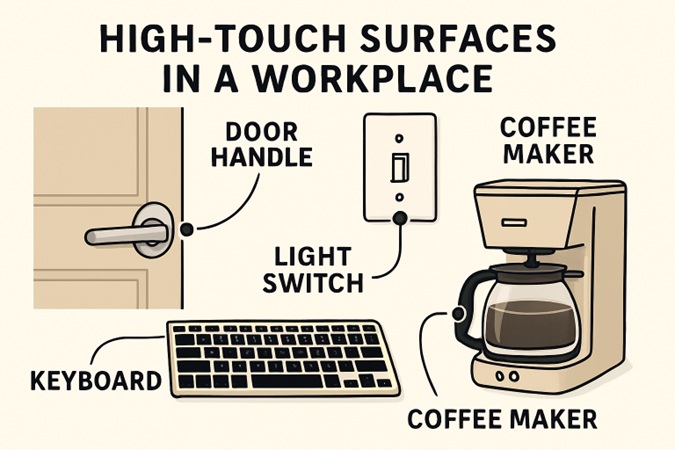
- Door Handles and Light Switches: Nearly every employee or visitor touches these when entering or leaving rooms, making them leading sources of touch-borne contaminants.
- Shared Office Equipment: Keyboards, mice, printers, and telephones are touched by many people, spreading germs between departments and shifts.
- Breakroom Appliances: Items like microwaves, refrigerators, and coffee makers are heavily used daily and are often overlooked in standard cleaning schedules.
- Restroom Fixtures: Faucets, soap and towel dispensers, and toilet flush handles receive high contact yet require thorough cleaning to eliminate bacteria effectively.
Less conspicuous items, such as chair backs, shared pens, and vending machine buttons, can also serve as transmission vectors when not regularly sanitized, making commercial cleaning services essential for maintaining hygiene. According to a study published in Live Science, maintaining strict hygiene over these frequently neglected spots is crucial for curbing the spread of infections in workplaces.
Effective Cleaning Strategies For High-Touch Areas
Protecting staff and visitors in professional environments requires a comprehensive, systematic approach to cleaning high-contact surfaces. Strategies include:
- Regular Disinfection: Schedule high-touch surface cleanings several times per day, especially during flu season or outbreaks.
- Proper Cleaning Techniques: Use EPA-approved disinfectants and adhere to recommended dwell times for maximum germ-killing potential.
- Employee Training: Educate staff about best hygiene practices and the importance of responsible use of shared equipment.
- Use of Microfiber Cloths: Switch from generic cleaning supplies to high-quality microfiber cloths for superior bacteria and particle removal.
Benefits Of Maintaining Clean High-Touch Areas
- Reduced Illness Transmission: Thorough cleaning lowers the presence of contagious microorganisms, directly reducing the risk of absences and the spread of workplace illnesses.
- Enhanced Employee Productivity: Healthier employees can maintain their focus, motivation, and energy, contributing to sustained workplace momentum and output.
- Improved Workplace Morale: Staff feel valued and safer, knowing their environment is protected and that management prioritizes well-being.
- Positive Impression on Clients: Clean offices build confidence and trust, sending a strong message of professionalism to clients and prospective visitors.
Challenges In Cleaning High-Touch Areas
- Overlooking Less Obvious Surfaces: Items such as chair backs and shared office supplies are often missed in standard cleaning checklists.
- Inconsistent Cleaning Schedules: Infrequent or irregular attention can lead to the buildup of pathogens, reducing the effectiveness of cleaning efforts.
- Insufficient Resources: Limited access to proper cleaning supplies or insufficiently trained staff can hinder sanitation outcomes.
Solving these obstacles begins with a culture of accountability and a clear assignment of cleaning responsibilities. Using digital tracking or checklists can help maintain consistency and thoroughness.
Implementing A Comprehensive Cleaning Plan
Establishing and executing a strategic, organization-wide cleaning plan is the cornerstone of a healthier workplace. Key steps include:
- Identifying All High-Touch Areas: Regularly audit spaces to discover frequently touched but commonly missed items.
- Establishing a Cleaning Schedule: Designate cleaning frequencies and responsibilities to ensure all high-traffic points are covered throughout the day.
- Allocating Resources: Invest in high-quality, appropriate cleaning materials, and provide ongoing training for both internal staff and third-party vendors.
- Monitoring and Evaluation: Continuously evaluate cleaning effectiveness through feedback and surface testing, and adapt your plan as needed.
Leadership support, enabled by engaged cleaning professionals and regular communication, keeps workplace health and safety standards high year-round.
Final Thoughts
High-touch areas play a significant role in workplace health. By identifying these critical surfaces, implementing vigilant cleaning routines, and adopting industry best practices, organizations can safeguard their people and productivity. Consistent attention to cleanliness proves a clear commitment to workplace well-being, trust, and excellence for both employees and visitors.