
Key Takeaways:
- The job market increasingly values a blend of technical and soft skills.
- Soft skills like communication and adaptability are crucial for navigating today’s workplace.
- Automation is raising the demand for human-centric skills that cannot be replicated by machines.
- Companies use both technical and soft skills assessments to find the best-fit candidates.
- Focusing on soft skills development leads to better career advancement and workplace cohesion.
The Evolving Job Market Landscape
The job market is evolving rapidly, and the attributes that employers look for are changing just as quickly. Technical expertise, once considered the gold standard for candidate selection, is now only part of the equation. Modern businesses seek individuals who not only possess the right technical prowess but can also excel through solid interpersonal dynamics. Integrating pre-employment assessments into hiring strategies can help employers evaluate the right combination of technical and soft skills, leading to stronger hires overall.
As companies adjust to new challenges, soft skills such as communication, flexibility, and problem-solving have become increasingly important. These human-centric abilities make it easier for organizations to adapt and grow amidst uncertainty. They bridge the gap between technology and teamwork, helping ensure that teams work harmoniously and effectively.
Soft skills encompass a wide range of personal qualities and interpersonal capabilities. While technical skills are learned through education and experience, soft skills are intrinsic traits refined over time. Commonly valued soft skills include:
- Communication: The ability to share ideas clearly and listen actively.
- Adaptability: Willingness to embrace change and respond productively to new situations.
- Teamwork: Collaborating with others to achieve common goals.
- Problem-Solving: Facing challenges calmly and finding practical solutions.
- Emotional Intelligence: Recognizing and managing your own emotions and responding thoughtfully to others.
These qualities play a crucial role in determining how effectively an individual interacts with colleagues and clients, ultimately influencing team success.
Soft Skills In The Age Of Automation
The rise of automation and artificial intelligence is disrupting traditional roles across many industries. Many routine and repetitive duties are now handled by machines, which means the remaining roles increasingly require skills only humans can bring. According to a LinkedIn analysis, companies are seeking talent with creativity, persuasion, and time management, among other soft skills.
Industry thought leaders note that while technical skills may get candidates in the door, soft skills are often what make them thrive as technology reshapes the workplace. Employees who handle complex, ambiguous situations with emotional intelligence and adaptability are more likely to succeed today.
Impact On Career Advancement
Studies show that professionals who develop strong soft skills along with technical expertise tend to outpace their peers in career advancement and compensation. Soft skills open doors to promotions and leadership opportunities because they signify the ability to motivate, manage, and collaborate. These factors are important for long-term professional growth, especially during times of change.
A recent Forbes article highlights that individuals who master both hard and soft skills can expect greater opportunities in a digital-first work environment.
Employer Perspectives On Soft Skills
Many hiring managers now prioritize soft skills alongside technical knowledge in their candidate evaluations. Surveys indicate that as many as 84 percent of respondents believe soft skills are crucial for new hires to thrive. Cohesion, effective communication, and adaptability drive productivity and foster positive workplace cultures.
In fact, when soft skills are lacking, teams may struggle to collaborate or adapt to industry shifts, leading to missed opportunities and inefficiency. Employers are therefore shifting their hiring strategies to better assess and develop these attributes in current and potential staff.
Integrating Soft Skills Assessments Into Recruitment
Many organizations have adopted specialized assessments to measure soft skills early in the hiring process. Through role-specific scenarios and behavioral interviews, employers gain a clearer understanding of how candidates might function within a team or adapt to change. Incorporating these assessments leads to better-informed hiring decisions, reducing turnover and improving employee fit.
For those hiring in the tech sector, combining technical evaluations with soft skills assessments helps to ensure new employees do more than just meet basic qualifications. Instead, it supports building well-rounded teams capable of thriving amidst challenge and disruption.
Balancing Technical & Soft Skills
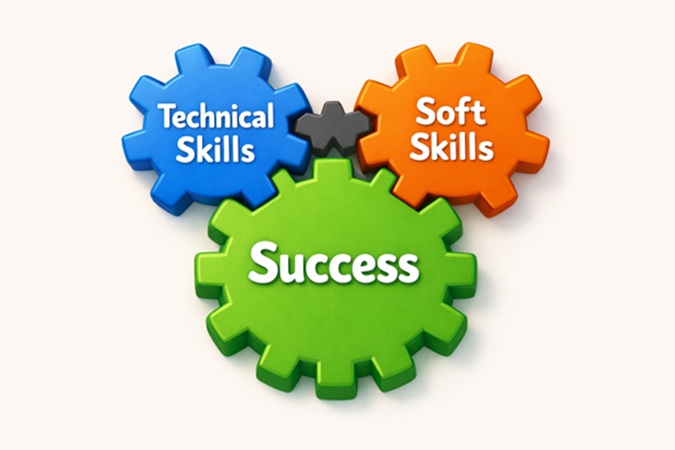
The best candidates and employees offer a blend of technical acumen and personal effectiveness. Both hard and soft skills are essential for innovation, adaptation, and meaningful contribution to strategic goals. For organizations, striking the right balance means deploying training that targets both areas, while individuals should invest in lifelong learning and personal growth beyond core competencies.
This holistic approach creates a workforce capable of navigating complexity, fostering innovation, and supporting growth far into the future. Developing both types of skills gives professionals an edge while also supporting healthier organizational cultures.
Final Thoughts
In today’s rapidly changing employment landscape, the combination of technical expertise and robust soft skills defines the ideal candidate profile. Both companies and individuals benefit from placing equal weight on these areas. By fostering and valuing soft skills at every stage, recruitment, career development, and leadership, organizations can thrive, and professionals can position themselves for sustained success.