
Defining Championship Golf In The Modern Era
When we talk about “championship golf,” we’re referring to more than just a beautiful course; we’re describing a meticulously designed and maintained layout capable of testing the skills of professional golfers and providing a challenging, rewarding experience for amateurs. It’s a standard of excellence that elevates a round from a casual game to an unforgettable event. These courses are often the venues for prestigious tournaments, reflecting their superior design, conditioning, and overall playability.
A championship course typically boasts a significant length, often exceeding 7,000 yards from the back tees, coupled with a high slope and course rating, indicating its inherent difficulty. The design incorporates strategic elements that demand precision, thoughtful shot-making, and a keen understanding of course management. From undulating fairways to strategically placed hazards, every hole presents a unique challenge. For those who appreciate the pinnacle of golf course architecture and maintenance, seeking out a true championship course, such as those found throughout the Texas Hill Country, offers an unparalleled golfing adventure. For a prime example of such a course, consider the experience offered by Plum Creek championship golf, known for its challenging layout and pristine conditions.

The Anatomy Of A Championship Golf Course
The characteristics that define a championship golf course are numerous and intricate. The United States Golf Association (USGA) provides guidelines that influence many aspects of course design and setup for competitive play. Key elements include:
- Course Length and Par: Championship courses are typically long, often stretching over 7,000 yards, with a par usually set at 72. This length necessitates powerful drives and precise long-iron play.
- Strategic Design: Architects integrate natural topography with man-made features to create strategic challenges. This includes doglegs, elevation changes, and varied hole layouts that require players to think several shots ahead.
- Bunker Placement: Bunkers are not merely obstacles; they are strategically positioned to guard landing areas, challenge aggressive lines, and protect greens, forcing players to choose between risk and reward.
- Water Hazards: Lakes, ponds, and streams are often incorporated to enhance aesthetics and increase difficulty, demanding accuracy and penalizing errant shots.
- Green Complexity: Greens on championship courses are known for their speed, undulations, and multiple tiers. Pin placements can dramatically alter the difficulty of a hole, requiring delicate touch and expert reading of breaks.
- Rough and Fairway Design: The rough is often maintained at a challenging height, punishing shots that stray from the fairway. Fairways themselves can be narrow, sloped, or feature hazards that demand precision off the tee.
- Maintenance Standards: Beyond design, the immaculate conditioning of a championship course is paramount. Pristine fairways, perfectly manicured greens, and well-maintained bunkers are standard, ensuring consistent playability.
These elements combine to create an environment where every shot matters, and the golfer’s skill, strategy, and mental fortitude are thoroughly tested.
Strategies For Securing The Best Discount Golf Tee Times
Playing championship courses doesn’t always have to break the bank. With a little strategic planning and knowledge of available resources, golfers can consistently find excellent deals on tee times. The key lies in understanding how golf courses manage their inventory and how various platforms leverage that to offer discounts. We’ve seen a significant evolution in how golfers access these deals, moving from traditional coupon books to sophisticated digital platforms and memberships.
One of the most straightforward ways to find discounted rates is by booking during off-peak hours. This often includes twilight rates (later in the afternoon), early morning slots, or mid-week bookings when courses are less busy. Many courses, including those offering competitive Golf Rates, adjust their pricing dynamically based on demand, so flexibility with your playing schedule can lead to substantial savings.

Another effective strategy involves leveraging “hot deals” offered by various online booking platforms. These are typically last-minute tee times that courses want to fill, often available at a significant discount. While they might require flexibility in terms of time and course, the savings can be considerable.
However, for frequent golfers, membership-based programs often present the most consistent and significant savings. These programs operate on an annual subscription model, providing access to exclusive member-only pricing. Below is a comparison to help illustrate the differences:
Feature Hot Deals (e.g., via booking platforms) Membership-Based Passes (e.g., TeeTime Golf Pass model) Booking Method Online via platform, often last-minute. Annual pass purchase, then book directly with course or via app at member rate. Flexibility High for specific tee times, but limited choice of courses/times for deals. High for course selection within network, flexible booking directly with course. Savings Significant per round, but inconsistent. Consistent, member-only pricing, often up to 50% off green fees. Cost Per-round payment, sometimes with booking fees. Annual membership fee, then member rate per round (no booking fees). Commitment None, pay as you play. Annual fee, encourages more play to maximize value. Hidden Costs Some platforms may charge booking fees. Generally no booking fees; pay member rate at course. Guarantees Varies by platform/course. Often includes money-back guarantees for unused passes. Typical User Casual golfers, spontaneous players, budget-conscious. Frequent golfers, those seeking consistent savings, loyal to specific regions/networks. Finding the Best Discount Golf Tee Times
To truly master the art of securing the best discount golf tee times, consider these actionable steps:
- Embrace Last-Minute Bookings: Many online platforms specialize in “hot deals” for tee times available within 24-72 hours. Courses use these to fill empty slots, and the savings can be substantial. Keep an eye on these sections of major booking sites.
- Utilize Twilight and Mid-Week Rates: As mentioned, playing outside of peak weekend morning hours almost always results in lower prices. Twilight rates allow for a full or partial round at a reduced cost, while mid-week play offers a quieter course and often better deals.
- Look for Verified Deals: Some membership programs pride themselves on offering “verified deals” directly negotiated with courses. This means the discount is guaranteed and not subject to last-minute changes or hidden fees. For example, some membership models, trusted by over a million golfers, offer access to member-only pricing at more than 1,100 courses, ensuring transparent savings of up to 50% on green fees.
- Consider Annual Memberships: For dedicated golfers, an annual pass can be incredibly cost-effective. These passes, like the model offered by TeeTime Golf Pass, provide access to a network of courses where you pay a member-only rate directly at the pro shop. This model eliminates booking fees and often pays for itself within just a couple of rounds, with members typically saving an average of $500 or more per season. The Super Pass, for instance, provides access to over 1,175 courses across various regions for a single annual fee, representing a significant return on investment for frequent players.
- Sign Up for Email Alerts: Many courses and booking platforms offer newsletters that announce special promotions, flash sales, and exclusive discounts directly to your inbox. This is an easy way to stay informed about upcoming deals.
- Check Course Websites Directly: While booking platforms are convenient, always check the course’s official website. Sometimes, courses offer exclusive promotions or packages that aren’t available elsewhere.
By combining these strategies, golfers can significantly reduce their expenses while still enjoying the challenge and beauty of championship-level golf.
Premier Destinations For Championship Golfing In The Texas Hill Country
The Texas Hill Country is a golfing paradise, renowned for its breathtaking landscapes, rolling terrain, and an impressive array of championship courses. The region’s unique topography, characterized by limestone cliffs, oak-studded hills, and winding rivers, provides a stunning backdrop and natural challenges for course designers. From the bustling metropolitan areas to serene, secluded retreats, the Hill Country offers diverse golfing experiences for every skill level and preference.
Cities like Austin, San Antonio, San Marcos, and New Braunfels serve as vibrant hubs for golf enthusiasts, each boasting multiple high-caliber courses. Whether you’re seeking a challenging round with panoramic views or a more relaxed game amidst nature, the Hill Country delivers. For those exploring the capital city, finding excellent Austin, TX Golf Courses is a breeze. Further south, golf options abound, with numerous San Marcos, TX Tee Times and fantastic courses available in New Braunfels, TX Tee Times. The variety ensures that every golfer can find their ideal championship experience.

Why The Hill Country Is A Hub For Championship Golf
The appeal of the Texas Hill Country as a premier golfing destination stems from several key factors that make it uniquely suited for championship-level play:
- Dramatic Elevation Changes: The undulating hills provide natural elevation changes, creating visually stunning holes and requiring golfers to account for uphill and downhill lies, adding a layer of complexity to club selection and shot execution.
- Natural Terrain Integration: Course architects in the Hill Country often masterfully integrate the existing landscape into their designs. This means working with natural limestone outcroppings, mature oak trees, and winding creeks, which serve as both aesthetic features and strategic hazards.
- Diverse Course Designs: The region hosts a wide range of championship course designs, from traditional layouts that evoke classic golf architecture to modern, resort-style courses with expansive features. This diversity ensures that golfers can experience different styles of play within a relatively concentrated area.
- Year-Round Playability: With generally mild winters, the Texas Hill Country offers excellent golfing conditions for much of the year, making it an attractive destination for golfers seeking to extend their playing season.
- Accessibility and Amenities: Beyond the courses themselves, the Hill Country provides a wealth of amenities, including luxury resorts, fine dining, and cultural attractions, making it an ideal destination for golf vacations.
- Abundance of Quality Courses: The sheer number of high-quality courses, many designed by renowned architects, solidifies the Hill Country’s reputation. Golfers can easily find a fantastic selection of Texas Golf Courses, including some of the Best Golf Courses in San Antonio, TX, offering championship-level challenges and experiences.
The combination of natural beauty, challenging design, and a vibrant golf culture makes the Texas Hill Country an essential destination for anyone serious about championship golf.
The Economics Of Golf Memberships & Digital Passes
In the pursuit of the best discount golf tee times, understanding the economic models behind various booking options is crucial. While “hot deals” offer sporadic savings, membership-based passes and digital platforms provide a more consistent and predictable path to reduced green fees, especially for frequent players. These models are designed to offer significant value, often turning an initial investment into substantial annual savings.
Consider the model of an annual golf pass, which has gained considerable traction among savvy golfers. These passes operate on a simple premise: pay a one-time annual fee, and in return, gain access to member-only pricing at a network of participating courses. This approach differs fundamentally from traditional per-round booking by eliminating booking fees and offering verified discounts directly at the course.
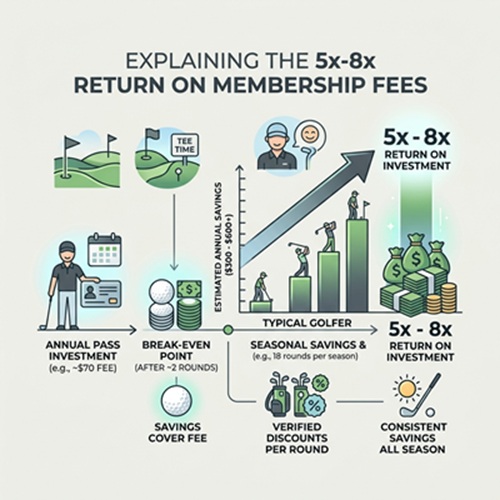
The financial benefits can be quite compelling. For instance, many members report average annual savings exceeding $500. The pass often pays for itself rapidly, with some individuals breaking even after just two rounds of golf. This means that if a regional pass costs around $65-$70, and a golfer saves an average of $35 per round, the pass essentially becomes “free” after just two plays. For those who play regularly, say 18 rounds per season, the estimated annual savings can range from $324 to $576, representing an impressive 5x to 8.9x return on the initial pass investment. This makes the decision to invest in such a pass a clear economic win for dedicated golfers looking to secure Tee Times at a lower cost.
Regional Savings & Break-Even Points
The structure of these digital golf passes often includes both regional and “Super Pass” options, catering to different playing habits and travel patterns.
- Regional Passes: These are typically more affordable, ranging from $39.99 to $69.99 per year, and provide access to a concentrated network of courses within a specific state or geographic area. For example, a Mid-Atlantic pass might cover over 400 courses, offering extensive local options. This is ideal for golfers who primarily play within their home region.
- Super Pass: For golfers who travel frequently or desire access to the widest possible network, a Super Pass might be available for around $99.99 per year. This pass often grants access to over 1,100 courses across multiple states and even international locations (like parts of Canada), maximizing flexibility and potential savings for the avid golf traveler.
The “break-even” point is a critical metric for evaluating these passes. As highlighted by user testimonials and program statistics, most members achieve this after their second round. This rapid return on investment is a strong incentive. Furthermore, a significant advantage of these membership models is the absence of booking fees or hidden charges. You pay once for the annual membership, and then simply pay the member rate directly to the course when you check in. This transparency and predictability are highly valued by golfers.
To instill confidence, many reputable pass programs offer guarantees. Unused passes purchased directly from the provider often come with a 30-day full refund policy, no questions asked. Even if a pass has been used and a member isn’t satisfied, many providers commit to working with the customer to “make it right,” demonstrating a strong commitment to value and customer satisfaction. This combination of significant savings, transparent pricing, and customer-friendly policies makes digital golf passes a highly attractive option for securing the best discount golf tee times.
Frequently Asked Questions About Championship Golf
Navigating championship golf and discount tee times can sometimes bring up questions. Here, we address some of the most common inquiries to provide clarity and help you make informed decisions.
What defines a course as “championship” level?
A golf course is typically considered “championship” level based on several key factors. Primarily, it’s about the design and difficulty, meaning the course is strategically laid out to test the skills of highly proficient golfers, often meeting professional tournament standards. This includes significant length (often 7,000+ yards from the back tees), challenging bunker and water hazard placements, complex green undulations, and narrow fairways. Beyond design, course conditioning and maintenance are paramount; championship courses are meticulously maintained to ensure pristine playing surfaces. Finally, a championship course often has a high slope and course rating from the USGA, indicating its inherent challenge relative to a scratch golfer.
How much can I save with a digital golf pass?
The savings potential with a digital golf pass can be substantial, particularly for regular golfers. Based on available data, members using these passes often save an average of $500 or more per season. For an annual pass costing around $65-$100, the pass typically pays for itself within just two rounds of golf. For example, if you save an average of $35 per round, a $65 pass is recouped after two plays. Over a season of 18 rounds, golfers can see an estimated return of 5 to nearly 9 times their initial investment, translating to hundreds of dollars in savings. The more you play within the network of participating courses, the more you save.
Are there hidden fees when booking discount tee times?
This is a crucial question, and the answer depends on the booking method.
- Membership-based passes (like the model offered by TeeTime Golf Pass) are generally transparent: you pay an annual membership fee, and then you pay the discounted, member-only rate directly at the golf course. These models explicitly state “no booking fees, no per-round charges, no hidden costs.”
- Online booking platforms that offer “hot deals” can sometimes have booking fees or service charges added at checkout. While the initial advertised discount might seem attractive, read the fine print and proceed to the final checkout screen to see the total cost, including any additional fees.
- Booking directly with a course usually means no hidden fees beyond the advertised green fee, though some courses might add a small online booking convenience fee.
Always confirm the total price before finalizing your reservation to avoid any surprises.
Conclusion
The pursuit of championship golf, especially in a region as stunning as the Texas Hill Country, is a passion shared by many. We’ve explored how the intricate design and pristine conditions define a championship course, setting the stage for an exceptional golfing experience. More importantly, we’ve unveiled that this elite level of play doesn’t have to be prohibitively expensive.
By strategically utilizing discount booking methods, whether through last-minute “hot deals,” leveraging off-peak hours, or investing in annual digital golf passes, golfers can significantly reduce their expenses. The economics of memberships, with their rapid break-even points and potential for hundreds of dollars in annual savings, offer a compelling argument for frequent players.
The Texas Hill Country, with its dramatic landscapes and diverse array of courses in areas like Austin, San Marcos, and New Braunfels, stands out as a premier destination for championship golf. Its natural beauty and challenging layouts provide the perfect backdrop for memorable rounds.
Securing the best discount golf tee times is about informed decision-making and leveraging the tools available in today’s digital landscape. By understanding the options and applying smart strategies, you can optimize your golfing budget, play more rounds on championship courses, and fully embrace the unparalleled beauty and challenge of golf in the Texas Hill Country.