The Foundation: Building A Cohesive Digital Marketing Strategy
A digital marketing strategy is more than just a collection of individual tactics; it’s a carefully constructed execution plan designed to achieve specific business objectives. While many businesses engage in digital activities, a staggering 45% of them don’t have a clear and defined digital marketing strategy. This often leads to scattered efforts, wasted resources, and missed opportunities.
A robust strategy outlines the particular efforts and actions we should take to communicate with our audience across various channels, including our website, email lists, and social media platforms. It ensures that every digital touchpoint serves a purpose, guiding prospects through a defined journey that leads to becoming loyal customers.
Why A Documented Strategy Is Non-Negotiable
Having a documented digital marketing strategy provides invaluable clarity and focus. It aligns our team members around common goals, ensuring everyone is working towards the same vision. This structured approach facilitates efficient resource allocation, preventing us from spreading our efforts too thin or investing in initiatives that don’t contribute to our overarching objectives.
A proactive strategy allows us to anticipate market shifts and consumer needs, rather than react to them. It provides a framework for measurable progress, enabling us to track performance, identify what works (and what doesn’t), and make data-driven decisions. A well-defined strategy helps us avoid wasted budget and establishes a long-term vision for sustainable growth.
Step 1: Defining Your Target Audience With Buyer Personas
Before launching any marketing initiative, we must deeply understand who we are trying to reach. This goes beyond basic demographics. We need to dig into psychographics, understanding their motivations, values, interests, and lifestyles. What are their pain points? What challenges do they face that our product or service can solve? What are their goals and aspirations?
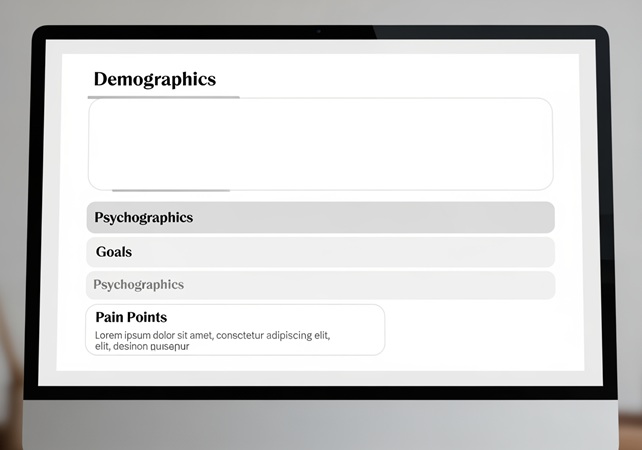
Creating detailed buyer personas – semi-fictional representations of our ideal customers – helps us answer these questions. These profiles should include information such as job titles, demographics, behavior patterns, and motivations. We can gather this information through various sources, including customer interviews, website analytics, and social media insights. Tools like Google Surveys and Facebook Audience Insights can be invaluable in compiling this data, allowing us to build rich, actionable profiles that inform our messaging and channel selection.
Step 2: Setting SMART Goals & Identifying KPIs
Once we know who we’re targeting, we need to define what we want to achieve. Our goals should always be SMART: Specific, Measurable, Achievable, Relevant, and Time-bound. For instance, instead of “increase website traffic,” a SMART goal might be “increase organic website traffic by 20% within the next six months.”
Aligning our digital marketing goals with our broader business objectives is crucial. If our business aims to increase revenue by 15% this year, our marketing goals should directly contribute to that, perhaps by focusing on lead generation or conversion rate optimization.
To track our progress, we identify Key Performance Indicators (KPIs). These are the measurable outcomes that indicate whether we are progressing toward our goals. For a goal of increasing organic traffic, relevant KPIs might include keyword rankings, organic search visibility, and the number of organic sessions. For lead generation, we might track the number of form submissions or marketing-qualified leads (MQLs). Conversion rate goals focus on metrics such as sales or sign-ups, while customer lifetime value (CLV) helps us understand the long-term impact of our customer acquisition efforts.
Step 3: Auditing Your Existing Channels & Competitors
Before developing new strategies, it is essential to understand our current digital footprint and how we compare to the competition. This involves a thorough audit of our owned, earned, and paid media channels.
We examine our website’s performance using tools like Google Analytics to assess traffic sources, user behavior, and conversion paths. We review our social media metrics to understand engagement rates, reach, and audience demographics. Our SEO rankings for key terms provide insights into our organic search visibility.
Next, we turn our attention to the competitive landscape. Tools like SimilarWeb and SEMrush’s Traffic Analytics allow us to analyze competitor strategies, identify their top-performing channels, and uncover potential content gaps they might be missing. This analysis helps us pinpoint competitor weaknesses we can exploit and opportunities where we can differentiate ourselves. Understanding how competitors utilize their digital presence to deliver comprehensive digital marketing solutions enables us to refine our own approach and carve out a unique space in the market.
Core Digital Marketing Strategies For Sustainable Growth
At the heart of effective digital marketing growth strategies lies the inbound methodology: attracting, engaging, and delighting customers. This approach prioritizes providing value, building trust and credibility over time, and delivering a seamless omnichannel experience. Instead of interrupting prospects with unwanted messages, we draw them in with helpful, relevant content and personalized interactions.
Search Engine Optimization (SEO): The Long-Term Asset
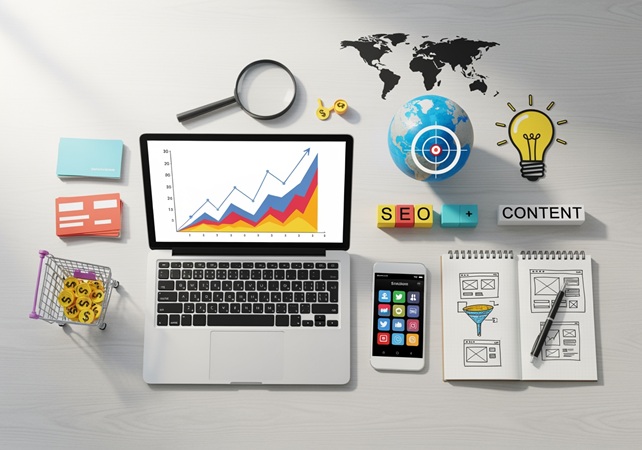
Search Engine Optimization (SEO) is the process of improving our website’s visibility in search engine results pages (SERPs) when people search for products or services related to our business. It’s a long-term investment that yields compounding returns, bringing consistent organic traffic to our site.
SEO encompasses several key areas:
- On-page SEO: Optimizing individual web pages with relevant keywords, high-quality content, appropriate headings, and meta descriptions.
- Off-page SEO: Building authority and credibility through backlinks from other reputable websites.
- Technical SEO: Ensuring our website’s backend is optimized for search engine crawlers, including site speed, mobile-friendliness, and site structure.
Effective SEO begins with thorough keyword research to understand the terms our target audience uses. We also consider user intent – what are they hoping to achieve with their search? For local businesses, Local SEO is critical, as it optimizes our online presence for geographic-specific searches (e.g., “best coffee shop near me”). Resources like Moz’s “Beginner’s Guide to SEO” offer excellent foundational knowledge to build authority in our niche.
Pay-Per-Click (PPC) Advertising: Driving Targeted Traffic
While SEO builds long-term organic visibility, Pay-Per-Click (PPC) advertising offers immediate visibility and targeted traffic. With PPC, we pay a fee each time our ad is clicked, allowing us to appear at the top of search results or on relevant websites and social media feeds.
Platforms like Google AdWords allow us to bid on specific keywords, ensuring our ads are shown to users actively searching for our products or services. Social media platforms also offer powerful PPC options, enabling precise targeting based on demographics, interests, and behaviors.
PPC provides significant control over our budget and targeting options. We can specify geographic areas to display our ads, which is particularly beneficial for brick-and-mortar businesses looking to attract local customers. A/B testing different ad copies and landing pages is crucial for optimizing performance and maximizing our return on investment (ROI). PPC is an effective way to drive qualified leads and conversions quickly.
The Role Of Content In Your Digital Marketing Strategies
Content is the lifeblood that fuels all other digital marketing channels. It’s how we demonstrate our expertise, build relationships, and guide our audience through the buyer’s journey. Without valuable content, our SEO efforts would have nothing to optimize, our social media would have nothing to share, and our email campaigns would have nothing to say.
Content comes in many forms:
- Blog posts: Establish thought leadership and attract organic search traffic.
- Videos: Engage audiences, explain complex topics, and build brand personality.
- Ebooks and whitepapers: Offer in-depth knowledge in exchange for lead generation.
- Infographics: Present complex data in an easily digestible and shareable format.
- Podcasts: Reach audiences who prefer audio content and build a loyal following.
Unlike short-term advertising, content marketing is a long-term strategy. Over time, we build a library of valuable resources that continues to attract users and generate leads. Organizations like Adobe Experience Cloud emphasize that content marketing fosters sustainable relationships, resulting in long-term sales rather than just single transactions.
Amplifying Reach & Engagement
Beyond attracting initial interest, digital marketing excels at building relationships at scale. It provides direct communication channels, fosters a sense of community, increases brand loyalty, and drives repeat business.
Social Media Marketing: Building Communities & Brand Awareness

Social media marketing encompasses all the activities a business undertakes through social media channels to connect with its audience. It’s a powerful tool for brand awareness, engagement, and driving traffic. According to Statista, 86% of industry professionals stated that increased exposure to their company was the leading benefit of social media marketing in 2023, with 76% claiming an increase in website traffic was the most significant advantage.
Choosing the right platforms is key; we need to be where our target audience spends their time. Developing a content calendar helps us post consistently, and engaging with comments and messages fosters a sense of community. Leveraging user-generated content (UGC) can amplify our reach and build authenticity. Social listening – monitoring what people say about our brand and industry online – allows us to respond to feedback, address concerns, and identify trends. With almost 3.5 billion people using social media, the potential for connection is immense.
Email Marketing: Nurturing Leads & Driving Conversions
Despite the rise of new channels, email marketing remains one of the most effective digital marketing strategies, boasting an impressive average return on investment (ROI) of $36 for every $1 invested. It’s a direct, personalized channel for nurturing leads and driving conversions.
Effective email marketing involves:
- List segmentation: Dividing our audience into groups based on interests, behavior, or demographics to send highly relevant messages.
- Personalization: Addressing subscribers by name and tailoring content to their preferences.
- Automation: Setting up automated email sequences (drip campaigns) for onboarding, lead nurturing, or abandoned carts.
- Newsletters and promotional emails: Keeping subscribers informed and offering exclusive deals.
Companies like Constant Contact provide tools to optimize email campaigns. At the same time, insights from the American Marketing Association (AMA) highlight the importance of understanding audience outreach and analyzing customer interactions to make strategic decisions.
Affiliate & Influencer Marketing: Leveraging Partnerships
Affiliate and influencer marketing leverage trusted voices to promote our products or services. The affiliate marketing industry alone was estimated to be a $13 billion industry in 2023.
- Affiliate marketing is a performance-based strategy where we pay a commission to affiliates for driving sales or leads. This can include bloggers, review sites, or coupon sites.
- Influencer marketing involves partnering with individuals who have a dedicated following on social media or other platforms. These influencers promote our brand to their audience, building credibility through their trusted recommendations.
This approach is ideal for targeting niche audiences and establishing brand trust. We might work with micro-influencers (those with 10,000-99,999 followers) who often have higher engagement rates and a more authentic connection with their audience, or macro-influencers for broader reach. Transparency and transparent disclosure of sponsored content are crucial for maintaining trust. Tracking affiliate links and unique discount codes enables us to measure the ROI of these partnerships accurately.
Integrating & Measuring Your Efforts For Maximum ROI
The true power of digital marketing lies in the synergy between its various channels. When different levers work together, they create a seamless customer experience, driving greater impact than any single strategy could achieve alone. Data-driven decision-making is paramount, enabling us to optimize performance and demonstrate the tangible value of our marketing efforts to the business.
How Different Digital Marketing Levers Work Together
Consider how these strategies can intertwine:
- Content acts as the foundation, fueling our SEO efforts by providing valuable, keyword-rich pages that rank in search engines. This duplicate content is then shared across social media, increasing its reach and driving traffic.
- PPC advertising can drive immediate traffic to our best-performing content or landing pages, providing a quick boost while SEO builds momentum.
- Email marketing nurtures leads acquired through SEO or PPC, moving them further down the sales funnel with personalized communication.
- Social media not only promotes our content but also helps build our email list by encouraging sign-ups for newsletters or exclusive offers.
This holistic approach ensures that each marketing activity supports and amplifies others, creating a cohesive and powerful overall strategy.
Key Metrics For Measuring Success
To understand the effectiveness of our integrated strategies, we must continuously measure key metrics.
Strategy Key Performance Indicators (KPIs) SEO Organic Traffic, Keyword Rankings, Search Visibility, Bounce Rate PPC Click-Through Rate (CTR), Cost Per Click (CPC), Conversion Rate Social Media Engagement Rate, Reach, Follower Growth, Referral Traffic Email Open Rate, Click-Through Rate, Conversion Rate, Unsubscribe Rate
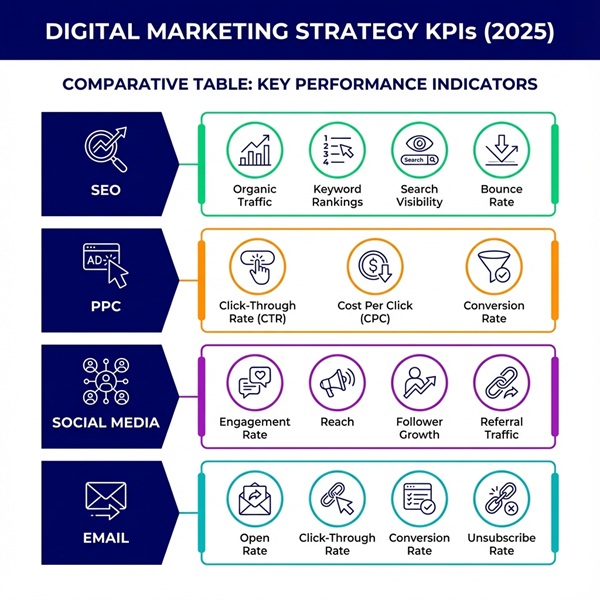
Beyond these channel-specific metrics, we also look at overarching business KPIs:
- Website traffic: Overall visitors, unique visitors, and traffic sources.
- Conversion rates: The percentage of visitors who complete a desired action (e.g., purchase, sign-up).
- Cost Per Acquisition (CPA): The cost of acquiring a new customer.
- Customer Lifetime Value (CLV): The total revenue a customer is expected to generate over their relationship with our business.
- Return on Investment (ROI): The financial gain from our marketing spend.
Tools like Google Analytics are indispensable for tracking these metrics, providing a comprehensive view of our digital performance.
Implementing Data-Driven Digital Marketing Strategies
Implementing data-driven digital marketing strategies involves a continuous cycle of analysis and optimization. We use attribution modeling to understand the customer path to conversion, crediting different touchpoints along the journey. This helps us identify which channels are most influential at various stages.
By analyzing our analytics, we can pinpoint high-performing channels and campaigns, allowing us to reallocate our budget to maximize impact. Conversely, underperforming areas can be optimized or paused for improvement. This continuous optimization cycle, informed by real-time data, is critical for achieving and sustaining growth. For deeper insights into leveraging data for strategic advantage, exploring resources on Data-driven digital marketing strategies can provide valuable guidance.
Adapting To The Future: Evolving Your Strategy
The digital landscape is constantly evolving. Consumer privacy concerns, such as the phase-out of third-party cookies and regulations like GDPR, are reshaping how we collect and use data. Mobile-first indexing means our websites must be optimized for mobile devices above all else. Voice search optimization is becoming increasingly important as more people use virtual assistants. The ability to adapt and be agile is no longer a luxury but a necessity for digital marketers.
Staying Ahead Of Market Trends & Consumer Behavior
To remain competitive, we must actively monitor industry publications, subscribe to newsletters like ICYMI by Lia Haberman for social media updates, and engage in social listening to stay informed. Analyzing competitor innovations can provide valuable insights, and regularly surveying our audience helps us understand their evolving needs and preferences. Being prepared to pivot our strategies based on these insights is crucial. The digital world rewards those who are agile and willing to take calculated risks.
The Growing Role Of AI In Digital Marketing
Artificial intelligence (AI) is rapidly changing digital marketing. It enables personalization at scale, delivering highly relevant content and offers to individual users. Predictive analytics powered by AI helps us forecast customer behavior and optimize campaigns. Chatbots and AI-driven customer service tools enhance the user experience and offer instant support. AI also assists with content generation, ad campaign optimization, and data analysis, streamlining processes and improving efficiency.
While AI is a powerful tool, it’s essential to view it as an assistant rather than a replacement for human creativity and strategic thinking. As 1 in 2 marketers (50.17%) see AI working in conjunction with marketers, it’s clear that human oversight and strategic direction remain essential. Exploring resources on AI marketing strategies can help us understand how to integrate these technologies into our workflows effectively. The future of digital marketing is undoubtedly a collaborative effort between human ingenuity and artificial intelligence.
Frequently Asked Questions About Digital Marketing Strategies
What is the most effective digital marketing strategy?
There is no single “best” digital marketing strategy that fits all businesses. The most effective approach is a custom mix tailored to your specific business goals, target audience, and budget. While SEO and content marketing are foundational for long-term organic growth and authority, PPC advertising can deliver immediate, targeted results. A comprehensive strategy often integrates several channels, leveraging their individual strengths to create a synergistic effect.
How much should a business budget for digital marketing?
Digital marketing budgets vary significantly depending on a business’s size, industry, and growth objectives. Standard models suggest allocating a percentage of overall revenue, typically ranging from 5% to 15%. Startups with limited funds may focus on low-cost strategies, such as organic social media and content marketing. Established businesses may invest more heavily in paid channels, such as PPC and paid social. The key is to track the ROI of each investment and scale what works, reallocating funds to the most effective channels.
How long does it take to see results from digital marketing?
The timeline for seeing results from digital marketing varies significantly by strategy:
- PPC and paid social campaigns can generate traffic and leads within 24 to 48 hours of launch.
- Email marketing to existing lists often produces results within days.
- Social media marketing builds momentum over 1 to 3 months as consistent posting increases followers and engagement.
- SEO is a long-term investment, typically taking 3 to 6 months to see meaningful organic traffic increases and 6 to 12 months to achieve top rankings for competitive keywords.
- Content marketing also shows compounding returns over time.
Consistency and patience are crucial for all digital marketing efforts, especially for strategies focused on organic growth.
Conclusion
In today’s hyper-connected world, a well-defined and adaptable digital marketing strategy is not just an advantage—it’s a necessity for driving business growth. We’ve explored the critical components of building such a strategy, from understanding our audience and setting SMART goals to leveraging core channels like SEO, PPC, content, social media, and email.
The key takeaways are clear: know your audience intimately, set clear and measurable goals, choose the right mix of strategies, measure everything, and be prepared to adapt. Digital marketing is a marathon, not a sprint, demanding continuous learning and optimization. By embracing a well-planned, integrated, and evolving digital marketing strategy, we can navigate through the complexities of the online world and pave the way to sustainable business success.