
Key Takeaways:
- Human Resource (HR) managers must adapt to rapid technological advancements and evolving workforce dynamics.
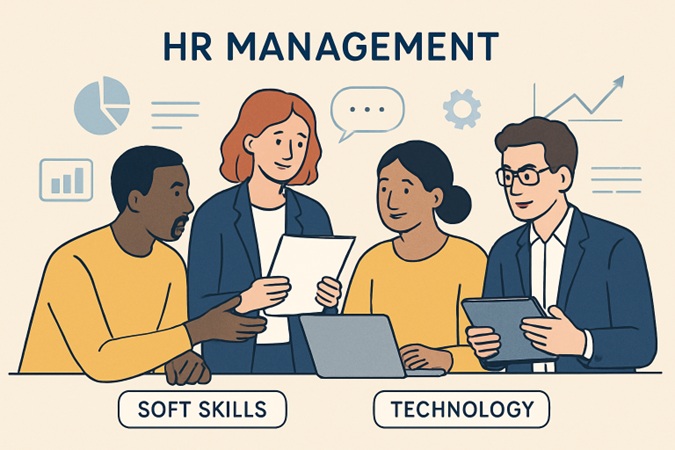
- Developing a blend of technical proficiency and soft skills is crucial for future success.
- Continuous learning and adaptability are crucial for staying relevant in the evolving HR landscape.
HR management is transforming with digital tools, AI, and changing workforce expectations. HR leaders must adapt to trends like remote work, digital communication, and evolving employee needs around flexibility, well-being, and diversity. Success requires mastering a broad skill set to handle technological and human challenges. Whether advancing or future-proofing, investing in core competencies is vital. Exploring advanced credentials such as an MBA HR online can help equip managers with the adaptability and technical expertise needed in tomorrow’s workplace. Such programs provide exposure to the latest business analytics, talent management practices, and leadership strategies, ensuring HR managers are prepared for ongoing changes.
By 2025, HR managers will operate in fast-paced environments driven by rapid technological change and workforce innovation. They must efficiently manage talent, lead organizational change, promote new technologies, and cultivate a resilient culture. Success will depend on developing technical and interpersonal skills like workforce data analysis, team management, and strategic planning. Crucially, agility and a learning mindset will be vital to HR strategies.
Embracing Technological Proficiency
Digital fluency is essential for HR managers and will grow in importance. Emerging technologies are transforming HR tasks like recruitment, onboarding, and talent management. AI platforms automate tasks, provide predictive analytics, and improve employee engagement through personalized communication. Walmart’s AI retraining program exemplifies the integration of technology and HR. Progressive HR leaders actively adopt and optimize these tools. Managers must be familiar with digital platforms, such as applicant tracking systems, learning management systems, and analytics dashboards, to boost productivity, enhance the candidate experience, and create business value. This makes HR a strategic partner, not just an administrative one.
Developing Soft Skills
While technical skills are vital, they must be complemented by soft skills to effectively lead modern HR teams. Today’s diverse, distributed, and dynamic workplaces demand empathy, emotional intelligence, and cultural awareness. Building trust, collaboration, and psychological safety is crucial for success. HR managers act as mediators, coaches, and change agents, requiring them to possess compassion, patience, and practical communication skills. In global, hybrid settings, active listening, open-mindedness, and conflict resolution are vital to prevent misunderstandings. As organizations focus on inclusion, HR must recognize cultural nuances and foster open discussions on equity. Industry experts agree that soft skills are essential for employee engagement, retention, and innovation.
Fostering A Culture Of Continuous Learning
As automation and AI replace tasks and create new opportunities, HR managers must prepare organizations and people for the future of work. Promoting lifelong learning is key to remaining competitive and agile, involving professional development, upskilling, reskilling, and internal mobility. A growth mindset encourages retention by showing commitment to career growth. HR leaders champion change by making continuous learning easy and rewarding, aligning programs with business strategies and tech trends, and integrating training into workflows and reviews. Supporting ongoing education through digital platforms and fostering innovation is vital. Resources like SHRM offer strategies to sustain a culture of development.
Enhancing Data Literacy
Data interpretation and utilization are now vital in nearly all HR functions, guiding decisions in talent acquisition, performance, employee well-being, and workforce planning. Workforce analytics enable managers to identify trends, enhance HR programs, and connect initiatives to business outcomes. Key skills include gathering, validating, and transforming HR data into actionable insights for leaders. As AI and predictive analytics become more prevalent, HR must ensure data integrity, identify potential biases, and clearly communicate findings to non-technical executives. Investing in data literacy boosts HR’s credibility and strategic role. A growing body of research—such as the study on AI and human skills demand—underscores the value of professionals who can navigate the intersection of data and emerging technologies, delivering better decision-making and more innovative solutions across the organization.
Prioritizing Ethical Leadership
As organizations increasingly rely on AI, data analytics, and cloud platforms, ethical leadership in HR is crucial. HR professionals handle sensitive data and must ensure its responsible use, privacy, and the unbiased application of algorithms. As more decisions are delegated to intelligent systems, HR leaders must assess the impact of technology on fairness in hiring, promotion, and monitoring. Transparency and moral clarity are essential for building trust and safeguarding both employees and the business. Proactive policies and open communication help prevent biases and unintended issues with new tech.
Conclusion
The path forward for Human Resource managers is one of both innovation and human-centric leadership. In a landscape constantly reshaped by technology, successful HR leaders will distinguish themselves by combining digital proficiency, emotional intelligence, and a learning mindset. They must serve as role models for ethical conduct, practical problem solvers, and strategic business partners simultaneously. By equipping themselves with essential skills in technology, communication, data analysis, continuous learning, and ethical decision-making, HR professionals will be well prepared to help shape vibrant, innovative, and resilient workplaces in 2025 and beyond.