
Key Takeaways:
- Technological innovations continue to revolutionize the delivery of outpatient care, increasing accessibility and enhancing clinical outcomes.
- Policymakers are enacting significant reforms that impact how outpatient services are authorized, funded, and regulated.
- Demographic changes, particularly an aging population, are driving robust demand for expanded outpatient infrastructure.
- Hospitals and health systems are restructuring business models to better support the shift toward outpatient solutions.
Outpatient healthcare services are undergoing significant transformation as technology, policy, and patient expectations drive change throughout the industry. As more patients turn to an urgent medical clinic and other outpatient options for convenience and affordability, providers must adapt rapidly to keep pace with shifting patient demands. This evolution impacts how care is delivered, who can access it, the services available, and the quality of outcomes.
This dynamic landscape is characterized by strong growth in outpatient procedures, digital acceleration, and the need for new business models that address both patient needs and systemic challenges. Whether through the use of cutting-edge technologies or careful navigation of regulatory reforms, the sector is positioned for lasting change and expanded impact within the broader healthcare ecosystem.
Technological Advancements In Outpatient Care
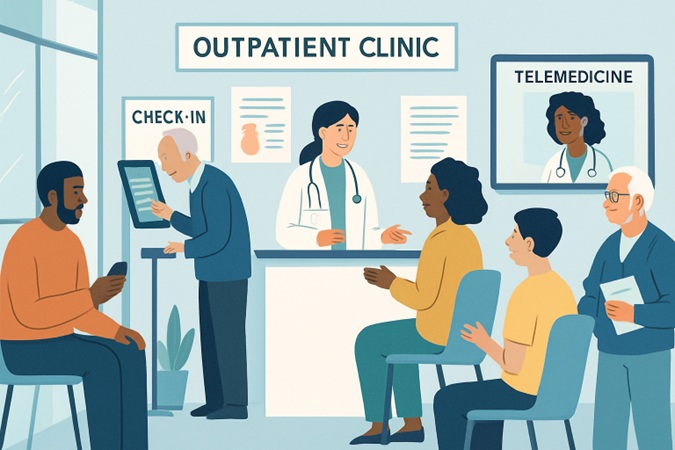
Technology has become the foundation for many advances in outpatient healthcare, enabling providers to deliver more efficient and effective care than ever before. Artificial intelligence (AI) is now commonly used for automated diagnostics, triage, and patient scheduling. These AI-driven tools identify conditions early and help clinicians make evidence-based decisions in real time, improving patient outcomes and operational efficiency. Telemedicine and virtual care have also become mainstays, allowing patients to consult with specialists and primary care providers without the need for travel, reducing both wait times and exposure risk.
Furthermore, Internet of Things (IoT)-enabled devices, such as wearables and remote monitoring equipment, allow for continuous health tracking from the comfort of a patient’s own home. Robotic-assisted outpatient procedures enable surgeons to perform less invasive interventions, leading to quicker recoveries and fewer complications. These and other digital innovations are projected to significantly reshape care models, driving a future in which outpatient services are central to the patient experience.
Policy Reforms Impacting Outpatient Services
Ongoing policy reforms are establishing new frameworks for outpatient healthcare delivery and payment. The Centers for Medicare & Medicaid Services (CMS) has implemented initiatives that require prior authorization for select services at Ambulatory Surgical Centers (ASCs) in certain states. This five-year demonstration project, which starts accepting requests in December 2025, aims to curb unnecessary or cosmetic procedures, such as Botox and eyelid surgeries, while ensuring medical necessity and making timely decisions.
These reforms reflect a larger national movement towards accountability and transparency in outpatient care, with Medicare and private payers both seeking lower costs and higher quality of care. The effects of these policies extend beyond the administrative level, impacting service capacity, provider workflow, and ultimately, patient access.
Demographic Shifts & Increased Demand
America’s aging population is rapidly reshaping the clinical landscape. The number of individuals aged 65 and older is expected to surge, comprising over half of inpatient hospital discharges by 2035. This demographic trend is driving a significant spike in demand for outpatient facilities, as older adults typically experience multiple chronic conditions that either require regular monitoring, preventive services, or follow-up care that can be safely provided outside the hospital setting.
Simultaneously, this influx contributes to higher occupancy and longer hospital stays for complex cases, exacerbating capacity problems that reinforce the importance of robust outpatient infrastructure. Outpatient services are no longer an option but a necessity for an efficient healthcare system that can absorb and redirect volume appropriately. Policymakers, providers, and health technology vendors are collaborating to expand these options and address the rapidly evolving needs of a diverse and aging patient population.
Evolution Of Healthcare Business Models
Traditional healthcare systems are evolving in response to the shift toward outpatient care. Hospital administrators are strategically recentering hospital campuses to focus on specialized, high-revenue inpatient services such as trauma, intensive care, and complex surgery. At the same time, they are increasing investment in medical office buildings, ambulatory centers, and hybrid healthcare facilities that combine diagnostics, treatment, and rehabilitation in a single location.
This split model enhances both efficiency and resilience: routine elective services are moved offsite, maintaining hospitals’ ability to accommodate the sickest and most complex patients. Medical developers are also seizing on the opportunity, seeing outpatient healthcare real estate as a promising asset with stable, long-term tenants and enhanced value. As the business of care continues to evolve, flexibility and patient-centricity are emerging as dominant themes in future-facing strategy and infrastructure investment.
Conclusion
A combination of technological advancements, policy innovations, population trends, and strategic business adaptations will shape the future of outpatient healthcare services. These forces are pushing the healthcare system toward a more accessible, efficient, and high-quality outpatient experience—the foundation of better patient outcomes and a more sustainable path for providers. Embracing these transformations enables providers and patients to navigate change with confidence and agility in the years to come.