
Key Takeaways:
- Regular policy reviews keep your coverage in step with seasonal risks.
- Preventive home maintenance reduces the likelihood of expensive weather-related damage.
- Standard home insurance may not cover all threats; consider extra protection where needed.
Every home faces unique challenges throughout the year, from spring’s heavy rains to winter’s ice and snow. Understanding how changing seasons can impact your property—and your insurance needs—is essential for keeping your home protected, regardless of the weather that comes your way. Partnering with a trusted provider of triple AAA home insurance can simplify your search for robust protection, offering peace of mind across all four seasons.
Beyond basic coverage, savvy homeowners ensure their policy evolves with the seasons. As storms, wildfires, and temperature extremes threaten different regions at different times of year, regularly reassessing your insurance safeguards helps close costly gaps before they become problems. Adapting your preventive maintenance and policy updates for each season is key to keeping your home—and your financial future—safe.
Home insurance isn’t a one-and-done policy; it requires active attention. Reviewing your coverage annually, after renovations, or following major purchases helps ensure you are fully protected. Additionally, exploring add-on endorsements and disaster-specific policies provides a stronger defense against risks that standard coverage may overlook.
Read on to learn proactive steps you can take, season by season, to keep your home secure and your insurance working effectively throughout the year.
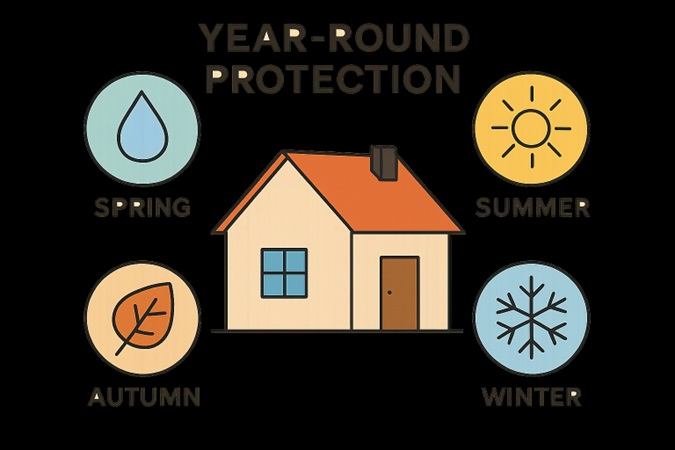
Spring: Preparing For Renewal & Potential Flooding
Spring breathes new life into your home landscape, but it can also introduce flooding hazards due to thawing snow and seasonal storms. Most standard homeowners’ insurance policies specifically exclude coverage for flood damage, leaving many homeowners unprepared for the costly repairs that can result. To guard against this gap, consider purchasing a supplemental flood insurance policy, which is available through the National Flood Insurance Program (NFIP).
Keeping gutters and downspouts free from leaves and debris allows spring rainwater to flow away from your home’s foundation, helping minimize water damage. It’s also a good time to check your sump pump, look for signs of basement leaks, and confirm your emergency plan for sudden flooding events.
Summer: Guarding Against Storms & Wildfires
Severe storms, hurricanes, and wildfires are among the most damaging summer threats. Verifying that your policy covers both wind and fire events is crucial—homeowners in wildfire-prone areas should pay particular attention to exclusions and regional requirements. In many places, creating defensible space by clearing dry brush and flammable plants dramatically lowers your wildfire risk; it may also qualify you for insurance discounts or local rebates.
States like Alabama lead by example, offering grants to homeowners who upgrade roofing and other structural elements through programs designed to make houses more storm-resistant. Investing in these home improvements could mean better protection and potentially lower premiums.
Autumn: Mitigating Risks From Falling Leaves & Storms
As the season transitions to autumn, falling leaves can block gutters and downspouts, increasing the risk of water damage to your home. Regularly clearing these blockages and inspecting your home’s drainage system prevents costly repairs down the road. This is also the ideal time to inspect and repair your roof, as well as trim overhanging branches that could fall during autumn storms.
Homeowners often overlook window caulking and weather stripping checks until it’s too late. Defending your home against autumn chills helps keep heating bills lower and prevents moisture from getting inside, where it can cause hidden damage. Prevention in the fall can mean peace of mind all winter long.
Winter: Preventing Damage From Freezing Temperatures
Freezing pipes and ice dams cause some of the most expensive and disruptive wintertime damage. Ensuring exposed pipes are properly insulated and keeping your thermostat set to a steady, safe temperature will help prevent freezing and bursting when temperatures plummet. Proper attic insulation and ventilation help reduce the risk of ice dams forming on your roof, thereby preventing leaks and structural deterioration. Read about common home disasters not covered by insurance to make sure your winter preparations align with your policy’s fine print.
Remember, many policies exclude claims related to lack of maintenance. Insurers often deny damage caused by neglect, making proactive winterization a financial necessity as well as a practical one.
Year-Round: Regular Policy Reviews & Updates
Maintaining the right insurance protection means reviewing your policy at least once a year, especially after making improvements or purchases that might increase your coverage needs. Factors such as home renovations, new valuables, or changes in your community’s risk profile should all trigger a policy review. Consulting with your insurance agent annually enables you to keep coverage current and ensure you’re not vulnerable to uncovered losses.
Understanding Policy Exclusions & Additional Coverage
Earthquakes, sewer backups, and other disasters are typically not covered by standard homeowner’s policies. Have a frank conversation with your agent about the regional risks unique to your area and discuss add-on riders or endorsements that address these vulnerabilities. Customizing your insurance can help minimize surprises when you go to file a claim.
Implementing Preventive Measures
Preventive steps beyond insurance save money and reduce stress. Sump pumps, backup generators, storm shutters, and smart home monitoring devices all lower your risk profile. Insurance companies may even offer premium discounts for taking practical, preventive actions.
Conclusion
Securing your home against seasonal weather changes requires both practical maintenance and regularly updated insurance policies. By staying proactive—reviewing coverage annually, adding endorsements where needed, and adopting preventive measures—you can ensure your home is shielded no matter what the next season brings.