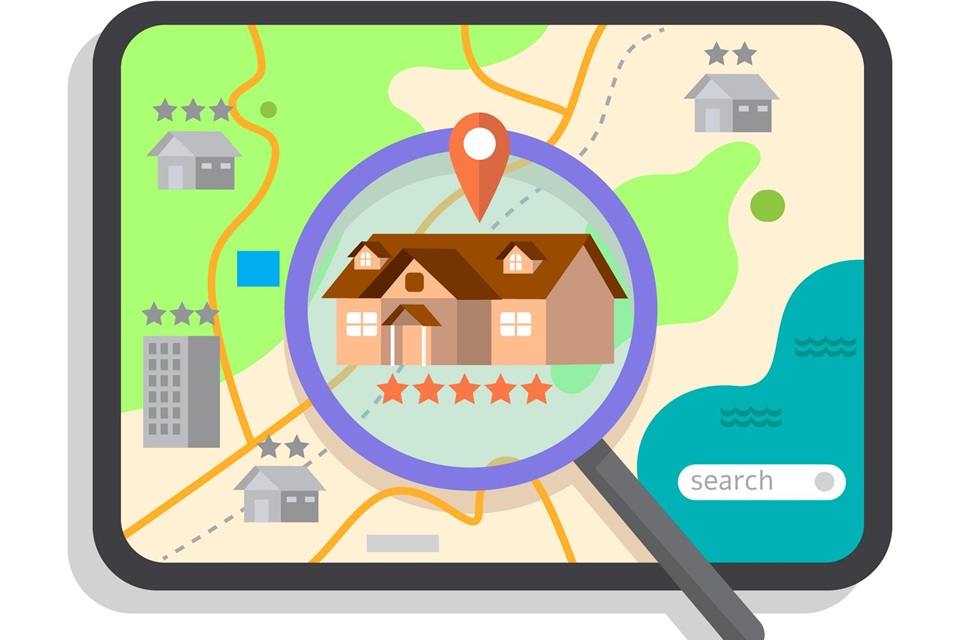
- Addressable geo-fencing enables precise targeting of individual households and businesses.
- Integrating this technology with direct mail campaigns can significantly enhance marketing effectiveness.
- Real-world applications demonstrate substantial improvements in engagement and conversion rates.
Modern marketing demands a sophisticated approach to reach audiences where they live, work, and interact. Among the innovations transforming digital and offline engagement, addressable geo-fencing stands out for its exceptional targeting capabilities. With the ability to draw virtual boundaries around individual addresses, marketers can now direct highly relevant campaigns to distinct households and businesses. This technology has revolutionized the marketing landscape, enabling brands to cut through noise and boost campaign results. To learn more about how addressable geofencing works for advertisers, explore its growing use in today’s omnichannel strategies.
Unlike traditional geo-fencing, which targets broader geographic areas, addressable geo-fencing focuses on granular audience segments. This ensures that every touchpoint is meaningful and personalized, resulting in greater engagement and a higher return on investment. By bridging digital ad campaigns with physical addresses, marketers are redefining precision and efficiency in their outreach.
Many businesses have found that integrating addressable geo-fencing with their existing channels, such as direct mail, creates multiplier effects. This convergence of digital and print strengthens brand recall and encourages faster responses from potential customers. It’s a shift from broad speculation to targeted influence—addressable geo-fencing marks the frontier of hyper-personalized marketing.
As competition intensifies and consumer attention becomes increasingly fragmented, the ability to connect with the right people at the right place and at the right time has never been more vital. This article explores the actionable strategies, key benefits, and real-world results that addressable geo-fencing offers to modern marketers seeking an edge.
Understanding Addressable Geo-Fencing
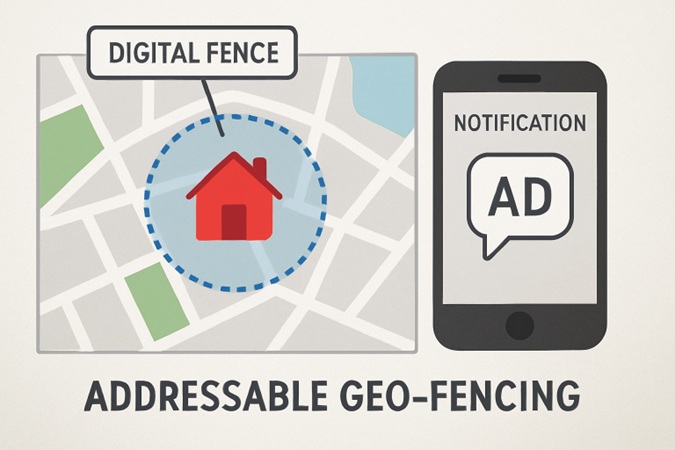
At its core, addressable geo-fencing uses advanced mapping data—such as property plat lines and GPS coordinates—to create digital “fences” around specific locations. When devices enter these fenced areas (matched via mobile IDs, WiFi, or IP addresses), advertisers can push customized digital ads to those users, even if they move between home, work, or retail environments.
This approach contrasts sharply with conventional geo-fencing, which can only pinpoint users within a zip code, city block, or shopping mall. Addressable geo-fencing works down to the individual household or business level, allowing for campaigns that are extremely relevant to specific recipients. This laser focus not only minimizes wasted ad spend but also fosters a sense of personalization that consumers increasingly expect from modern marketing.
Benefits Of Addressable Geo-Fencing
- Precision Targeting: Deliver tailored messages directly to key households, ensuring every impression counts.
- Scalability: Scale campaigns to reach large address lists, sometimes up to one million or more, without losing accuracy.
- Enhancement of Other Channels: Integrate digital targeting with direct mail, television, and other touchpoints for increased effectiveness.
- Attribution and Analytics: Track who engages with digital ads and measure real-world visits or conversions for true ROI insights.
Integrating With Direct Mail Campaigns
One of the most impactful uses for addressable geo-fencing is its integration with direct mail. Delivering targeted digital ads to the same addresses on your physical mailing list increases message frequency and aids in recall. Coordinated timing—serving digital ads just before or after direct mail lands—can nudge customers toward action or reinforce your call to action. The synergy between digital and print leads to greater engagement and, ultimately, more conversions.
This data-driven approach also enables A/B testing across various creative sets. By aligning digital ads and mailers both visually and contextually, campaigns appear seamless and consistent to the end user. Adding digital touchpoints to a direct mail strategy has been proven to increase response rates and expedite purchase decisions, as highlighted in industry reports on integrating direct mail and digital channels.
Furthermore, marketers can track engagement metrics across both mediums to refine audience targeting and creative strategies. Over time, this integrated methodology builds stronger brand recognition and loyalty. Ultimately, combining geo-fencing with direct mail creates a measurable, high-impact marketing ecosystem that maximizes ROI.
Real-World Applications
Industries across the spectrum have leveraged addressable geo-fencing to great effect. For example, a regional furniture store can mail sale flyers to select homes while digitally targeting the same households with mobile or social media ads, reinforcing the offer when targeted customers browse online. Home services companies—like electricians or pest control providers—can print brochures for promising neighborhoods, while addressable geo-fencing provides digital reminders about seasonal service deals. These multi-channel contacts maximize campaign visibility and ensure messaging isn’t lost in a shuffle of digital noise.
Higher education institutions also use this technique, delivering enrollment ads to the homes of high school seniors while their parents receive direct mailers. Real estate agencies can drive open house attendance by geo-fencing surrounding homes in addition to postcard campaigns. This layered approach has yielded a positive increase in foot traffic and inquiry rates.
Best Practices For Implementation
- Data Hygiene: Ensure all mailing and targeting addresses are current and accurately mapped. Outdated inputs can hinder campaign performance.
- Visual Consistency: Match the creative on digital ads with that on mailers, leveraging brand colors, logos, and messaging for instant recognition.
- Timing Strategy: Schedule campaigns to ensure digital impressions align with the delivery window of physical mailers. This maximizes mindshare and conversion opportunity.
- Real-Time Analytics: Monitor performance, optimize bids, and adjust creatives based on what’s delivering results. Campaign agility leads to stronger outcomes.
Measuring Success
Brands can track the effectiveness of addressable geo-fencing campaigns with metrics such as:
- Engagement Rates: Click-throughs and interactions with digital ads offer visibility into initial interest.
- Conversion and Response Rates: Monitor actual purchases, store visits, or completed forms tied to the campaign’s audience list.
- ROI Analysis: Compare total campaign spend with incremental revenue or customer acquisition to establish payoff.
- Attribution Tracking: Use foot traffic measurement tools and unique URLs/codes to pinpoint which audiences responded to your offer.
Conclusion
Addressable geo-fencing enables marketers to coordinate highly targeted, scalable campaigns that seamlessly bridge online and offline channels. By blending digital ads and direct mail at precise addresses, brands magnify relevance and engagement—an essential advantage as media landscapes evolve. Marketers who embrace this strategy will be well-positioned to drive superior results and maximize return on investment in a competitive and rapidly changing environment.