Introduction
Imagine open uping the full potential of your property. Whether you are a homeowner, a developer, or an investor, strategic property improvement is key. It can significantly increase your property’s value, offer a strong return on investment, and improve its overall appeal.
We understand that changing a property is more than just making changes. It is about making smart choices that yield lasting benefits. From boosting curb appeal to modernizing interiors, every improvement can add value.
This extensive guide will walk you through the essential elements of property improvement. We will cover meticulous planning and budgeting, and highlight high-impact capital improvements. We will also explore the art of changing outdoor spaces, such as a residential patio improvement. Finally, we will look at how improvement strategies differ for residential and commercial properties. Our goal is to provide you with the knowledge needed to make informed decisions for your property.
The Foundation: Planning & Budgeting for Success
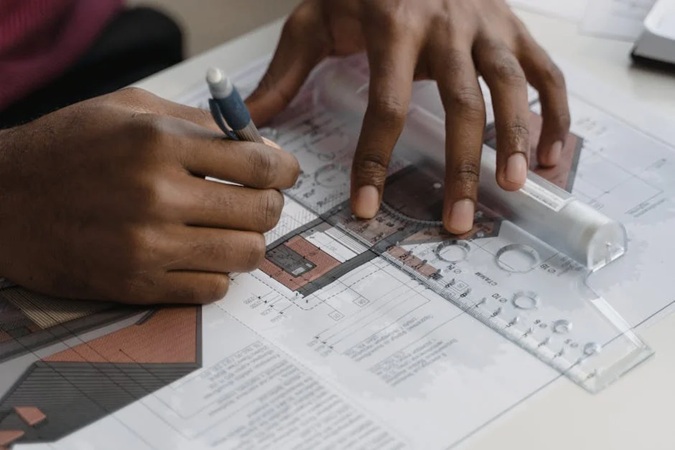
Effective property improvement begins long before any hammer is swung or shovel breaks ground. It starts with meticulous planning and strategic budgeting. This foundational stage is critical for ensuring your project aligns with your goals, maximizes return on investment (ROI), and avoids costly pitfalls. Without a clear vision and a well-defined financial roadmap, even the most ambitious improvement projects can falter.
Differentiating Renovations, Remodels, & Repairs
Understanding the distinctions between renovations, remodels, and routine repairs is fundamental to strategic property improvement. These terms are often used interchangeably, but they carry different implications for scope, cost, value, and even tax purposes.
- Routine Repairs: These are maintenance tasks that keep a property in good working order and generally do not add significant value or extend its useful life. Examples include fixing a leaky faucet, patching a hole in a wall, or replacing a broken window pane. While essential for preventing deterioration, repairs typically do not increase the property’s market value beyond maintaining its current condition.
- Renovations: To renovate means to restore something to a state of good repair or update its aesthetic without significantly changing its structure or function. This might involve a fresh coat of paint, updating flooring, or replacing old fixtures. Renovations improve the condition and appeal of a space, making it more desirable.
- Remodeling: This involves making major structural changes to a space, altering its layout, function, or size. Examples include knocking down a wall to create an open-concept living area, converting an attic into a bedroom, or adding a new bathroom. Remodeling projects often require extensive planning and permits due to their structural impact.
- Capital Improvements: This is a broader term that encompasses significant upgrades that increase a property’s value, extend its useful life, or adapt it to new uses. Capital improvements can include both large-scale renovations and remodels, such as a full kitchen overhaul, a room addition, or the installation of a new HVAC system. Unlike routine repairs, capital improvements are substantial and can increase a property’s tax basis, potentially reducing capital gains tax upon sale.
The choice between these depends on your objectives. If your goal is to simply maintain the property, routine repairs suffice. If you aim to refresh its look and feel, a renovation is appropriate. For significant changes that boost functionality and value, remodeling or capital improvements are the way to go.
Strategic Budgeting & Financing Your Vision
Budgeting for property improvement is not merely about estimating costs; it’s about strategic financial planning to optimize your investment. A common guideline suggests capping your renovation budget at 10-15% of your home’s current value, especially if you’re aiming for a strong return on investment (ROI) before selling. However, this figure can vary based on project scope and market conditions.
A crucial step is a thorough cost vs. value analysis. This involves researching the average costs of specific projects in your area and comparing them to the potential increase in your property’s resale value. Resources like Remodeling Magazine’s annual Cost vs. Value Report are invaluable for this, providing regional data on project costs and recoupment percentages. For instance, while a full kitchen remodel can be substantial, a minor kitchen refresh can bring an impressive ROI near 80%.
Financing options are diverse and should be chosen based on your financial situation and the project’s scale:
- Home Equity Loans: These allow you to borrow a lump sum against the equity in your home, typically with a fixed interest rate.
- Home Equity Lines of Credit (HELOCs): Similar to a credit card, a HELOC provides a revolving line of credit that you can draw from as needed, up to a certain limit.
- Renovation Loans: Specifically designed for home improvements, these loans can be secured or unsecured and may offer more favorable terms.
- Cash-Out Refinancing: This involves refinancing your existing mortgage for a larger amount and taking the difference in cash to fund your improvements.
Each option has its own implications for interest rates, repayment schedules, and tax deductibility, so consulting with a financial advisor is recommended.
Navigating Legal Requirements & Permits
Property improvement projects, especially those involving structural changes or significant outdoor work, often come with legal requirements and necessitate various permits. Failing to secure the proper permits can lead to fines, project delays, and even the forced removal of completed work.
- Building Permits: These are typically required for projects that involve structural changes, additions, major plumbing or electrical work, or significant sitework. For example, creating or extending a driveway, erecting a retaining wall, or constructing a new patio walkway will likely require a building permit. The deciding factor is often the safety of any changes being made.
- Street Excavation Permits: If your project involves digging into or otherwise impacting public property, such as extending a driveway that connects to a public street, a street excavation permit will be necessary in addition to other building permits.
- ADA Compliance: For commercial properties, ensuring compliance with the Americans with Disabilities Act (ADA) is paramount. Any expansion or renovation of a commercial property must consider how the ADA will impact such changes. This often includes requirements for ramps, accessible restrooms, and wider doorways. A Code-compliant property enhancement is not just a legal necessity but also broadens the accessibility and appeal of your commercial space.
- Zoning Laws: Local zoning ordinances dictate how land can be used and what structures can be built. These laws can influence everything from the height of a new addition to the placement of a fence or the amount of impervious surface allowed on your property.
The permit application process typically involves submitting detailed plans, a legal survey of the property, and an estimate of the work’s cost. Processing times can vary, from immediate issuance for minor repair permits to several weeks for more complex projects requiring inspections and plan reviews. We advise familiarizing yourself with your local building codes and consulting with your municipality’s planning department early in the process. For more information on navigating these regulations, resources like the Building Codes Assistance Project can provide valuable insights into existing renovation codes.
Maximizing ROI: High-Impact Capital Improvements
When starting on property improvement, the goal is often to not only improve aesthetics and functionality but also to maximize your return on investment (ROI). Strategic capital improvements are those that consistently yield significant value, making your property more attractive to buyers or more profitable for investors. We closely monitor market trends and cost-vs-value analyses to identify these key opportunities.
Interior Improvements With Proven Value
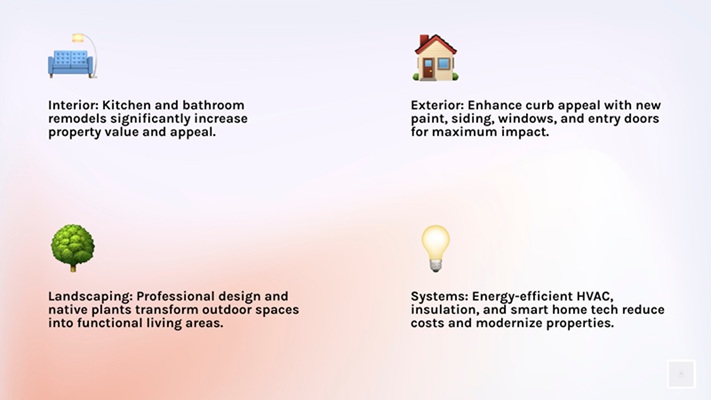
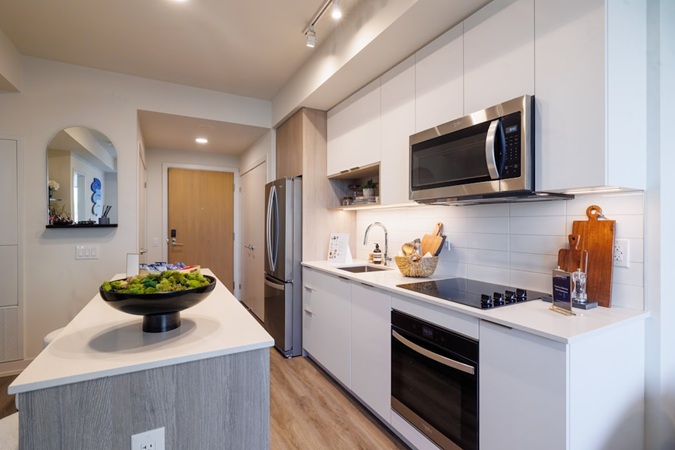
Interior improvements are often at the forefront of a homeowner’s or investor’s mind, and for good reason. Kitchen and bathroom remodels frequently provide the highest returns, as they are considered the most personal and frequently used functional spaces in a home.
- Kitchen Remodels: A minor kitchen remodel (midrange) can see an impressive 96% resale value return. This typically involves updating cabinets and countertops, refreshing appliances and fixtures, and modernizing lighting. A full kitchen modernization, while a larger investment, can bring an approximate 5% value increase to a property.
- Bathroom Renovations: Midrange bathroom remodels typically return up to 70% of the investment, with some sources suggesting a 10-20% increase in property value. Modernizing vanities, lighting, and considering features like dual sinks or walk-in showers are highly valued.
- Finished Basements and Conversions: These projects significantly increase a home’s usable square footage, directly impacting value. Finishing a basement or converting an attic into a bedroom or office can yield an ROI around 65%-75%. This is particularly appealing as it creates additional living space without expanding the property’s footprint.
Note on pricing ranges: While specific costs vary by region and material choices, a minor kitchen refresh might range from $5,000-$10,000, while a full bathroom renovation could be $10,000-$20,000. Energy-efficient upgrades, as discussed below, can exceed 100% ROI.
Top 5 Interior Projects by ROI (National Averages):
- Minor Kitchen Remodel (Midrange): 96% ROI
- Bathroom Remodel (Midrange): 74% ROI
- Attic Conversion to Bedroom: 75% ROI (estimated)
- Basement Conversion to Living Space: 70% ROI (estimated)
- Major Kitchen Remodel (Midrange): 41.8% ROI (while lower, still impactful for personal enjoyment)
Boosting Curb Appeal For Maximum Impact
First impressions are crucial, and nowhere is this more true than with property. Enhancing curb appeal is one of the most cost-effective ways to increase perceived value and attract potential buyers.
- Exterior Paint & Siding: A fresh exterior paint job instantly modernizes a home’s look. Siding replacement, particularly fiber-cement, offers an 88% return, while vinyl siding replacement yields an 80% return.
- Window Replacement: New windows not only improve aesthetics but also improve energy efficiency and reduce maintenance. Vinyl window replacement can recoup around 67% of its cost.
- Entry Doors: Replacing your garage door offers an astounding ROI, with some reports indicating a 194% return. Similarly, steel entry door replacement can have a 188% return on investment. These projects are relatively inexpensive but dramatically improve the home’s facade. Consider a Custom garage door property enhancement to significantly boost your home’s exterior appeal and value. Manufactured stone veneer projects, adding texture and to exteriors, can yield a 153% return.
Curb appeal improvements, such as replacing a garage door, can increase the perceived value of the property by 5-10%. These are often the first elements potential buyers see, making them critical for a positive initial impression.
The Rise Of Energy-Efficient & Smart Home Upgrades
In an era of rising utility costs and growing environmental consciousness, energy-efficient and smart home upgrades are increasingly appealing to buyers and offer excellent long-term value.
- Energy Efficiency Benefits: Energy-efficient upgrades can exceed 100% ROI, not just through increased property value but also through significant long-term savings on utility bills. They are a major draw for eco-conscious buyers.
- HVAC Upgrades: If your property’s HVAC system is over ten years old, replacing it with an ENERGY STAR qualified system can lead to substantial savings. Regular maintenance, such as cleaning air filters monthly, and installing programmable thermostats further optimize energy use.
- High-Efficiency Windows & Insulation: Replacing old windows with high-efficiency units and improving insulation reduces heating and cooling costs, improves comfort, and reduces outside noise.
- Solar Panels: While the initial installation may be pricey, solar panels can save thousands of dollars over a 20-year span and appeal strongly to environmentally conscious individuals.
- Smart Home Technology: Features like smart thermostats, video doorbells, smart lighting systems, and security systems are highly important to 36% of buyers. These relatively low-cost upgrades can significantly improve a home’s appeal and perceived modernity.
These upgrades not only reduce operating costs but also contribute to a property value increase of 5% to 25%, making them a wise investment for both homeowners and commercial property owners. For more insights on saving energy, you can explore resources like the Department of Energy’s guide on lighting choices.
The Art Of Outdoor Property Improvement
Beyond the walls of a structure, the outdoor space plays a pivotal role in a property’s overall appeal, functionality, and value. Thoughtful outdoor improvements can transform a simple yard into an extension of the living space, offering beauty, utility, and environmental benefits.
The Role Of Professional Landscape Design & Consultation
Professional landscape design is the blueprint for creating outdoor spaces that are both visually appealing and highly functional. It goes beyond simply planting flowers; it’s about crafting an integrated environment that complements the property’s architecture and suits the owner’s lifestyle or business needs.
- Design Process: A professional design consultation typically begins with a site analysis, assessing factors like soil quality, sun exposure, drainage, and existing features. This leads to a conceptual design, often followed by a detailed master plan that outlines plant selection, hardscaping elements, lighting, irrigation, and other features.
- Functionality and Aesthetics: The designer’s role is to balance aesthetics with practicality. This means creating beautiful vistas while ensuring pathways are safe, outdoor living areas are comfortable, and planting schemes are appropriate for the climate and maintenance levels.
- Maximizing Outdoor Space: For both residential and commercial properties, effective landscape design maximizes the use of outdoor areas, turning underused zones into valuable assets. This could be a serene garden retreat for a homeowner or an inviting communal gathering space for a commercial complex.
A well-executed landscape design can add significant value to a home, sometimes as much as a new kitchen or bath, and commercial offices with high-quality landscaping can see higher rental rates.
Softscaping: The Living Elements Of Your Landscape
Softscaping refers to the living, horticultural elements of landscape design, encompassing plants, trees, shrubs, and groundcover. These elements bring color, texture, and life to an outdoor space.
- Plant Selection: Choosing the right plants is crucial. Factors like climate, soil type, water availability, and desired maintenance level all influence selection.
- Native Plants: The use of native plants is a growing trend, offering numerous benefits. They are adapted to local conditions, requiring less water and fewer pesticides, thus contributing to environmental sustainability. They also support local ecosystems and pollinator species. According to the University of Washington, people are willing to pay more for properties with trees, which provide shade, privacy, and noise reduction. For more on the benefits of integrating native plants, consider research from sources like the University of Washington on the economics of trees.
- Pollinator Gardens: Designing gardens specifically to attract bees, butterflies, and other pollinators contributes to and creates vibrant, dynamic outdoor spaces.
- Water Conservation: Strategic plant choices, combined with efficient irrigation systems and mulching, can significantly reduce water consumption, a valuable asset in many regions.
- Sod Installation & Mulching: Professional sod installation can instantly create a lush, green lawn, while mulching improves soil health, retains moisture, and suppresses weeds, contributing to a polished appearance.
Hardscaping: Building Functional & Beautiful Outdoor Spaces
Hardscaping involves the non-living elements of landscape design, providing structure, definition, and functionality to outdoor areas. These features are built to last and form the backbone of any well-designed exterior.
- Material Selection: The choice of materials for hardscaping is critical, balancing durability, aesthetics, and cost. Options range from natural stone and brick to concrete pavers and composite materials.
- Patios & Walkways: Patios create inviting outdoor living rooms, perfect for relaxation and entertaining. Walkways guide movement through the landscape, connecting different areas of the property. For a truly bespoke outdoor space, consider a Residential patio enhancement that integrates seamlessly with your home’s design and your personal style.
- Retaining Walls: Beyond their functional role in managing slopes and preventing erosion, retaining walls can be attractive architectural features, creating terraced gardens or defining different zones within a landscape.
- Outdoor Fire Pits: These have become highly sought-after amenities, providing a focal point for social gatherings and extending the usability of outdoor spaces into cooler evenings.
Popular Hardscaping Materials:
- Natural Stone: Flagstone, bluestone, granite (durable, high-end aesthetic)
- Concrete Pavers: Versatile in, color, and pattern; durable and cost-effective
- Brick: Classic, traditional look; durable and low maintenance
- Stamped Concrete: Offers the look of stone or brick at a lower cost
- Wood/Composite Decking: For raised outdoor living areas, offering warmth and comfort
When combined with softscaping, hardscaping creates a harmonious and functional outdoor environment that significantly improves property value and enjoyment.
Enhancing Commercial Vs. Residential Properties
While the fundamental principles of property improvement – increasing value, functionality, and appeal – remain consistent, the specific strategies and objectives often differ significantly between residential and commercial properties. Understanding these nuances is key to successful project execution.
Key Considerations For Residential Property Improvement
For homeowners, property improvement is a deeply personal endeavor, driven by a blend of personal enjoyment and future resale value.
- Homeowner Enjoyment & Family Needs: Many residential improvements are undertaken to improve the quality of life for the occupants. This could mean adding a swimming pool for family fun, creating a gourmet kitchen for a passionate cook, or finishing a basement to provide more living space. While these bring personal satisfaction, their ROI upon sale can vary.
- Resale Value: When selling, homeowners often focus on improvements that appeal to a broad range of buyers and offer a strong ROI. As discussed, kitchen and bathroom remodels, curb appeal improvements (like garage and entry door replacements), and energy-efficient upgrades consistently perform well.
- Neighborhood Standards: It’s important not to over-improve a property relative to its neighborhood. Lavish luxury upgrades in a mid-range area may not command a proportional return. Conversely, neglecting basic maintenance can make a property stand out negatively.
- Low-Cost Improvements: Simple, low-cost improvements can significantly improve appeal. Fresh paint (interior and exterior), updating light fixtures, new cabinet hardware, and well-maintained landscaping are effective ways to boost appeal without breaking the bank. For more ideas on how to add value to your home, explore resources like HowStuffWorks’ guide to home value.
Strategic Property Improvement For Commercial Assets
For investors and developers, commercial property improvement is primarily a business decision aimed at maximizing asset value, attracting and retaining tenants, and increasing rental income.
- Investor and Developer Benefits: Strategic improvements can lead to higher occupancy rates, increased rental rates, quicker lease-ups, and ultimately, a higher sale price for the asset. The cost of improvements can be recovered by investors who are remodeling rental properties through increased rental rates.
- Attracting Tenants & Increasing Rental Rates: In competitive markets, updated facilities are crucial. Prospective tenants look for modern, attractive, and functional spaces. Renovations that bring a commercial property up to date can justify higher rental rates and reduce vacancy periods.
- Façade Improvement Programs: Many municipalities offer incentives, such as matching-grant programs, for façade improvements (paint, brick/stone, awnings, lighting, windows) and landscaping. These policies aim to improve the overall aesthetic of commercial districts, benefiting both property owners and the community.
- ADA Compliance & Security Upgrades: For commercial properties, ensuring ADA compliance is a legal necessity and a value-add, as it broadens the potential tenant base. Security features, such as attractive gates, alarm systems, and well-lit parking lots, add significant value by creating a safer and more appealing environment for tenants, customers, and employees.
Property improvement for commercial assets often involves considering the property’s “class” (e.g., Class B to Class A). Renovations that lift the perceived class of a building are more likely to yield significant financial returns.
Frequently Asked Questions About Property Improvement
What is the difference between a capital improvement and a repair?
A capital improvement is a significant, long-term upgrade that increases a property’s value or extends its life, such as a new roof or a room addition. It adds to the property’s tax basis. A repair, like fixing a leaky faucet or patching a wall, is routine maintenance that keeps the property in good condition but doesn’t add substantial value or extend its useful life beyond its original state. Repairs are typically deductible as expenses in the year they occur for income-generating properties.
Which property improvements offer the best return on investment?
Projects that boost curb appeal, such as new garage door replacement (up to 194% ROI), steel entry door replacement (up to 188% ROI), and manufactured stone veneer (up to 153% ROI), often have ROIs exceeding 100%. Minor kitchen remodels (up to 96% ROI) and midrange bathroom renovations (up to 74% ROI) also consistently provide high returns upon resale. Energy-efficient upgrades can also exceed 100% ROI due to long-term savings and buyer demand.
How much should I budget for a home renovation project?
A common guideline is to budget between 10-15% of your home’s current market value for a major renovation. However, this can vary greatly depending on the project’s scope, your local market, and your ultimate goals (personal enjoyment vs. maximizing resale value). It’s also wise to allocate an additional 10-20% of your budget as an emergency fund for unexpected issues.
Conclusion
Property improvement is a dynamic and strategic process, offering substantial benefits to homeowners, developers, and investors alike. From the initial stages of meticulous planning and budgeting to the execution of high-impact capital improvements, every decision shapes the future value and utility of an asset. We have explored how differentiating between repairs, renovations, and remodels informs your approach, and how understanding ROI can guide your choices for interior, exterior, and energy-efficient upgrades.
The art of outdoor property improvement, encompassing professional landscape design, vibrant softscaping, and durable hardscaping, further lifts a property’s appeal and functionality. Finally, we’ve highlighted the distinct considerations for enhancing residential versus commercial properties, underscoring the importance of tailoring strategies to specific stakeholder objectives and market demands.
Property improvement is about more than just physical changes; it’s about intelligent investment. By balancing cost, function, and aesthetics, you can open up the full potential of your property, ensuring it stands as a valuable and enduring asset for years to come.