
Modern business success relies on finding strategic ways to optimize daily operations and maximize productivity across every department. With the growing complexity of assets and heightened customer expectations, field services have become an essential component of workplace efficiency. By leveraging digital tools, automation, and continual improvement, organizations can better respond to customer needs and minimize bottlenecks. This transformation is especially pronounced for industries that require hands-on technical solutions, such as oil and gas field services for structural repairs and recertification, where operational downtime can carry steep costs. Integrated and advanced field service solutions not only reduce overhead but also enhance long-term business resilience.
Field service management is evolving with automation, data-driven decisions, and smart mobile tech shifting companies from reactive to proactive operations. Benefits include faster resolution, higher technician productivity, and greater customer satisfaction. Digital transformation helps businesses reduce disruptions and gain a competitive edge. Technologies like IoT sensors, predictive algorithms, and mobile apps enable proactive maintenance and asset care, minimizing failures and downtime. This results in a more agile workforce with instant access to necessary tools. Efficient field services lower costs and strengthen client relations, with industries favoring partners committed to continuous improvement and innovation.
Enhancing Productivity Through Automation
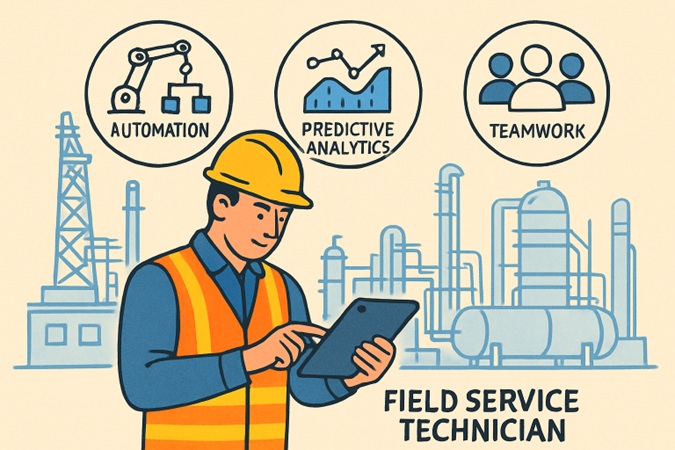
Automation has emerged as a cornerstone of efficiency in field services, helping organizations minimize human error and cut down response times. Through technology-driven platforms, companies can automate dispatching, scheduling, and real-time reporting, thereby reducing administrative friction and streamlining operations. For example, intelligent scheduling algorithms distribute workloads more evenly, decrease unnecessary travel, and ensure that the right technician is assigned to the right job based on skill and availability. Automating repetitive administrative tasks can save up to 68 percent of a field technician’s time, translating directly into cost savings and improved productivity.
Predictive Maintenance: Reducing Downtime
Predictive maintenance uses advanced data analytics and IoT devices to anticipate equipment malfunctions, enabling proactive servicing before issues escalate. Instead of adhering to static maintenance schedules, organizations can deploy resources precisely when and where they are needed most, leading to fewer breakdowns and extended equipment longevity. Real-time monitoring devices collect performance data, which is analyzed for early warning signs of inefficiency or failure.
Mobile Tools: Empowering Field Technicians
Mobile technology provides field technicians with instant access to service histories, digital manuals, and job instructions wherever they are deployed. These digital tools streamline communication between teams and enable immediate updates to work orders, customer signatures, and completed task reports. Mobile applications are also essential for capturing on-site images and customer feedback, minimizing paperwork time, and enabling greater focus on hands-on tasks. Across the United States, more than 45,000 companies are currently using mobile field service management tools, driving remarkable gains in technician productivity and accuracy.
AI Integration In Field Services
Artificial intelligence is rapidly transforming field service operations. AI-driven platforms analyze vast amounts of operational data to recommend efficient routes, predict equipment failures, and allocate resources strategically. These systems can optimize every phase of the field service cycle, from dispatch to post-service analytics. AI-powered chatbots and voice assistants also support technicians in the field, quickly providing solutions to complex problems without the need for phone support or manual searches.
Data-Driven Decision Making
Collecting and analyzing performance metrics is essential for building a culture of continuous improvement. Data-driven insights enable companies to locate inefficiencies, track asset performance trends, and tailor resource allocation. Centralizing data streams through unified platforms not only sustains operational consistency but also empowers leadership to make smarter, faster decisions regarding workforce management and customer needs. Organizations that build data literacy into their processes outperform their competitors in operational efficiency and customer satisfaction.
Customer Satisfaction & Loyalty
The direct impact of efficient field services is best measured by rising customer satisfaction and repeat business. Prompt service, proactive maintenance, and clear communication help establish lasting customer loyalty. Self-service scheduling tools and comprehensive customer portals empower clients, enabling them to resolve minor issues on their own while reserving specialist expertise for more complex problems. These solutions reduce support backlogs and free skilled technicians to provide expert attention where it is needed most.
Training & Development
Ongoing training ensures that field service teams remain informed about evolving technology, safety requirements, and customer service best practices. Innovative training programs not only improve service quality and response efficiency but also increase technician job satisfaction and reduce turnover. Investment in continuous employee development is an engine for better service outcomes and a major driver of retention for service-oriented companies.
Future Trends In Field Services
The future of field service is shaped by trends like cloud computing, machine learning, and AI tools. AR and VR are used for remote diagnostics and training. Cloud solutions provide secure, real-time access to information globally. These innovations meet the demand for faster, safer, customer-focused service, giving companies a competitive edge. Adopting new tech helps businesses increase efficiency, reduce disruptions, and improve customer service through automation, predictive maintenance, mobile tools, and continuous training, supporting growth.
Conclusion
Field services continue to redefine workplace efficiency by shifting organizations from reactive problem-solving to proactive, technology-driven operations. Through automation, predictive maintenance, mobile connectivity, and data intelligence, businesses can reduce downtime, optimize resources, and deliver faster, more reliable service. As innovation accelerates, companies that embrace integrated field service strategies will be better positioned to control costs, strengthen customer relationships, and maintain long-term operational resilience in an increasingly competitive landscape.