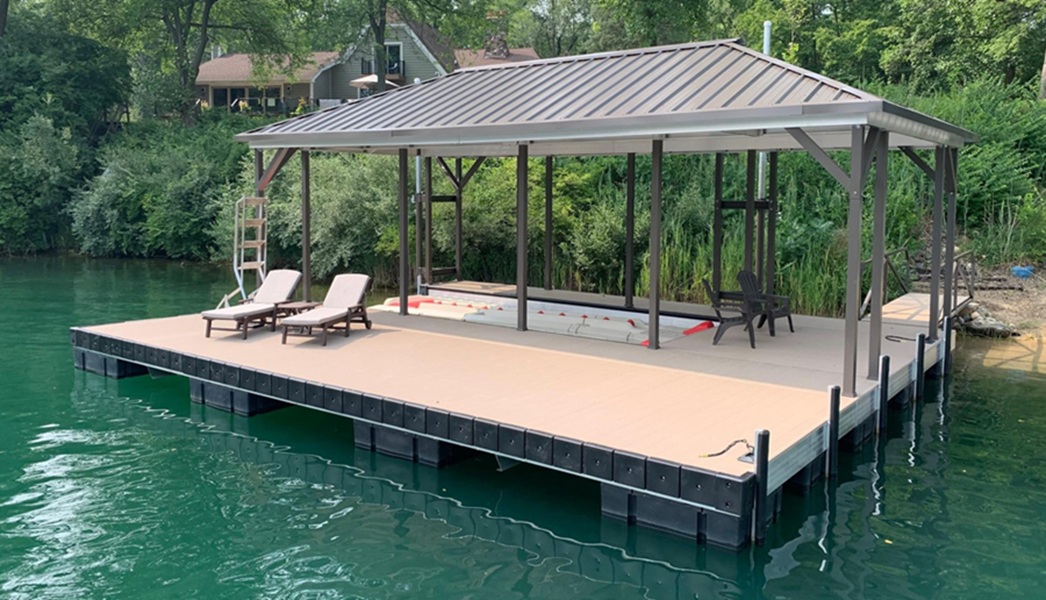
Drive past newer marinas, lakeside resorts, and waterfront homes, and the same silver-gray frames keep showing up along the shore. Developers once defaulted to wood and concrete, but that habit is fading fast. Aluminum has moved from a niche option to a standard choice, and the reasons go well beyond looks.
Why Builders Are Moving Away From Wood & Concrete
Maintenance bills pushed the change. Wood rots, splinters, and needs sealing every year or two, while concrete cracks under freeze-thaw cycles and takes heavy equipment to install or repair. Over a ten-year stretch, those costs often exceed the original purchase price. Developers who manage dozens of slips feel that pain most, since every repair day means a berth sitting empty.
Aluminum flips the math. The metal forms a natural oxide skin that protects it, so upkeep comes down to rinsing and checking bolts. Lighter frames also cut shipping and labor, and smaller crews can finish installs on remote or tight shorelines. Buyers scanning aluminum boat docks for sale now compare lifetime cost instead of sticker price, and that shift favors metal.
What Makes Floating Aluminum Systems So Popular?
Water levels refuse to stay put on reservoirs, tidal rivers, and flood-control lakes, and fixed piers struggle to keep up. An aluminum floating dock rides the surface, so the deck stays at a steady height for boarding and loading whether the lake is high or low. Foundations are simpler too, since anchors and pile guides replace deep posts that must be driven into difficult soil.
Modular construction adds another draw. Sections bolt together, which lets owners start small and expand as demand grows, or pull sections out before ice forms. Resort operators and rental businesses like this flexibility because the dock can follow the business instead of locking it into one layout. Floating dock builders who design for this kind of change give property owners room to adapt as boats, guests, and budgets shift.
Regulations, Habitat, & The Push For Lighter Footprints
Environmental rules increasingly shape waterfront projects. Many agencies limit how much bottom a structure can disturb, and some require open decking so light reaches plants and fish below. Floating systems with grated or gapped surfaces satisfy those requirements without special add-ons, and they avoid the chemical preservatives that treated lumber leaches into the water.
Approval often moves faster as well. Smaller footprints on the lakebed can simplify reviews, and aluminum is fully recyclable, which appeals to public agencies and resorts that track sustainability goals. Rules vary by state and water body, so builders familiar with local offices save applicants time and revisions.
Can Aluminum Handle Heavy Commercial Demands?
Strength surprises people who picture aluminum as lightweight and flimsy. Marine-grade alloys like 5052 and 6061 carry serious loads when tubing is thick and welds run continuous, and engineered bracing keeps long runs rigid in chop. Marinas now use aluminum for fuel docks, main walkways, and large slip systems that see constant traffic. Design still matters. Float spacing, anchoring, and hardware must match the load and the water, and cheap shortcuts show up fast under commercial use. Stainless fasteners prevent galvanic corrosion, and closed-cell foam floats keep working after a puncture. Operators browsing aluminum docks for sale should request load ratings, wave and wind limits, and warranty terms in writing before comparing prices.
Where The Market Is Heading
Waterfront owners now expect more from a dock than a place to tie up a boat. Built-in lighting, power and water lines, wide gangways, and nonslip decking have become common requests, along with accessibility features that let guests of all abilities reach the water. Aluminum frames handle these upgrades well because conduit channels and mounting points can be built in from the start.
Customization is rising alongside that demand. Owners want layouts shaped to the shoreline, colors that blend with the setting, and systems that scale. That trend favors manufacturers who design and fabricate in-house instead of selling one fixed catalog, and it explains why custom aluminum docks keep gaining ground in both residential and commercial projects.
Anyone weighing a switch to metal can lean on Flotation Systems, a manufacturer and custom design company focused on aluminum floating dock systems for homes, marinas, and resorts. The team studies the water, shoreline, and expected traffic, then builds marine-grade frames with stainless hardware and durable floats sized to match. Sending over photos, depth readings, and a rough wish list is enough to get a clear, site-specific plan started.