Car accidents in Waterloo can happen on a quick neighborhood trip, during a commute across town, or while traveling through busy intersections and commercial corridors. Although every collision has its own facts, many crashes begin with a preventable decision, a moment of inattention, or conditions that make a driver’s normal routine less safe. After a serious collision, resources such as Ball, Kirk & Holm may help people understand the practical issues that can arise when injuries, insurance questions, or fault disputes follow a crash.
Learning the most common causes of car accidents can help Waterloo drivers make more deliberate choices behind the wheel. It can also help injured passengers, pedestrians, and motorists recognize why preserving photos, witness information, medical records, and the police report may matter after a collision.
1. Distracted Driving
Distraction is one of the clearest ways a routine drive can become dangerous. A driver may glance at a text message, enter an address into the navigation system, adjust the music, reach for an item, eat, or turn to speak with a passenger. Each activity can draw the driver’s eyes, hands, or attention away from traffic at the moment another vehicle stops, changes lanes, or enters an intersection.
Cell phones are a particularly common concern because messaging requires visual, manual, and mental attention. The National Highway Traffic Safety Administration explains that distracted driving includes any activity that diverts attention from driving, not only texting. In Waterloo, distraction can be especially risky near crosswalks, school zones, busy parking-lot entrances, and intersections where drivers need to notice changing signals and people crossing the street.
Ways To Reduce Distraction
- Set navigation, music, and climate controls before leaving a parking space.
- Put the phone away or use a setting that limits notifications while driving.
- Ask a passenger to handle calls, messages, or directions when possible.
- Pull over safely before responding to an urgent call or text.
2. Speeding & Aggressive Driving
Speeding is not limited to driving far above the posted limit. A driver may also be traveling too fast for traffic conditions, visibility, pavement conditions, or the available space to stop safely. Higher speed can shorten a driver’s reaction time and make it harder to avoid a vehicle that brakes suddenly, turns across traffic, or enters from a side street.
Aggressive driving can compound that risk. Tailgating, weaving between lanes, racing through a yellow light, and reacting angrily to another driver can turn ordinary congestion into a collision. According to the National Highway Traffic Safety Administration’s safety guidance on speeding, speeding endangers everyone sharing the road and can increase the severity of a crash. Leaving more following distance is a simple yet meaningful safety measure, particularly during heavy traffic or poor weather.
3. Weather & Road Conditions
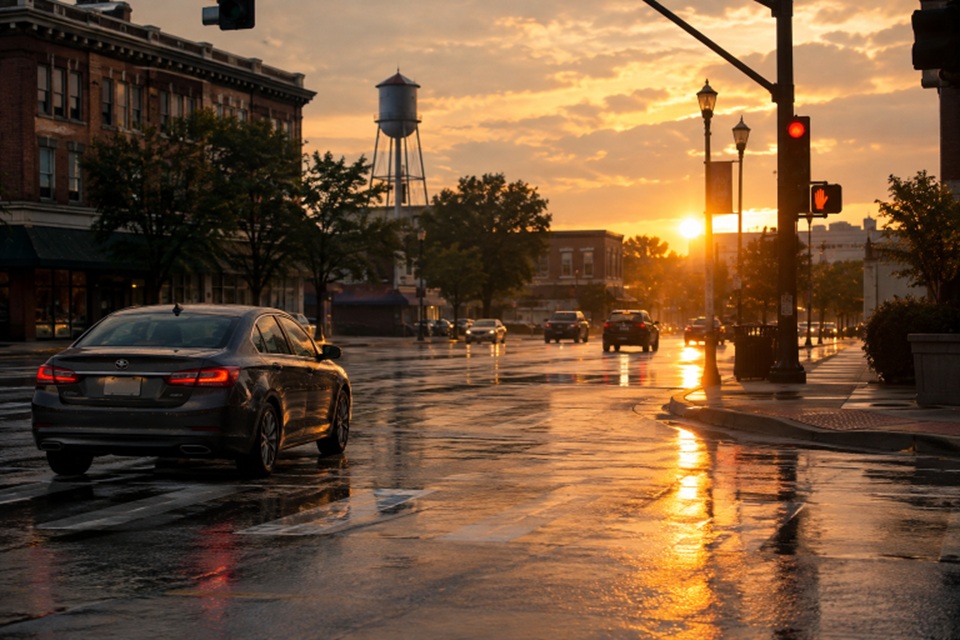
Waterloo drivers experience changing conditions throughout the year. Rain can reduce tire traction, snow can cover lane markings, ice can make braking unpredictable, and fog or low winter light can reduce visibility. Even roads that feel familiar may require different driving behavior when the pavement is wet, slippery, uneven, or covered with debris.
Weather does not automatically explain every crash, nor does it remove a driver’s responsibility to operate carefully. Drivers should reduce speed when conditions call for it, increase following distance, clear snow and ice from windows and lights, and ensure tires, brakes, wipers, and headlights are in good working order. Sudden lane changes and hard braking are more likely to create problems when traction is limited.
4. Impaired Or Drowsy Driving
Alcohol, drugs, and some medications can affect judgment, coordination, vision, perception, and reaction time. Impairment may also result from combining substances, using medication without understanding its side effects, or driving after very little sleep. A drowsy driver may miss a traffic signal, drift from a lane, or fail to recognize a hazard until there is too little time to react.
Planning ahead is often the most effective safeguard. Anyone who has been drinking, using an impairing substance, or feeling too tired to focus should choose a sober driver, rideshare, taxi, public transportation, or another safe ride. Friends and family members can also prevent harm by speaking up before someone gets behind the wheel.
5. Failure To Yield & Unsafe Turns
Many Waterloo collisions occur when one driver misjudges the right of way. Examples include turning left across oncoming traffic, entering from a driveway, merging without enough space, rolling through a stop sign, or failing to check for a pedestrian or bicyclist before turning. These crashes can happen in seconds, especially where multiple lanes, traffic signals, and turning vehicles create competing movements.
Drivers should slow down before entering intersections, scan carefully in every direction, and avoid assuming another motorist will stop or yield. A turn should be made only when there is enough time and space to complete it safely. Using turn signals early also gives nearby drivers, cyclists, and pedestrians a better chance to anticipate the vehicle’s movement.
What To Do After A Waterloo Car Accident
Safety comes first after any crash. Move out of traffic if it is safe, call 911 when there are injuries, hazards, or a need for police assistance, and accept emergency medical care when appropriate. Avoid arguing about fault at the scene. Instead, exchange information, take photographs if doing so is safe, and ask witnesses for their names and contact details.
Useful Records To Preserve
- Photographs of vehicle damage, road conditions, traffic signs, and visible injuries.
- The other driver’s contact, insurance, and vehicle information.
- Witness names and contact details.
- A copy of the crash report when available.
- Medical records, bills, prescriptions, and notes about symptoms.
- Receipts for towing, repairs, transportation, and other crash-related costs.
Final Thoughts
Distracted driving, speeding, difficult weather, impairment, and failure to yield are five common causes of car accidents in Waterloo, Iowa. Safer driving starts with attention, patience, realistic speed, and respect for the conditions around the vehicle. When a crash does occur, prompt medical attention and organized records can make the days and weeks afterward easier to manage.