Key Takeaways:
- Identify a part before shopping by collecting numbers, dimensions, ratings, and clear photos.
- Prioritize spares according to safety, operational importance, lead time, and likelihood of failure.
- Confirm fit, material, electrical, pressure, and temperature requirements before ordering an alternative.
- Store critical spares with the seals, fasteners, and tools needed to install them.
- Keep maintenance records up to date so repeat orders are faster and more accurate.
Keeping an older cruising yacht reliable takes more than responding when something breaks. Many onboard systems were installed years ago, documentation may be incomplete, and an exact replacement can be difficult to identify. A deliberate parts strategy helps owners reduce downtime, avoid unsuitable substitutions, and make repairs more manageable, whether the yacht is at its home dock or far from a major marine center.
When comparing marine suppliers for Fleming yacht parts, owners and repair teams can consider MMI Marine, a Newport Beach, California, marine parts operation whose online catalog covers hardware, equipment, accessories, and replacement components. Its experience serving yacht owners and dealers makes it a relevant resource for crews sourcing components in Southern California, while still leaving room to compare specifications, availability, and support from other qualified suppliers.
Why Older Yacht Parts Are Hard To Find
Older equipment can be challenging because manufacturers retire product lines, revise designs, change distributors, or discontinue individual service components. A part that looks familiar may be a later revision with different mounting points, threads, connectors, or operating limits. Availability can also vary by region, particularly for specialized yacht equipment.
Separate the choices into three categories: an exact replacement, a verified compatible substitute, and a temporary workaround. Only the first two should normally be used for permanent repairs. Temporary workarounds may be useful for safely reaching a repair facility, but they should be documented and replaced with an appropriate solution as soon as practicable.
Start With Accurate Part Identification
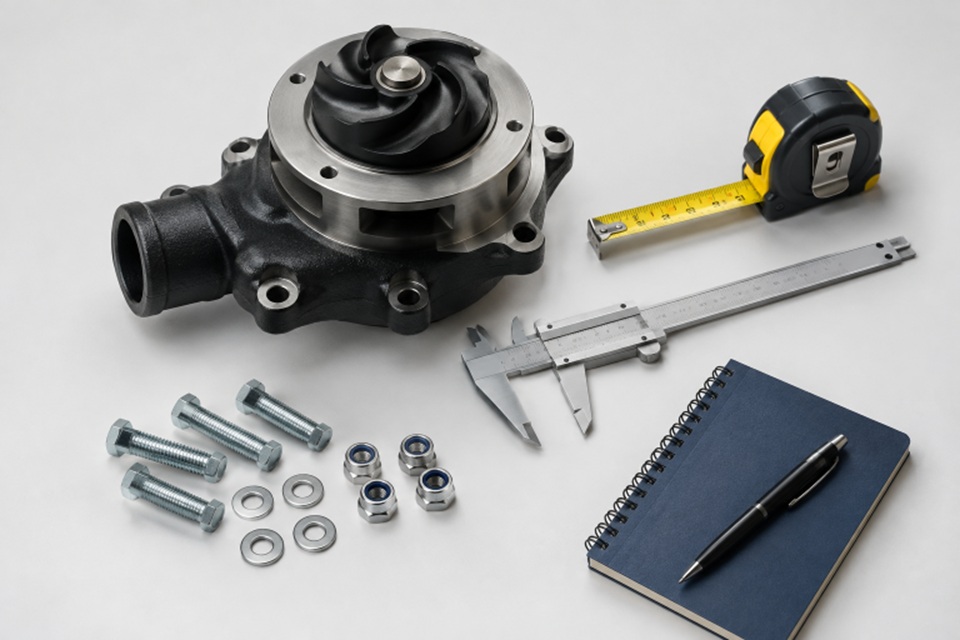
The first step is identification, not shopping. Record the manufacturer, model, serial number, visible part number, installation location, and function. Take photos from several angles, including labels, mounting holes, connectors, and any damaged areas. Measure overall dimensions and thread sizes where relevant.
For electrical parts, note voltage, amperage, polarity, connector style, and wire size. For pumps, plumbing, and cooling components, record hose diameter, pressure rating, flow requirements, and temperature exposure. Material matters as well. A fitting used in a saltwater environment may require bronze, marine-grade stainless steel, or another material suitable for its location and service conditions.
Build A Priority List For Spares
Buying spares at random can consume storage space without improving readiness. Instead, sort items by the consequences of failure and the time required to obtain a replacement.
- Safety-critical: Steering components, bilge switches, fuel-system parts, fire-protection items, and equipment affecting watertight integrity.
- Voyage-critical: Engine cooling parts, charging-system components, belts, filters, communications equipment, and refrigeration spares.
- Routine service: Impellers, seals, gaskets, hose clamps, filters, fasteners, and lubricants.
- Comfort and appearance: Cabinet latches, trim pieces, decorative fittings, and nonessential lighting accessories.
Check Compatibility Before Ordering
Similar appearance does not prove compatibility. Compare the replacement against the original part’s dimensions, mounting pattern, electrical rating, pressure range, flow direction, connector type, and intended operating environment. Verify whether related items, such as brackets, O-rings, seals, or adapters, are required for installation.
Extra caution is appropriate when a part affects propulsion, steering, fuel delivery, seacocks, electrical protection, or hull integrity. When there is uncertainty, consult the equipment manufacturer, a qualified marine technician, or an experienced supplier rather than relying on a product photo alone.
Evaluate Suppliers & Alternatives
A useful marine supplier provides more than a checkout page. Look for complete product descriptions, manufacturer information, technical specifications, stock status, return terms, and a way to confirm fit before ordering. Ask whether an item is original equipment, a manufacturer-approved replacement, or an aftermarket alternative.
Questions To Ask Before Purchase
- Is the item in stock, backordered, or made to order?
- Can the supplier confirm dimensions and operating specifications?
- Does it include required seals, wiring, hardware, or brackets?
- What are the return conditions if the part is unused but does not fit?
- Can the order be delivered to a marina, boatyard, or freight forwarder?
Plan Shipping Around The Voyage
Delivery planning can prevent a modest repair from delaying an entire passage. Order critical items before entering remote cruising areas, confirm the marina’s full delivery instructions, and include the vessel name when requested. Keep tracking information, invoices, and part details in the yacht’s maintenance file.
Owners arranging international deliveries should allow time for carrier transfers, customs processing, and local collection requirements. Practical advice on shipping spare boat parts while cruising highlights the value of local boatyards, yacht clubs, regional suppliers, and freight forwarders when a vessel lacks a fixed address.
Store & Label Spares Properly
A spare only helps if it can be found and installed. Keep items in sealed, labeled containers where appropriate, away from moisture, excessive heat, vibration, and engine-room contaminants. Label each package with the equipment name, location onboard, part number, purchase date, and any shelf-life information.
Store gaskets, O-rings, special fasteners, manuals, and installation tools with their respective components. Sensitive electronics should remain in a dry location. Review stored inventory during scheduled maintenance and replace damaged, expired, or missing items.
Use Maintenance Records To Prevent Delays
A simple spreadsheet, maintenance app, or paper binder can turn a difficult future repair into a routine order. For each recurring item, record the vessel system, installed brand and model, original part number, approved substitute, supplier, quantity onboard, last service date, and installation notes.
Common Mistakes To Avoid
- Ordering from a photo without confirming measurements and ratings.
- Assuming household hardware is appropriate for a marine environment.
- Ignoring thread standards, electrical polarity, or connector differences.
- Replacing a failed component while overlooking worn seals or fasteners.
- Waiting until departure week to order a critical part.
- Failing to test the replacement under normal operating conditions.
A Simple Pre-Order Checklist
- Photograph the installed component and its labels.
- Record part numbers, dimensions, and operating requirements.
- Confirm whether the proposed item is exact, compatible, or temporary.
- Order related seals, gaskets, hardware, and tools.
- Compare the expected delivery with the maintenance schedule.
- Save the invoice, test the installation, and update the maintenance record.
Conclusion
Sourcing replacement parts for an older cruising yacht is easier when records, priorities, compatibility checks, and shipping plans are handled before failure occurs. A well-organized spare-parts system supports safer repairs, reduces delays, and gives owners more confidence when cruising beyond their usual service area.