Key Takeaways:
- Carefully assess your backyard’s dimensions and design before choosing structures.
- Durability and weather resistance extend the lifespan of your outdoor additions.
- Ensure all structures meet current safety standards and best practices.
- Select designs that harmonize with your home’s existing style.
- Maximize functionality by incorporating multi-use features where possible.
Transforming your backyard into an inviting, functional retreat requires a thoughtful selection of outdoor structures. Whether you envision a serene escape or a lively gathering space, understanding how to blend style and safety is essential. Early planning ensures that every addition—from pergolas to playhouses—complements your home—and your lifestyle. If you’re looking for inspiration or high-quality timber solutions, consider consulting a prefinished wood paneling manufacturer for durable, attractive material options.
Well-designed outdoor structures not only enhance the beauty of your space but also improve its usability year-round. By examining your backyard’s layout and prioritizing long-lasting, resilient materials, you’ll set the foundation for additions that feel both intentional and secure. Taking time to plan each detail helps preserve the visual appeal and functionality of your landscape for years to come.
The ever-increasing trend of outdoor living means that homeowners are seeking ways to maximize every inch of their exteriors. Carefully chosen features—such as weather-resistant furniture, shaded seating areas, and integrated play zones—can transform an everyday backyard into a cherished extension of your living space. Investing in safety and craftsmanship ensures these structures aren’t just visually striking, but also built to last.
Assessing Your Backyard Space
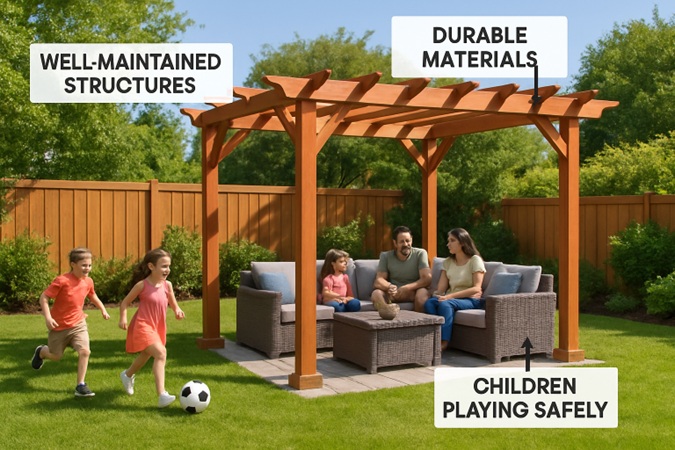
Before any construction or installation begins, take time to measure and map your outdoor area. Understanding the dimensions ensures your chosen structures won’t overwhelm or crowd the space. Make notes of sun patterns, existing trees or shrubs, slopes, and other landscaping elements—these factors impact both aesthetic choices and safety considerations. Effective planning can help avoid mistakes and costly alterations later on.
Prioritizing Safety In Design
Safety is paramount, especially in family-friendly backyards. Opt for rounded edges on play equipment, railings on elevated platforms, and slip-resistant surfaces in walking areas. Features like gates for pool fencing or cushioned zones around swings are not just innovative—local building codes often require them. When structures also reflect your home’s architecture, such as a cedar playhouse in matching hues, they blend seamlessly without sacrificing safety.
Choosing Durable Materials
Enduring quality begins with the right materials. Harsh winters, hot summers, and rainy seasons demand weather-resistant options. Teak and powder-coated aluminum stand up to both active use and extreme climates, making them ideal for high-traffic or exposed areas. Recycled composites provide an eco-friendly, sustainable alternative—resisting rot, pests, and fading over time while also reducing environmental impact.
- Teak and Powder-Coated Aluminum: Noted for strength and resilience, these materials require minimal upkeep and remain attractive for years.
- Recycled Composites: Comprised of recycled plastics and fibers, these options deliver low-maintenance performance alongside environmental responsibility.
Incorporating Stylish Designs
Great design achieves a harmony between function and form. Consider how each structure, whether a pergola, pavilion, or gazebo, will look from inside the house as well as from the garden. Choose classic silhouettes or modern lines to reflect your architectural style, and use finishes or color schemes that tie exterior elements together. Elevated platforms or integrated planters can double as visual focal points, creating cozy retreats or welcoming gathering spots.
Covered seating areas or wooden gazebos not only provide shade and shelter but can also become the heart of your entertaining space. Make sure these additions serve both your practical needs and your style preferences to get the most value and enjoyment from your investment.
Ensuring Proper Installation
Successful installations start with professional planning. Hiring licensed contractors ensures structures are properly anchored and compliant with local regulations, particularly critical in areas with severe weather. DIY installations should always follow manufacturer guidelines in detail—skipping steps or using the wrong fasteners can undermine safety and longevity.
For regions prone to high winds or snow loads, it’s vital to select anchoring systems and materials engineered for those conditions. Even smaller structures, such as storage sheds and arbors, benefit from secure footings and wind resistance. A commitment to thorough installation grants peace of mind and extends the useful life of your outdoor features.
Maintaining Your Outdoor Structures
Maintenance is essential to preserve both safety and style. Periodically inspect all structures for loose fasteners, splintered wood, rust, or other signs of wear. Regular cleaning prevents mold and mildew buildup, while applying protective finishes helps guard against UV damage and moisture infiltration. Create a seasonal checklist to address recurring issues before they become repairs.
- Check for instability, especially after storms or severe weather events.
- Clean hard and soft surfaces with appropriate cleansers to avoid long-term damage.
- Refresh sealants or finishes on wood and metal structures annually.
Conclusion
Selecting safe, stylish outdoor structures begins with understanding your space and ends with consistent care. By choosing resilient materials and designs that suit your home’s character, you can build a backyard retreat that’s both beautiful and enduring. Thoughtful maintenance and professional installation secure your investment—and provide a haven your family will love for years to come.