- Trading fees significantly impact investor behavior and portfolio performance.
- Understanding and minimizing these fees can enhance long-term investment returns.
- Technological advancements and regulatory changes are reshaping the landscape of trading costs.
Introduction
Trading fees, often overlooked by new and seasoned investors alike, can play a fundamental role in shaping investment strategies and outcomes. These costs, if left unmanaged, slowly chip away at total returns, especially for those who trade frequently or manage complex portfolios. Before making any investment, it is wise to compare brokerage fees before you invest. Understanding the structure and consequences of various trading fees enables investors to make informed choices, ensuring that more of their money stays invested and at work in the markets.
In today’s investing landscape, the amount paid in fees can influence not only what you invest in, but also how often you buy or sell assets. Even what might appear to be minor trading costs have lasting implications due to compounding. When investors consistently pay less in fees, the difference in portfolio value becomes significant over years or decades. Knowing how these charges affect your bottom line is one of the first steps to successful, long-term investing.
Trading fees are not just a technical detail; they are a critical consideration that can make or break a retirement goal or financial objective. Some investors avoid making trades to sidestep fees, while others with access to low- or no-fee brokerages may trade more than necessary. Each approach can have a significant impact on returns and risk exposure, underscoring the importance of thoughtful fee management.
Understanding Trading Fees
Trading fees encompass all charges investors pay when buying or selling investments, typically in the form of commissions, spreads, and account maintenance fees. Commission fees are the most recognizable, often displayed as a flat fee or a percentage of each trade. Spread costs refer to the difference between the buying (ask) and selling (bid) prices of a security, which becomes especially relevant in fast-moving or illiquid markets. Account maintenance fees are charged periodically for simply holding an account, regardless of trading activity.
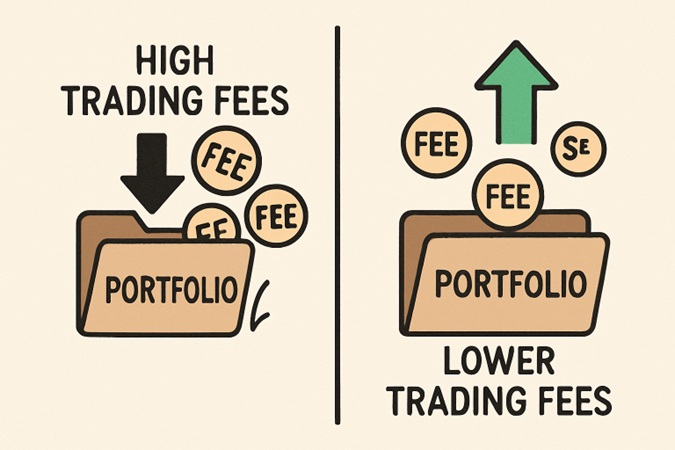
Even fees as seemingly small as 1% to 2% per year can erode significant portions of your investment gains. According to the U.S. Securities and Exchange Commission, consistently paying high fees could potentially halve a portfolio’s value over the course of 30 years. This effect is compounded, as fees paid are not left in the account to grow with the rest of the portfolio.
Psychological Impact Of Trading Fees
Trading fees do more than reduce portfolio returns; they also influence how investors think and act. The level of fees an investor pays can alter the frequency and timing of trades. In markets where the perception of low or no fees is widespread, investors can be drawn into overtrading, moving in and out of positions too frequently, and exposing themselves to avoidable market swings and emotional decision-making.
Conversely, when trading costs are perceived as high, investors may become fee-averse, hesitating to rebalance or make necessary portfolio adjustments. This “fee paralysis” may cause missed opportunities or unbalanced portfolios that carry unnecessary risk. Striking the right balance between minimizing fees and taking informed action is key to long-term success.
Technological Advancements & Fee Reduction
The evolution of digital trading has resulted in a dramatic reduction in trading fees over the past decade. Online brokerages have ushered in commission-free trades, increased competition, and made investing accessible to more people than ever. Fee compression benefits investors by lowering the cost barrier, but also leads to more active trading and the growing popularity of advanced financial products, such as options and margin trading.
While technological advancement has democratized access to markets, it has also prompted investors to rethink their trading patterns and risk tolerance. According to The Pew Charitable Trusts, the move to zero-commission trading platforms has contributed to record trading volumes among retail investors. The result is a landscape where it is easier than ever to access the market, but where it is even more important to understand the hidden ways costs can still influence returns, such as through payment for order flow or wider spreads.
Regulatory Influences On Trading Fees
Regulators have stepped in over recent years to strengthen investor protections, particularly around fee transparency and fairness. Disclosure requirements require brokerages to clearly state all the fees associated with various investment products, helping investors make apples-to-apples comparisons. Regulators have also introduced caps on certain fees to prevent unfair practices and encourage honest competition among platforms. These steps aim to protect investors from hidden or high costs that may go unnoticed yet undermine performance over time.
By fostering transparency and competition, regulatory bodies encourage established and emerging trading platforms to innovate and deliver better value to investors.
Strategies To Minimize Trading Fees
There are several proven strategies investors can use to keep trading costs low. Choosing a brokerage with a transparent, low-fee structure is one of the most effective steps. Limiting the number of trades, especially those not part of a well-defined strategy reduces unnecessary costs. Many brokerages now offer commission-free ETFs, which allow you to diversify your investment with minimal charges.
Batching trades, rebalancing less frequently, and considering dollar-cost averaging can further lower transaction costs and reduce the temptation to time the market based on short-term noise. By making fee reduction a core part of their strategy, investors can enjoy greater compounding and better portfolio growth over time.
Final Thoughts
Trading fees play a pivotal role in shaping investment behavior, risk exposure, and long-term outcomes. By thoroughly understanding and proactively managing these costs, investors can safeguard more of their capital and avoid the subtle drain of accumulated fees. Staying informed about the latest changes in trading technology, regulatory developments, and fee structures empowers investors to make decisions that support their long-term objectives. With careful planning and the right strategies, the impact of trading fees can be kept in check, setting the stage for higher net returns for years to come.