Key Takeaways:
- Modern dock construction increasingly prioritizes sustainability, incorporating eco-friendly materials such as recycled plastics, bamboo composites, and marine-grade aluminum.
- Smart technologies, including remote-controlled lifts, solar lighting, and app-based monitoring, enhance dock convenience, safety, and energy efficiency.
- Modular and adaptive dock systems provide flexibility to respond to fluctuating water levels, seasonal needs, and shared waterfront usage.
- Multifunctional docks transform waterfront spaces into entertainment and relaxation hubs, integrating features like outdoor kitchens, seating, and swim platforms.
- Luxury and aesthetic innovations, from LED lighting to native landscaping, allow docks to blend seamlessly with the environment while enhancing property value.
- Climate-resilient engineering ensures docks withstand extreme weather, rising sea levels, and long-term environmental changes, protecting both property and ecosystems.
- Environmental enhancements, such as fish habitats, living shorelines, and floating wetlands, demonstrate that docks can benefit local ecosystems.
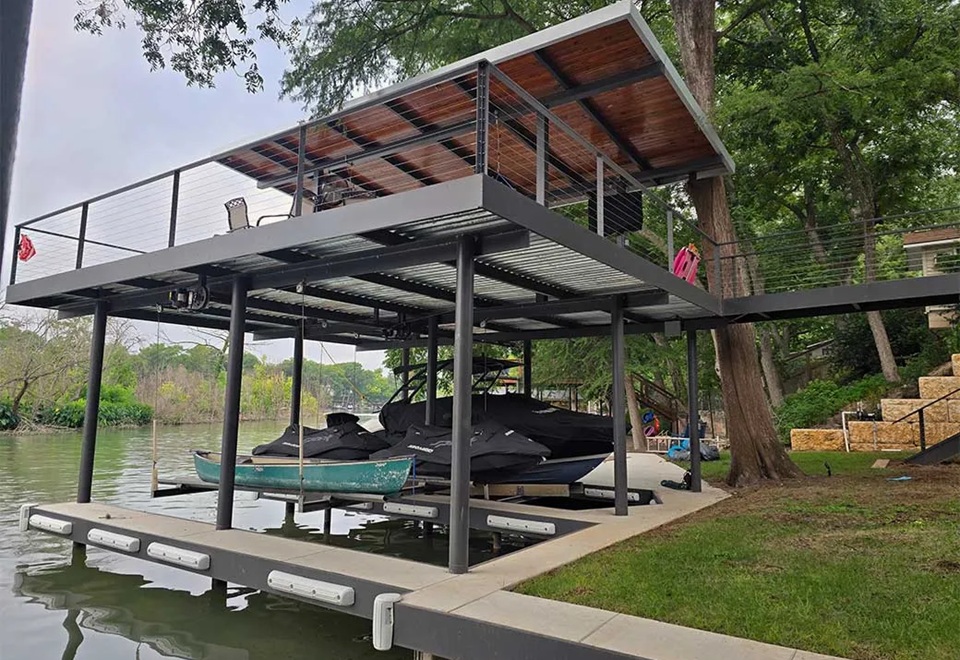
As environmental awareness grows, the marine construction industry is embracing sustainable practices to minimize ecological impact. Modern dock designs now prioritize eco-friendly materials, energy efficiency, and technologies that harmonize with natural surroundings. For those seeking expert guidance in sustainable dock design, Lakeside Structures Inc. offers comprehensive services. As a reputable marine contractor in New Braunfels, they specialize in eco-friendly dock construction, using innovative materials and technologies to create durable, environmentally conscious waterfront structures. Their commitment to sustainability and quality craftsmanship makes them a trusted authority in the field.
Eco-Friendly Materials In Dock Construction
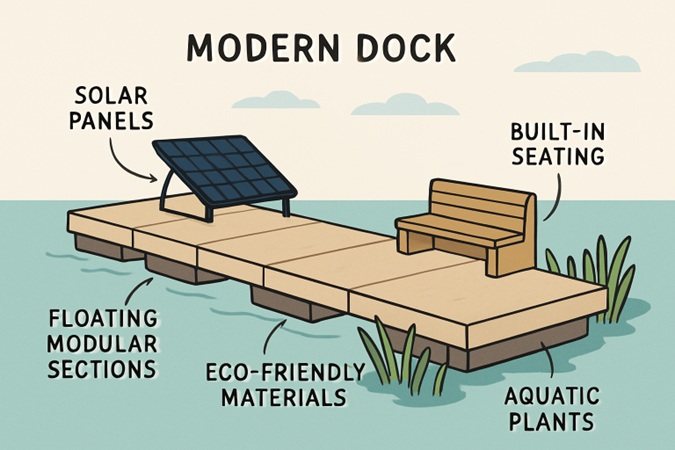
Traditional treated wood, known for leaching chemicals into waterways, is being replaced by sustainable alternatives. Materials like recycled plastic lumber and bamboo composites offer durability and resistance to rot and pests without harming the environment. Marine-grade aluminum frames provide lightweight, corrosion-resistant options that are also recyclable.
Increasingly, dock designers and builders are experimenting with hybrid materials and advanced composites made from agricultural byproducts, such as rice hulls or soy-based polymers. These innovative options not only reduce the carbon footprint associated with traditional material production but also promote a closed-loop approach to building, minimizing waste at every stage. The use of permeable pavers or decking allows rainwater to drain naturally, reducing runoff and promoting groundwater recharge, which is particularly beneficial in sensitive waterfront areas.
Integration Of Smart Technologies
Advancements in technology have enabled the incorporation of smart features into dock systems. Remote-controlled boat lifts and lighting, weather and water level sensors, and smart security systems enhance convenience and safety for dock owners. These innovations allow for real-time monitoring and control, improving the overall functionality of docks.
Further, solar-powered energy solutions are frequently embedded into dock structures, reducing reliance on the electrical grid. Solar dock lights, charging stations for electric boats, and integrated solar panels for powering entire dock systems are becoming mainstream in sustainable dock design. With the integration of wireless networks, it’s even possible to control dock features via smartphone apps, giving owners unprecedented flexibility and real-time updates about weather conditions or security breaches.
Modular & Adaptive Dock Systems
Fluctuating water levels due to climate change have made modular floating docks increasingly popular. These systems can be reconfigured to meet seasonal or event-specific needs, expanded with additional sections, and easily relocated, making them ideal for areas with harsh weather conditions.
The modular approach not only accommodates changing water levels but also supports emerging trends such as shared waterfront access, where community docks serve multiple users without compromising space or environmental integrity. Docks that can be disassembled and stored in adverse weather, or expanded for large gatherings and watercraft, offer versatility and resilience that traditional fixed docks simply cannot provide.
Multifunctional Dock Spaces
Modern docks are evolving into multifunctional spaces that extend a home’s living area. Features such as outdoor kitchens, built-in seating, and swim platforms transform docks into hubs for entertainment and relaxation, enhancing the waterfront living experience.
Some contemporary docks even feature retractable sunshades, fire pits, or weatherproof sound systems, effectively transforming these structures into year-round destinations. Waterfront homeowners are seeking seamless transitions between indoor comforts and outdoor amenities, using their docks as venues for everything from morning yoga to evening gatherings under the stars. This evolution reflects the growing desire for outdoor living spaces that are both purposeful and aesthetically integrated with nature.
Luxury & Aesthetic Innovations
High-end waterfront properties are investing in aesthetically pleasing dock designs that complement their surroundings. Glass railings for unobstructed views, LED lighting systems for dramatic effects, and custom cladding using tropical hardwoods or stone finishes are trending features that blend functionality with elegance.
Lighting design is taking on a new level of sophistication in premium docks, with programmable LED systems that create ambient moods or highlight architectural features. Invisible speakers and integrated Wi-Fi enhance the experience without compromising the serene environment. Designers also employ eco-conscious landscaping along dock perimeters, using native species to blend the structure naturally into its environment, while softening hard edges and supporting local wildlife habitats.
Environmental Enhancements
Innovative dock builders are integrating designs that enhance local ecosystems. This includes fish habitat enhancements underneath docks using suspended structures or artificial reefs, living shorelines with oyster beds or aquatic plants to stabilize erosion, and UV-reflective decking materials that reduce heat and protect marine life.
Biodegradable silt curtains and erosion-control fabrics are often incorporated during construction to protect water quality. Some projects receive certifications or endorsements from environmental agencies for incorporating floating wetlands or using recycled dredge material to create habitats beneficial to birds, fish, and macroinvertebrates. These enhancements demonstrate that docks can be active contributors to the local ecosystem rather than merely inert additions.
Climate-Resilient Engineering
As rising sea levels and extreme weather become more common, dock structures are evolving to be more resilient. Hurricane-rated anchoring systems, corrosion-proof components for saltwater environments, and floating breakwaters to protect docks from waves and storm surges are engineering advancements that ensure durability and longevity.
Many new dock projects undergo risk assessments and employ computer modeling to predict how the structure will perform under various climate scenarios. Adjustable pilings, reinforced connection points, and built-in drainage further protect against both sudden storms and gradual changes in water levels. Engineers are not only considering the current climate, but also adapting their designs to accommodate decades of environmental shifts, aiming to provide security for both property and ecosystem.
Embracing these innovative approaches not only enhances the functionality and aesthetics of docks but also helps preserve our waterways for future generations.
Final Thoughts
Sustainable dock design represents a new era in marine construction, one where functionality, aesthetics, and environmental stewardship go hand in hand. By embracing eco-friendly materials, smart technologies, modular systems, and climate-resilient engineering, modern docks serve both the homeowner and the surrounding ecosystem. Multifunctional and luxurious features make docks extensions of living spaces, while environmental enhancements actively support local flora and fauna.
For waterfront property owners seeking guidance, working with experienced marine contractors, such as Lakeside Structures Inc. in New Braunfels, ensures that every dock project balances durability, design, and ecological responsibility. With careful planning and the integration of sustainable innovations, docks can provide years of enjoyment, safety, and environmental harmony, setting a standard for how waterfront structures should evolve in a changing world.