Gear Up For The Best Houston Golf Experience
Embarking on your golf journey in Houston means getting equipped for success. The right clubs can significantly impact your early experiences, making the game more enjoyable and accelerating your learning curve. For beginners, the focus should always be on forgiveness – clubs designed to minimize the impact of off-center hits. This often means looking for game-improvement clubs featuring larger clubfaces, perimeter weighting, and cavity-back designs. These characteristics create a larger “sweet spot,” making it easier to get the ball airborne and achieve more consistent results, even with an evolving swing.
When considering your first set, you’ll encounter two primary approaches: buying a complete package set or building your own set with individual clubs. While building a custom set might appeal to some, for most newcomers, a complete package set is often the most practical and cost-effective starting point. These sets are thoughtfully curated to provide a balanced collection of clubs, typically ranging from 9 to 11 pieces, rather than the full 14-club limit allowed by golf rules. They are designed with consistent loft gapping, meaning the distance between each club is sensible for a beginner, and they often include a suitable bag and headcovers, taking the guesswork out of your initial purchase.
Many reputable brands offer excellent beginner-friendly options. For instance, we’ve seen comprehensive reviews of various starter sets under $500, which can be a fantastic way to get started without breaking the bank. You can explore some top recommendations and insights into value-packed options by checking out resources like “Best Golf Clubs for Beginners — Full Sets Tested Under $500.” For more general guidance on selecting your initial gear, our own guide on the “Best Golf Clubs for Beginners: Start Your Game Right” offers valuable perspectives.
The choice between a package set and individual clubs depends on your budget, commitment level, and desire for customization. Here’s a brief comparison to help you decide:
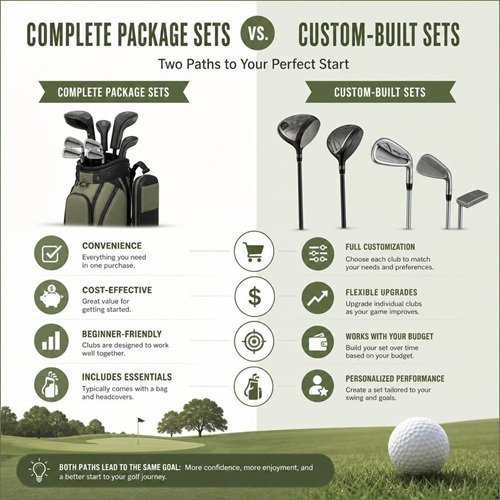
While a package set offers convenience and a lower entry barrier, building your own set, especially with used clubs, provides flexibility to upgrade individual pieces as your game develops.
How To Build Your First Set Of Clubs
Crafting your initial set of golf clubs is an exciting step, and understanding the core components will empower you to make informed decisions. The goal for a beginner isn’t to amass a full 14-club arsenal, but rather to select a functional, forgiving set that allows you to learn the fundamentals without being overwhelmed. As we discuss in “How to Choose Golf Clubs: 5 Key Factors to Consider,” focusing on the right club types and specifications is paramount.
Selecting The Right Clubs For Houston Golf Courses
When you’re starting out, fewer clubs can actually lead to faster improvement. Experts often recommend a set of 6 to 10 clubs to begin. This allows you to truly learn each club’s capabilities and build a consistent swing. Here’s a breakdown of what to prioritize:
- Driver: For many beginners, a driver can be intimidating. If you choose to include one, look for a model with a higher loft (10.5 to 12 degrees) and a larger clubhead (460cc) to maximize forgiveness and help get the ball airborne. These features are crucial for new players looking to gain confidence off the tee. For deeper insights into selecting your first long-distance club, our article on “Golf Drivers for Beginners” provides excellent advice.
- Fairway Wood or Hybrid: Many new golfers find a 5-wood or a hybrid (4H or 5H) much easier to hit than a driver, especially off the fairway or from light rough. Hybrids, with their wider bases and weight distributed towards the back, are particularly forgiving and can effectively replace harder-to-hit long irons. A 5-wood offers a higher launch than a 3-wood, making it more accessible for beginners. Resources like “What Clubs Should a Beginner Buy First for Golf?” emphasize the utility of these clubs for new players.
- Mid-Irons (6, 7, 8, 9): Instead of a full set of irons, focus on the mid-to-short irons. A 7-iron is often considered the most versatile club for learning the swing. For a beginner’s set, having a 6-iron through pitching wedge (PW) provides a good range for different distances on the course. Game-improvement irons, characterized by their cavity-back design and perimeter weighting, are ideal as they offer maximum forgiveness on off-center strikes.
- Wedges: You don’t need a full complement of wedges right away. A pitching wedge (which often comes with an iron set) and a sand wedge (typically 54-56 degrees) are sufficient. The sand wedge is invaluable for getting out of bunkers and for short shots around the green. Heavily used wedges can lose their groove effectiveness, so if buying used, ensure the grooves are still in good condition.
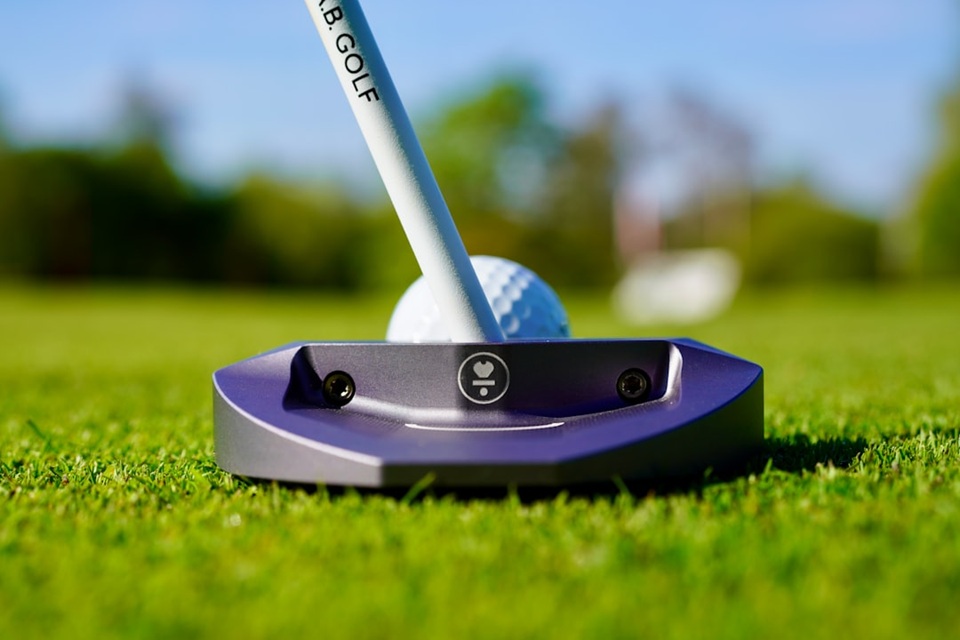
- Putter: This is arguably the most important club in your bag, as putting accounts for a significant portion of your strokes. For beginners, a mallet-style putter with good alignment aids is highly recommended. Mallet putters generally offer higher Moment of Inertia (MOI), providing more stability and forgiveness on mishits, helping you keep your putts on line.
Shaft Flex and Club Length: These are critical factors even for beginners.
- Shaft Flex: This refers to how much the shaft bends during your swing. Most adult male beginners will benefit from a “Regular” flex shaft. Players with faster swing speeds or more athletic builds might consider “Stiff,” while those with slower speeds, including many women and seniors, might find “Senior” or “Ladies” flex more appropriate. Graphite shafts are lighter and can help increase swing speed for moderate to slow swings, especially in drivers and woods. Steel shafts, while heavier, can offer more feedback and are often found in irons.
- Club Length: While a full custom fitting isn’t usually recommended for absolute beginners, ensuring your clubs are roughly the correct length for your height is important. Standard lengths work for most, but if you’re particularly tall or short, you might consider slightly longer or shorter clubs to promote a more natural swing posture.
Finding Quality Gear In The Houston Golf Scene
Houston’s vibrant golf community means you have excellent resources for finding your first set of clubs. Local retailers are invaluable for beginners, as they allow you to physically hold clubs, get a feel for their weight and balance, and even try out different putters. Stores like Edwin Watts Golf in Houston, TX, and Golf Galaxy in Spring, TX, offer a wide selection and knowledgeable staff who can guide you through the options.
While online shopping offers convenience, visiting a physical store provides the opportunity to compare models side-by-side and ask questions. Many local golf shops also offer basic fitting services that, while not as comprehensive as a full custom fitting, can ensure your clubs are generally suited to your stature. As you explore the many Premier Houston golf courses and practice facilities, having a trusted local shop for advice and equipment can be a huge asset.
Smart Budgeting: New Vs. Used Golf Clubs
One of the biggest considerations for new golfers is how much to spend on their first set. The good news is that you don’t need to empty your wallet to get started. A realistic budget for a beginner’s first set of clubs in 2026 can range from $200 to $1,000, depending on whether you opt for a budget package or a more curated selection. For around $150-$350, you can typically acquire at least nine decent clubs, which is more than enough to begin your golfing journey. Our guide on “Buying Your First Set of Golf Clubs” delves into these financial aspects in more detail.
A key decision point is whether to buy new or used clubs.
New Clubs (Package Sets):
- Pros: Convenience, matching set, often include a bag and headcovers, warranty.
- Cons: Higher upfront cost, you might outgrow the technology quickly if your game progresses rapidly.
- Budget Range: Starter packages typically run from $200 to $1,000. Higher-end complete sets can reach $1,399 or more.
Used Clubs:
- Pros: Significantly more affordable (often 40-60% less than new), allows you to build a customized set, easier to upgrade individual clubs as your game improves. Used clubs from just a few years ago still incorporate excellent technology and can perform nearly identically to brand-new models for a fraction of the price.
- Cons: No warranty, condition can vary, requires more research to find good deals and assess quality. Wedges, in particular, should be inspected carefully as groove wear can impact performance.
- Where to Buy: Online retailers like 2nd Swing Golf and GlobalGolf (which also offers a “UTrade-In” program) are excellent sources for certified pre-owned clubs. You can also find great deals at local pro shops, consignment stores, or even from friends.
Many experienced golfers advocate for starting with used clubs. As “If I Had To Build A Used Golf Set For A Beginner, This Is What I’d Buy” suggests, a carefully selected used set can offer superior performance and value compared to a budget-new package set. This approach allows you to invest in higher-quality, more forgiving models that might be out of reach if purchased new. Used clubs can last 10+ years with regular use, making them a sustainable choice for beginners. For further discussion on this topic, consider reading “Is purchasing a used set of golf clubs a suitable option for beginners?” or “Should someone who is just starting out playing golf buy used golf club sets or new ones?”.
For example, a solid used driver from a few seasons ago, a forgiving set of used game-improvement irons, a new or lightly used sand wedge, and a stable used mallet putter can form an excellent foundation. This strategy lets you allocate your budget wisely, focusing on clubs that will genuinely help your game without overspending.
Frequently Asked Questions About Houston Golf & Gear
Starting golf can bring up a lot of questions, especially when it comes to equipment. Here, we address some of the most common inquiries from new players.
How many clubs does a beginner actually need to start playing?
While the rules of golf permit a maximum of 14 clubs in your bag, a beginner certainly doesn’t need that many. In fact, having too many clubs can often be counterproductive, leading to confusion and slower learning. Most experts agree that a beginner needs anywhere from 6 to 10 clubs to comfortably navigate a course and learn the game effectively. A quality starter package typically includes between nine and eleven clubs, providing a good balance. For a detailed breakdown of what to include, “How to Choose Your First Golf Club Set (Beginner Guide 2026)” offers practical advice on building a minimal yet effective set. Starting with fewer clubs allows you to focus on developing a consistent swing with each one, rather than constantly deliberating over which club to use.
Should a beginner get custom fitted for clubs immediately?
This is a common question with a nuanced answer. For an absolute beginner, a full custom fitting is generally not recommended right away. Why? Because your swing is still developing and inconsistent. A fitting is most beneficial when you have a repeatable swing that can be accurately measured and optimized.
Instead, prioritize getting a forgiving starter set that is generally appropriate for your height and strength. Invest in lessons to build a foundational swing. After you’ve played 20-30 rounds, developed some consistency, and perhaps started to break 100 regularly, then a custom fitting becomes incredibly valuable. At that point, a fitting can truly fine-tune your equipment to your established swing mechanics, helping you shave strokes off your game. Our article, “A Better Game: When Should You Get a Golf Fitting,” further explores the optimal timing for this investment.
What is a realistic budget for a beginner’s first set of clubs in 2026?
In June 2026, the cost of a beginner’s first set of golf clubs remains quite flexible, catering to various commitment levels and financial plans.
- Budget-Friendly ($200-$500): You can find excellent entry-level package sets within this range. These sets typically include 9-11 clubs (driver, fairway wood/hybrid, a partial set of irons, a wedge, and a putter) and often a bag. While they might not offer the latest technology, they provide ample forgiveness and are perfect for testing the waters without a significant investment. You could also assemble a decent used set for this price.
- Mid-Range ($500-$1,500): This category offers higher quality package sets or allows for a well-curated used set of more premium brands from recent years. Clubs in this range will likely offer more advanced game-improvement features and better durability. This is a popular choice for beginners who are committed to playing regularly and want equipment that can grow with them for a few years.
- Premium ($1,500+): While not typically recommended for absolute beginners, some might opt for a premium new package set or a carefully constructed used set featuring current-generation, high-performance clubs. This level often includes options for basic customization or more advanced materials.
For a comprehensive look at the different cost tiers and what you can expect at each level, “Beginner Golf Club Costs In 2026: Budget, Mid-Range And Premium Options” provides an excellent breakdown of various setups. The goal is to find a set that matches your current skill level and commitment, allowing you to enjoy the game without feeling pressured by your equipment.
Conclusion
Embarking on your golf journey by “buying my first set of golf clubs” is a pivotal moment. By focusing on forgiveness, understanding the essential clubs you need (rather than all 14), and making smart budgeting decisions between new package sets and quality used clubs, you can set yourself up for a rewarding experience on the course. The right equipment is a tool to enhance your enjoyment and learning, not a barrier to entry.
As you develop your skills and passion for the game, you’ll find yourself exploring more advanced equipment options and perhaps even considering specialized instruction. For our younger enthusiasts eager to learn the game, we offer fantastic opportunities through our “Junior Golf Instruction” programs, designed to nurture future golfers from the ground up. Get out there, have fun, and enjoy the beautiful game of golf!