- Choose a truck that is most often used for work, not its biggest advertised number.
- Payload includes people, tools, cargo, installed equipment, and trailer tongue weight.
- Bed configuration, body equipment, powertrain, and driver comfort can affect productivity every day.
- Fuel, maintenance, insurance, and downtime matter as much as the purchase price.
A work truck is a business tool, so the right one should make daily jobs easier, safer, and more profitable. Whether you are comparing quality work trucks Tulsa options or evaluating trucks elsewhere, begin with the work your crew actually performs instead of choosing based on appearance, trim level, or maximum towing claims.
The best truck is not always the largest model available. A vehicle that is too small can be overloaded, wear out quickly, and create safety concerns. A truck that is far larger than necessary may cost more to buy, fuel, insure, park, and maintain. The goal is a practical balance of capability, operating cost, safety, and daily usability.
Start With The Work, Not The Truck
Write down what happens during a normal week. Include regular service calls, deliveries, material runs, towing jobs, employee transportation, and travel between job sites. Separate everyday tasks from rare situations. A truck should be sized for the heaviest loads and toughest duties it handles consistently, with a reasonable margin for occasional demands.
Also consider where it will operate. City contractors may need a shorter wheelbase, easier parking, and good visibility in tight alleys. A landscaper may prioritize bed length, trailer control, and equipment storage. A plumber may benefit more from a service body with lockable compartments than from a large open bed. A building contractor who pulls equipment several days a week may need heavier suspension, stronger brakes, and more towing capacity.
Calculate Payload Before Towing Capacity
Payload is the total weight the truck can carry in and on itself. It includes the driver, passengers, tools, cargo in the bed, racks, toolboxes, ladder systems, service bodies, and the downward force from a connected trailer. That last item is often overlooked. Trailer tongue weight uses part of the truck’s available payload.
Start with a realistic estimate of the truck’s usual load. Weigh common tools and equipment if possible, then add the weight of workers, consumables, materials, and permanent accessories. A loaded toolbox, ladder rack, fuel tank, snowplow mount, or utility body can take up more capacity than expected. Avoid planning to operate at the published limit every day. Leaving room for unexpected materials and changing job needs helps protect handling, braking, and tire life.
Match The Truck To The Load
- Compact trucks can suit light service work, small deliveries, mobile estimates, and routes with limited parking.
- Half-ton trucks offer flexibility for moderate loads of tools, materials, and employees, and occasional trailer use.
- Heavy-duty pickups are better suited to frequent towing, heavier payloads, large trailers, and demanding terrain.
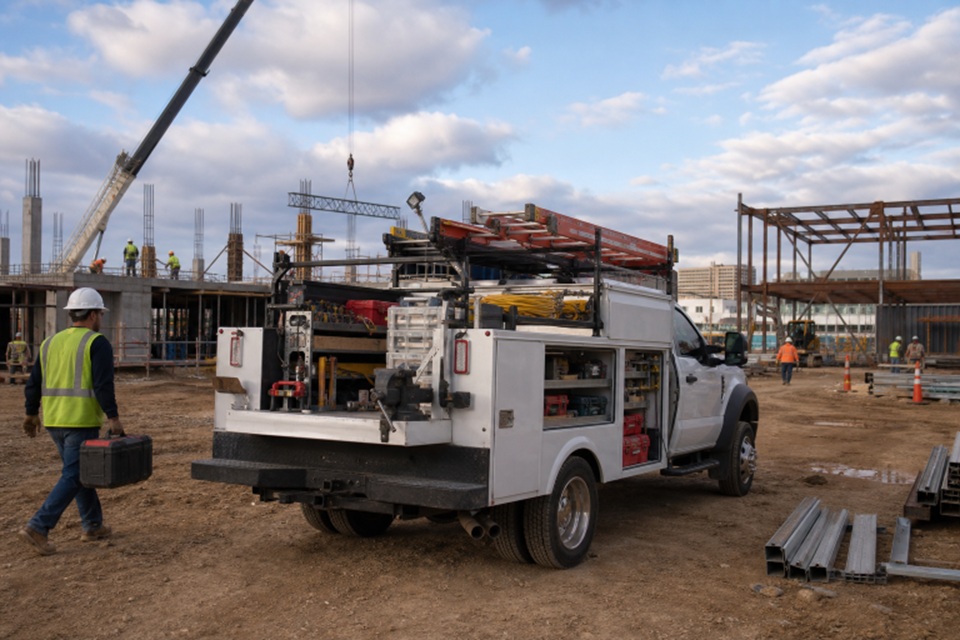
- Chassis-based trucks make sense when the business needs a service body, utility box, dump body, flatbed, or another specialized upfit.
Do not assume that trucks within the same general class have identical ratings. Cab style, bed length, drivetrain, engine, axle configuration, tires, and installed equipment can all change usable payload and towing capability. Review the specific truck’s door-jamb label and manufacturer documentation before committing to a purchase.
Review Towing Needs Carefully
Use the trailer’s fully loaded weight, not its empty weight, when evaluating towing needs. Include equipment, materials, fuel, attachments, and anything stored in the trailer. Then check the truck’s towing, payload, hitch, gross vehicle, and gross combined weight ratings. These figures work together, so a high tow rating does not remove payload limits.
Make sure the truck has the right hitch receiver, trailer brake controller, wiring connection, towing mirrors, and cooling equipment for the trailer. Cargo should be balanced and secured before every trip. Following safe cargo tie-down practices helps reduce shifting loads, roadside hazards, and preventable damage to equipment.
Choose The Right Bed & Body Setup
The body configuration can influence productivity just as much as engine output. A standard bed works well for mixed cargo and general repairs. A longer bed may be useful for lumber, ladders, pipe, and bulky materials. Service bodies keep hand tools organized and protected, while dump bodies can save labor when moving mulch, gravel, soil, or demolition debris.
Think through the complete workflow. Decide where to place ramps, tie-down points, bins, racks, compressors, generators, and jobsite supplies. Check bed height, rear access, side access, and whether doors or drawers can open when a trailer is attached. A well-organized truck reduces wasted time looking for tools and may help keep valuable equipment out of sight.
Compare Powertrain Options
Gas engines often fit lighter-duty work, mixed driving, and businesses that want straightforward service. Diesel may be appropriate for frequent heavy towing, long highway routes, and sustained loads, although it can add upfront and maintenance costs. Hybrid trucks can be useful for repeated stops and local routes, while electric trucks may fit predictable daily mileage when dependable overnight charging is available.
Review the whole operating environment before selecting a powertrain. Consider route length, towing frequency, local fuel or charging access, seasonal temperatures, service availability, payload needs, and how long the truck will remain in the fleet. The best choice is the one that supports the work schedule without adding avoidable complexity.
Prioritize Safety, Comfort, & Productivity
Useful safety equipment includes backup cameras, wide-angle mirrors, blind-spot monitoring, automatic emergency braking, trailer sway control, bright work lights, sturdy steps, grab handles, and secure storage. These features can improve awareness during backing, lane changes, loading, and jobsite movement.
Drivers should stay especially alert around workers, pedestrians, roadside crews, and busy loading areas. The habits covered in work-zone driving guidance, including slowing down, watching signs, avoiding distractions, and leaving extra following distance, are valuable for any truck that spends time near traffic or active work sites.
Comfort also supports safer workdays. Test seat support, visibility, climate control, cab storage, entry height, and control placement. If multiple workers ride together, make sure the cab has enough space for everyone. A truck that is easy to enter, comfortable to drive, and organized for paperwork and devices can help the driver stay focused through long routes and repeated stops.
Estimate The Full Cost Of Ownership
- Set a realistic purchase or financing budget.
- Estimate fuel or charging costs based on actual weekly mileage and loads.
- Account for tires, brakes, oil, filters, scheduled service, and repairs.
- Include insurance, registration, taxes, and upfit costs.
- Consider the cost of downtime when a truck cannot work.
- Compare expected resale value and useful service life.
Use A Simple Pre-Purchase Checklist
- What is the heaviest load carried regularly?
- What is the heaviest trailer when fully loaded?
- How many miles will the truck travel each week?
- Will it operate on pavement, gravel, mud, steep grades, or crowded streets?
- Which body accessories will be added after purchase?
- Where will maintenance and repairs be completed?
- Does it leave room for reasonable business growth?
Common Buying Mistakes To Avoid
Common mistakes include shopping only by towing capacity, forgetting passenger and accessory weight, adding a heavy service body without checking the remaining payload, and buying more truck than the business will use. It is also important to consider turning space, parking limitations, bed height, and the experience of the person who will most often drive the truck. A test drive with that driver can reveal issues that specifications alone will not show.
Conclusion
A capable work truck should fit the business, the load, and the driver. By reviewing payload, towing needs, bed or body setup, safety features, operating costs, and future plans, buyers can make a more confident decision. A careful assessment before purchase can lead to a truck that delivers dependable work for years to come.