The Fundamentals Of Peptide Research & Molecular Biology
In June 2026, the scientific world is abuzz with Peptide Research. This field is experiencing a remarkable boom. Peptides are short chains of amino acids. They act as essential messengers throughout our bodies, from hormones to immune signals.
The public’s interest in peptides is undeniable. Global Google searches for ‘peptides’ jumped from 1.3 million per month in 2024 to about 8 million per month today. This reflects their growing importance in both wellness trends and serious scientific study.
Why are peptides so captivating? They hold a unique place in medicine. They are more specific than many small molecule drugs. Yet, they are simpler to work with than large proteins. This makes them excellent candidates for new therapies. Peptide drugs are already a significant part of healthcare. Worldwide sales surpassed $70 billion in 2019. Nearly 100 FDA-approved peptide drugs exist. Around 150 more are currently in clinical trials.
We will explore the exciting landscape of peptide research. We will cover their basic biology and how they are synthesized. We will also look at their therapeutic applications and the latest breakthroughs. Join us as we examine the challenges and innovative future of this vital scientific area.
At the heart of peptide research lies a fundamental understanding of these biomolecules. Peptides are essentially short chains of amino acids linked together by peptide bonds. They are the building blocks of life, acting as crucial communicators within biological systems. While often discussed alongside proteins and small molecules, peptides occupy a unique and increasingly valuable space in molecular biology.
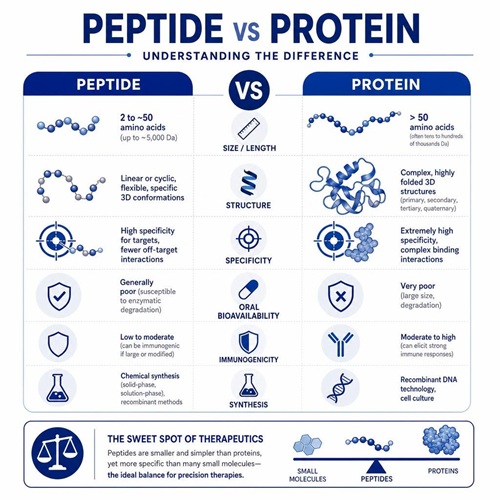
To understand their significance, it’s helpful to compare peptides with their molecular counterparts:
Feature Small Molecules Peptides Proteins Size/Length Typically < 500 Daltons 2 to ~50 amino acids (up to ~5,000 Daltons) > 50 amino acids (often tens to hundreds of thousands of Daltons) Structure Diverse, often rigid, synthetic or natural Linear or cyclic, flexible, specific 3D conformations Complex, highly folded 3D structures (primary, secondary, tertiary, quaternary) Specificity Can be broad or highly specific, potential off-target effects High specificity for targets, fewer off-target interactions Extremely high specificity, complex binding interactions Oral Bioavailability Often good Generally poor (susceptible to enzymatic degradation) Very poor (large size, degradation) Immunogenicity Generally low Low to moderate (can be immunogenic if large or modified) Moderate to high (can elicit strong immune responses) Synthesis Chemical synthesis Chemical synthesis (solid-phase, solution-phase), recombinant methods Recombinant DNA technology, cell culture This table illustrates why peptides are so appealing. They are generally smaller than full proteins, typically comprising fewer than 50 amino acids, which gives them advantages in terms of synthesis and modification. Yet, they offer a higher degree of specificity and fewer off-target effects compared to many small molecule drugs. This balance makes them ideal candidates for targeting specific biological pathways with precision. For a more comprehensive overview of these fascinating molecules, exploring resources like What Are Peptides? The Complete Science-Backed Guide to Cell Signaling, Metabolism, Hormones & Longevity can provide deeper insights. As one chemist aptly puts it, the scientific definition of a peptide is simply “any relatively short chain of amino acids,” a concept that has become increasingly vital in medical research today. For a deeper dive into the scientific perspective, a blog post titled Ah, Peptides. Where to Begin? offers a compelling read.
Cellular Signaling Mechanisms In Peptide Research
Peptides play a pivotal role in cellular communication, acting as intricate signaling molecules. Their ability to bind specifically to cell surface receptors, such as G-protein coupled receptors (GPCRs), initiates complex intracellular cascades that regulate a myriad of physiological processes. This precise receptor binding is what makes peptides so effective in modulating biological functions, from regulating metabolism to influencing immune responses.
Our understanding of these mechanisms is constantly evolving. Researchers are continually uncovering new peptide-receptor interactions and the downstream effects they trigger. This knowledge is crucial for designing novel peptide therapeutics that can selectively activate or inhibit specific cellular pathways. The sheer diversity of peptides, with approximately 7,000 different types present in the human body at any given time, underscores their widespread involvement in nearly every aspect of our biology. Further exploration into this dynamic field can be found in resources dedicated to Peptides in Scientific Research.
Historical Milestones In Peptide Research
The journey of peptide research is marked by groundbreaking discoveries that have reshaped medicine. One of the earliest and most significant milestones was the isolation of insulin in 1921 by Frederick Banting and Charles Best. This 51-amino acid peptide hormone, crucial for glucose regulation, quickly became the first commercial peptide drug, revolutionizing the treatment of diabetes.
Decades later, in 1969, Dr. Jaw-Kang Chang’s pioneering work in synthesizing TRH (Thyrotropin-releasing hormone) led to the discovery of neuropeptides, expanding our understanding of the brain’s complex chemical messengers. These early successes paved the way for the development of numerous hormone mimics and other peptide-based drugs. Today, the availability of high-quality research peptides from specialized suppliers continues to fuel innovation across various scientific disciplines.
Synthesis & Chemical Modification Of Research Peptides
The ability to synthesize peptides with atomic-level precision is fundamental to advancing peptide research. Over the years, significant strides have been made in peptide chemistry, moving from laborious solution-phase methods to more efficient and automated techniques.
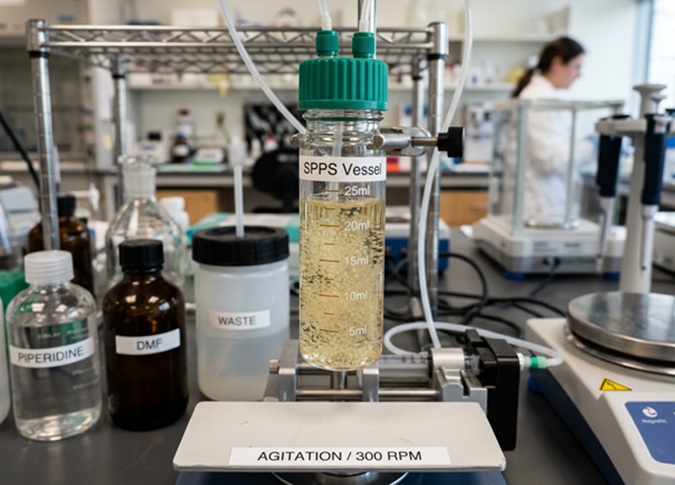
The gold standard for peptide synthesis today is solid-phase peptide synthesis (SPPS). This method, pioneered by Robert Bruce Merrifield, involves attaching the C-terminal amino acid to an insoluble resin, then sequentially adding protected amino acids to build the peptide chain. This approach simplifies purification and allows for the synthesis of complex sequences. While SPPS is widely used, solution-phase synthesis still holds relevance for certain applications, particularly for very long peptides or specific modifications.
Beyond the basic assembly of amino acids, chemical modification plays a crucial role in enhancing the therapeutic properties of peptides. This includes strategies to improve stability, bioavailability, and target specificity. Detailed explanations of these processes, including the comparison between solid-phase and solution-phase techniques, are available in resources like Peptide Synthesis Explained: Solid-Phase vs Solution-Phase. Furthermore, emerging technologies like Enzymatic Ligation in Peptide Synthesis: Why It May Be the Next Major Leap in Complex Peptide Manufacturing promise even more efficient and precise ways to create complex peptide structures. The expertise required for such advanced manufacturing is often highlighted by companies specializing in this area, underscoring the critical role of a top-tier peptide synthesis company in delivering reliable research materials.
Overcoming Aggregation & Enhancing Stability
One of the persistent challenges in peptide synthesis, especially for longer or more complex sequences, is the tendency for peptides to aggregate. This aggregation can hinder synthesis efficiency, reduce purity, and complicate subsequent research. Researchers are continuously developing innovative strategies to overcome this. For instance, recent breakthroughs, such as those described in a Nature Communications article on Pyridium-π interaction preserves N,S-benzylidene thioacetals in acidolysis enabling efficient protein chemical synthesis, demonstrate novel chemical approaches to disrupt aggregation and improve the yield of high-quality synthetic proteins and peptides.
Another critical aspect of peptide stability, particularly for research and storage, is proper preservation. Many research peptides are supplied in a lyophilized (freeze-dried) form. This process removes moisture, which is a primary factor in peptide degradation, significantly extending their shelf life and maintaining their structural integrity for long-term studies. Understanding the benefits of Lyophilized peptide research is crucial for any laboratory working with these sensitive molecules.
Quality Control & Analytical Verification
Ensuring the purity and identity of synthesized peptides is paramount for reliable research outcomes. Rigorous quality control measures are essential, utilizing advanced analytical techniques. High-Performance Liquid Chromatography (HPLC) is a standard method for assessing peptide purity, separating compounds based on their chemical properties. Mass spectrometry (MS) complements HPLC by providing precise molecular weight information, confirming the peptide’s identity and detecting potential modifications or impurities.
These analytical tools are indispensable for researchers. They provide the confidence that the peptides being used in experiments meet stringent quality standards. For those looking to delve deeper into these analytical methods, resources like HPLC and Mass Spectrometry in Peptide Analysis and How to Read a Peptide COA: Understanding HPLC & Mass Spectrometry (MS) offer valuable guidance on interpreting Certificates of Analysis (CoAs) and ensuring the integrity of research materials.
Therapeutic Areas & Experimental Models In Laboratory Settings
The versatility of peptides has led to their exploration across a vast array of therapeutic areas and experimental models. From metabolic disorders to neurodegenerative diseases, peptides offer a targeted approach to intervention, often with fewer side effects than traditional small molecule drugs.

One of the most notable successes in peptide therapeutics is the class of GLP-1 (Glucagon-Like Peptide-1) analogues. These peptides, such as Trulicity, Victoza, and Rybelsus, have revolutionized the treatment of type 2 diabetes and obesity. In 2019 alone, these three GLP-1 analogues accounted for billions of dollars in sales, highlighting their profound impact on metabolic research and patient care. The ongoing development in this space continues to be a major focus for peptide researchers globally, with many entities dedicated to advancing Peptide research solutions for these critical health challenges.
Tissue Repair & Wound Healing Models
In the realm of regenerative medicine, certain research peptides have garnered significant attention for their potential in tissue repair and wound healing. Peptides like BPC-157 and TB-500 are frequently studied in laboratory settings for their purported abilities to accelerate recovery from injuries, promote cellular migration, and modulate the extracellular matrix.
While animal studies have shown promising results, indicating potential benefits for tendon, muscle, and gut healing, the scientific evidence supporting their widespread use in humans remains largely preliminary. For instance, a review of BPC-157 literature found only three pilot studies involving a total of 30 human participants. This highlights the critical gap between preclinical observations and robust human clinical data, underscoring the need for further rigorous research before these peptides can be considered for approved therapeutic applications.
Mitochondrial & Neurodegenerative Research
Peptides are also at the forefront of research into complex conditions like neurodegenerative diseases and mitochondrial dysfunction. MOTS-c, a mitochondrial-derived peptide, is being investigated for its role in metabolic regulation and its potential to extend lifespan and prevent obesity, as observed in mouse models. While early human trials have explored its dosing and effects in individuals with obesity and fatty liver disease, the full therapeutic potential and long-term safety are still under evaluation.
Another compelling example is the GV1001 peptide, a 16-amino acid sequence derived from human telomerase reverse transcriptase. Originally studied for cancer immunotherapy, GV1001 has shown promise in preclinical models of Alzheimer’s disease by rescuing neurodegeneration. Research suggests it may act by binding to bradykinin receptor 1 (B1R), influencing microglial activation and promoting the clearance of amyloid-beta plaques, improving memory deficits. These studies exemplify the innovative ways peptides are being explored to tackle some of the most challenging health issues.
Key Challenges & Future Directions In Peptide Engineering
Despite their immense therapeutic potential, peptide drugs face several significant challenges in their development. These include issues related to stability, delivery, and navigating complex regulatory pathways. Peptides are often susceptible to enzymatic degradation in the body, leading to short half-lives and requiring frequent administration, typically via injection. Their poor membrane permeability also limits oral bioavailability, making non-injectable delivery methods a major hurdle.
To address these challenges, researchers are exploring innovative solutions. One common strategy to enhance peptide stability for research purposes is lyophilization, a freeze-drying process that preserves the peptide’s integrity by removing moisture. Understanding Why Research Peptides Are Typically Lyophilized and How This Benefits Research is crucial for maintaining the quality of experimental materials. Proper storage, as detailed in Peptide Storage Stability Guidelines, is equally important. Beyond these practical considerations, the broader pharmaceutical industry is investing heavily in novel delivery systems, such as oral formulations engineered for resistance to digestive enzymes, transdermal patches, and long-acting injectable depots. These advancements are critical for translating promising research into accessible patient therapies.
Artificial Intelligence & Generative Design
The landscape of peptide discovery is being rapidly transformed by artificial intelligence (AI) and generative design. Traditional peptide discovery often involves extensive screening of libraries or rational design based on known structures. However, AI-driven approaches, such as the ApexGO framework, are accelerating this process by enabling the de novo design and optimization of peptides with specific desired properties.
These generative models, often leveraging machine learning and Bayesian optimization, can explore vast chemical spaces to identify novel peptide sequences with enhanced binding affinity, stability, or therapeutic activity. For example, ApexGO has shown remarkable success in optimizing antimicrobial peptides, demonstrating an 86% experimental hit rate for generated sequences against multidrug-resistant bacteria. This technology not only speeds up the discovery phase but also allows for the fine-tuning of existing peptide templates, offering a powerful tool for sequence optimization and drug development.
Novel Biomaterials & Biosynthetic Pathways
Beyond traditional drug development, peptides are inspiring the creation of novel biomaterials and the exploration of complex biosynthetic pathways. Researchers are engineering peptides to self-assemble into intricate structures, such as the mesoporous peptide frameworks derived from collagen-mimetic peptide amphiphiles. These frameworks possess tunable pore dimensions and chemical functionalities, making them suitable for applications like molecular encapsulation and drug delivery, as demonstrated by their ability to encapsulate anti-cancer drugs like doxorubicin.
Furthermore, understanding the intricacies of natural peptide synthesis, particularly ribosomally synthesized and post-translationally modified peptides (RiPPs), is opening new avenues. Research into RiPP recognition elements reveals how these elements have evolved to prevent pathway interference, allowing multiple RiPP pathways to coexist within a single organism. This biological wisdom offers insights into designing more efficient and complex synthetic peptide systems, pushing the boundaries of what is possible in peptide engineering.
Frequently Asked Questions
The dynamic field of peptide research often sparks numerous questions, especially given its rapid advancements and the increasing public interest. Here, we address some common inquiries related to laboratory studies and the broader implications of peptide science.
What is the difference between peptides and proteins in laboratory studies?In laboratory studies, the distinction between peptides and proteins primarily revolves around their size and structural complexity. Peptides are generally defined as short chains of amino acids, typically ranging from 2 to about 50 amino acids in length. Proteins, on the other hand, are much larger, composed of more than 50 amino acids, and often fold into complex, highly specific three-dimensional structures. This difference in chain length and molecular weight directly impacts their synthesis, purification, stability, and how they interact with biological targets. Peptides are often easier to synthesize chemically and can offer high specificity with fewer off-target effects due to their smaller size.
Why is lyophilization critical for research peptides?Lyophilization, or freeze-drying, is a critical process for preserving research peptides due to their inherent instability. Peptides are susceptible to degradation through various chemical reactions, most notably hydrolysis, which is accelerated by the presence of water. By freeze-drying, nearly all moisture is removed, effectively halting these degradation pathways. This process ensures the long-term chemical stability of the peptide, maintains its structural integrity, and allows for convenient storage and transportation without the need for refrigeration during shipping. For researchers, this means greater confidence in the quality and consistency of their experimental materials, directly impacting the reliability and reproducibility of their results.
How does artificial intelligence accelerate peptide discovery?Artificial intelligence (AI) accelerates peptide discovery by leveraging advanced computational models to predict, design, and optimize peptide sequences far more rapidly and efficiently than traditional methods. AI-driven approaches, particularly generative models and machine learning algorithms, can analyze vast datasets of existing peptides and their properties. This allows them to:
- Predict Binding Affinity: Identify potential peptide candidates that are likely to bind to specific biological targets.
- Optimize Sequences: Suggest modifications to existing peptide templates to enhance desired characteristics like potency, stability, or selectivity.
- De Novo Design: Generate entirely new peptide sequences from scratch that are tailored for specific therapeutic applications.
By automating and refining these steps, AI significantly reduces the time and resources required for lead identification and optimization, pushing the boundaries of peptide therapeutics.
Conclusion
The journey through peptide research in June 2026 reveals a field brimming with innovation and therapeutic promise. From understanding their fundamental roles as cellular messengers to engineering them for targeted drug delivery, peptides continue to capture the scientific imagination. We have seen how advancements in synthesis, like solid-phase techniques and aggregation suppression, ensure the high quality of research materials. We’ve also explored their impact across diverse therapeutic areas, from metabolic disorders with GLP-1 analogues to neurodegenerative conditions and tissue repair.
Looking ahead, the integration of artificial intelligence promises to revolutionize peptide discovery, while novel biomaterials and insights into natural biosynthetic pathways open new frontiers in engineering. Despite challenges in stability and delivery, the scientific community’s relentless pursuit of solutions underscores the profound belief in peptides’ potential. As we continue to unravel their complexities and harness their power, peptides stand poised to deliver groundbreaking medical advancements, offering hope for more precise and effective treatments in the years to come. For those looking to support or engage with this exciting research, exploring resources like the Biogenix Peptides Shop can be a valuable first step.