
As organizations evolve to keep pace with rapidly shifting markets, adopting agile methodologies has become a key part of achieving long-term success. Yet, to fully realize the benefits of agility, it is essential to ensure that organizational design is in step with agile principles. By prioritizing adaptive structures, collaborative cultures, and technology integration, businesses can empower their teams to respond quickly to opportunities and challenges. For organizations seeking expert guidance in this area, Navalent provides specialized consulting, which you can explore at https://www.navalent.com/organization-design-consulting/, to optimize structural alignment with agile ways of working.
Aligning an organization to support agile teams is not about adding new processes; it is about reshaping the fundamental ways in which people interact, make decisions, and deliver value. Whether you are in technology, services, or manufacturing, designing for agility fosters a climate of innovation and resilience. This article walks through the core principles and practical strategies for successfully structuring modern organizations around agile teams.
Embracing A Network Of Empowered Teams
One of the key pillars of agile organization design is the shift from hierarchical structures to interconnected networks of empowered teams. Unlike traditional models that concentrate decisions at the top, agile organizations decentralize authority. This approach trusts teams to make decisions close to the work, adapting quickly as circumstances change. Leading agile organizations use stable leadership structures while enabling agile, multidirectional teams to operate with autonomy and speed. Empowerment means teams have the resources and authority they need to deliver optimal results without waiting for top-down directives.
Building networks of empowered teams goes beyond mere decentralization. Agile organizations often implement communities of practice or cross-functional squads that span across departments, ensuring the free flow of ideas and skills. This intentional structure not only accelerates innovation but also promotes a sense of ownership and accountability among team members. As organizations grow in complexity, maintaining clear connections between teams and leadership ensures strategic alignment, while still preserving agility in day-to-day execution. Periodic retrospectives and inter-team workshops can further enhance cohesion and shared knowledge.
Fostering A Culture Of Collaboration & Transparency
Successful agile teams depend on a culture that emphasizes open communication, transparency, and shared purpose. Collaboration reduces barriers between departments, drives collective problem-solving, and speeds innovation. Encouraging candid feedback and regularly aligning goals ensures that teams remain focused and adapt swiftly. According to a feature on TechRadar, organizations that embrace these values see greater alignment in hybrid and remote work environments, where information must flow freely and quickly. Transparency builds trust and clarifies expectations, ultimately enabling cross-functional teams to thrive together.
Implementing Flexible Structures & Processes
Rigid, inflexible structures are at odds with agile principles. Organizations need to design frameworks that allow for rapid iteration and adaptation. This means adopting cycles of continuous improvement, enabling teams to experiment and adjust their approach as they learn. Flexibility also involves updating governance and operational policies to emphasize partnership, accountability, and trust. As highlighted by McKinsey, agile transformation is deeply connected to empowering people with the creative freedom to respond to new priorities. By balancing clear objectives with the flexibility for teams to choose how to achieve them, organizations become more resilient and responsive.
Prioritizing Customer-Centricity
Central to the agile mindset is a relentless focus on customer needs. Agile organizations continuously interact with their customers, collecting feedback at every stage of the product or service lifecycle. This iterative feedback loop ensures that offerings evolve to meet real-world requirements. A customer-centric culture goes beyond marketing and support; it influences every decision, from product development to business strategy. By embedding customer feedback into routine workflows, teams can preempt issues, correct course rapidly, and build strong, lasting relationships with clients and users.
Leveraging Technology To Enhance Agility
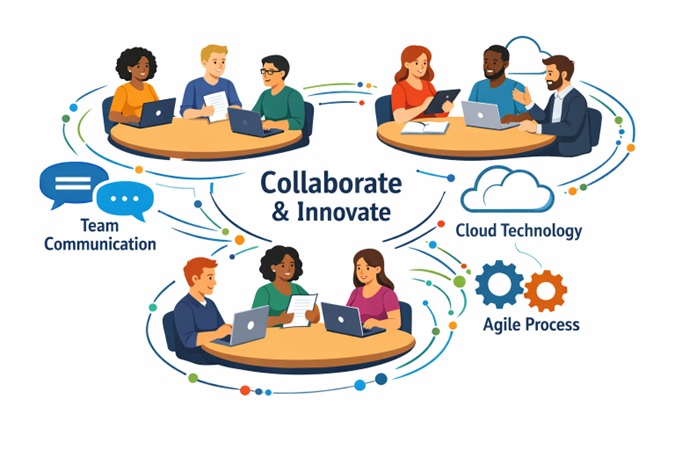
Technology is a crucial enabler of agility. Digital platforms for real-time collaboration, cloud data storage, workflow automation, and analytics help agile teams make timely, informed decisions. Tools such as Slack, Jira, and Trello allow cross-functional teams to collaborate seamlessly, regardless of physical location. Moreover, integrating emerging tech like artificial intelligence or machine learning can add another layer of responsiveness by automating routine tasks and providing insights that guide iterative improvements. Organizations that invest in the right technologies see a clear improvement in team productivity and adaptability.
Staying abreast of advancements in digital solutions is essential for modern teams. As remote work and distributed models become increasingly common, organizations must regularly review and upgrade their technology stack to avoid bottlenecks and ensure that communication, data sharing, and collaboration happen effortlessly. Investing in cybersecurity, seamless integrations between tools, and easily accessible documentation infrastructure further enhances organizational agility and safeguards productivity.
Investing In Continuous Learning & Development
Sustaining agility requires an organizational commitment to ongoing learning and growth. Teams that are encouraged to experiment and develop new skills stay ahead of industry trends and quickly tackle emerging challenges. This involves not only formal training and upskilling programs but also creating psychologically safe environments where taking calculated risks is supported. Regularly rotating team roles, sharing knowledge across teams, and incentivizing learning ensure talent does not stagnate, and new perspectives are harnessed for innovation.
In addition, leaders should foster environments that reward curiosity and embrace lessons from failures as much as successes. Establishing mentorship opportunities and creating clear pathways for personal and professional growth allow organizations to future-proof their workforce. Encouraging participation in external conferences, workshops, and certification programs helps teams maintain a competitive edge and rapidly adapt to shifting market expectations.
Measuring & Adapting Performance Metrics
Success in an agile organization cannot be measured by traditional metrics alone. Outdated measures like output quotas or simplistic time-to-completion statistics do not capture the iterative, customer-focused nature of agile work. Instead, organizations should track key outcomes such as customer satisfaction, speed to market, team capacity, and learning velocity. Emphasizing qualitative feedback alongside data-driven KPIs ensures a nuanced understanding of performance, motivating teams to continuously improve while remaining true to agile principles.
Agile organizations should revisit performance metrics regularly to reflect changing goals or market dynamics. Incorporating leading indicators, such as innovation throughput or the flexibility in responding to change, provides a more holistic view of organizational health. Transparently sharing these metrics across all levels increases accountability, helping teams quickly identify opportunities for optimization and further alignment to agile values.
Conclusion
Effective modern organization design for agile teams requires a deliberate fusion of structural flexibility, cultural openness, technological enablement, and a customer-first mindset. By moving away from obsolete hierarchical models and embracing networks of empowered teams, businesses unlock capabilities that drive innovation and resilience. Committing to collaboration, lifelong learning, and outcome-focused measurement systems paves the way for sustained growth in an ever-evolving business landscape. Organizations that continuously refine these agile foundations will be best positioned to thrive despite uncertainty and disruption.