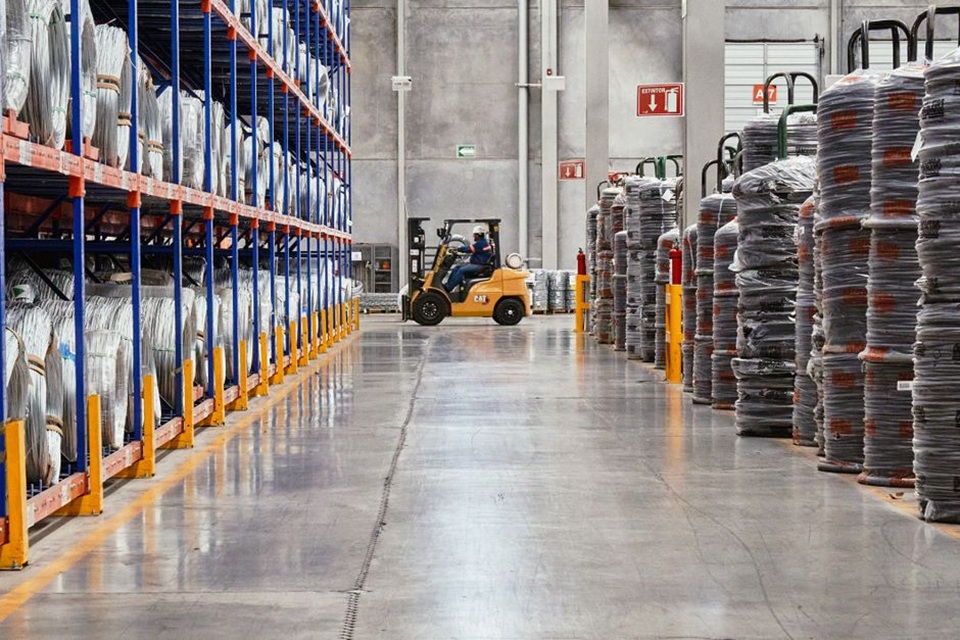
Defining Industrial Operations & Logistics Vs. General Logistics
In today’s dynamic global economy, the movement of goods is a finely tuned orchestra. For industrial businesses, this orchestration is even more complex. Industrial operations and logistics serve as the backbone for manufacturing, construction, and heavy engineering sectors. Any misstep can disrupt production, delay projects, and impact profitability. Therefore, optimizing these processes is not just an advantage; it is a necessity for survival and growth.
The intricate planning involved, from sourcing raw materials to delivering finished products, often involves specialized equipment and components, such as those crucial for industrial air valve logistics. This level of detail and precision sets industrial logistics apart.
This extensive guide will explore the unique aspects of industrial operations and logistics, differentiating it from general logistics. We will delve into its core components, the challenges faced, and the transformative role of technology in building more resilient, efficient, and sustainable supply chains. From advanced optimization frameworks to career opportunities, readers will gain a comprehensive understanding of this vital field.
Industrial operations and logistics refer to the specialized management of the flow of raw materials, work-in-process inventory, and finished goods within and between industrial sectors. This encompasses everything from the meticulous planning and execution of material movement for heavy machinery to the precise coordination required for specialized handling of oversized or hazardous components. It’s a field where the stakes are often higher due to the sheer scale, weight, and value of the items being moved, as well as the direct impact on production lines and project deadlines.
Unlike general logistics, which broadly covers the movement and storage of goods across industries, industrial logistics is deeply integrated with manufacturing processes and often addresses unique requirements. For instance, the transportation of large turbine components or specialized pneumatic systems demands different considerations than delivering consumer packaged goods. This distinction is critical, as industrial logistics often involves bespoke solutions for warehousing, material handling, and transportation, tailored to the specific needs of factories, construction sites, and heavy engineering projects. Companies seeking robust support for these complex movements often turn to specialized providers for their logistics for industrial operations.
Core Components Of Industrial Logistics
The effective management of industrial operations relies on several interconnected core components:
- Transportation: This involves the physical movement of materials and products. In industrial settings, it can range from specialized heavy-haul trucking and rail freight for large components to ocean and air cargo for global sourcing. The choice of mode significantly impacts cost, speed, and capacity.
- Warehousing: Industrial warehousing goes beyond simple storage. It includes managing raw material inventories, work-in-process goods, and finished products, often requiring specialized facilities for climate control, oversized items, or hazardous materials. Efficient warehouse layout and management are crucial for minimizing handling times and maximizing space utilization.
- Material Handling: This component focuses on the movement, storage, protection, and control of materials and products throughout the manufacturing and distribution process. It involves equipment like forklifts, cranes, automated storage and retrieval systems (AS/RS), and conveyor systems. For example, the integration of advanced Dorner conveyors can significantly streamline internal material flow within a plant, while effective Conveyor Accessories and Conveyor T-Bars ensure smooth and continuous operations.
- Information Management: In the modern industrial landscape, data is as critical as physical goods. This component involves the collection, processing, and dissemination of information related to inventory levels, shipment tracking, order status, and performance metrics. Robust Enterprise Resource Planning (ERP) and Warehouse Management Systems (WMS) are central to this.
- Packaging: Beyond protecting goods during transit, industrial packaging must consider factors like product dimensions, weight, fragility, and regulatory compliance. Specialized packaging may be required for sensitive electronic components or large, irregularly shaped parts to ensure they arrive at their destination in optimal condition.
Market, Technical, & Operational Constraints In Industrial Operations & Logistics
Industrial logistics operates within a complex web of constraints that differentiate it from other logistics sectors. These constraints necessitate a highly adaptive and specialized approach.
- Market Constraints: These are driven by customer demand and external economic factors. Fluctuating demand, tight delivery windows, and the need for just-in-time (JIT) deliveries place immense pressure on logistics systems. Industrial companies must be agile enough to respond to sudden shifts in market needs, which can impact production schedules and require expedited shipping options.
- Technical Constraints: The very nature of industrial products imposes significant technical challenges. Items are often heavy, oversized, or require specialized handling due to their delicate or hazardous nature. This mandates specialized equipment, such as heavy-duty forklifts, cranes, and custom transport vehicles. For instance, managing components like IMI Norgren VR Series Manifold, Pneumadyne Pneumatic Manifolds, TRD Rod Lock, Speciality Valve Air Exhaust Mufflers, or Super Quick Exhaust Valves requires precise handling protocols and often specialized Manifolds for assembly. Additionally, safety systems like robust Guarding systems are essential to protect both personnel and equipment during these operations.
- Operational Constraints: These stem from internal capabilities and limitations. Fleet capacity, labor availability, infrastructure limitations (e.g., dock space, road access for oversized loads), and internal process inefficiencies can all impede smooth operations. Coordinating transportation schedules, maintaining robust inventory management systems, and ensuring products are delivered on time and in good condition are constant operational challenges. These internal factors directly influence lead times and the overall efficiency of the supply chain.
Multi-Modal Transportation & Shipment Consolidation Frameworks
In industrial logistics, the strategic use of multi-modal transportation and sophisticated shipment consolidation frameworks is paramount for achieving both cost efficiency and environmental sustainability. Companies often deal with global supply chains, requiring seamless transitions between ocean, air, rail, and road transport. The goal is to create a multi-period network flow that effectively manages materials through intermediate nodes, leveraging transit storage to optimize overall costs and reduce carbon emissions. This approach is particularly vital when sourcing components from diverse global locations, as exemplified by major industrial manufacturers.
Balancing FCL, LCL, & Air Freight Trade-offs
Choosing the right transportation mode involves a careful balancing act between cost, lead time, and sustainability. The primary options for international industrial shipments are Full Container Load (FCL), Less than Container Load (LCL), and air freight.
- Full Container Load (FCL): This involves dedicating an entire shipping container to a single shipper’s goods. FCL is generally the most cost-effective option for large volumes, offering lower per-unit costs and typically a more secure transit. However, it comes with longer ocean lead times, often ranging from 5-7 weeks, as observed by companies like GE Gas Power when sourcing turbine components globally. Booking FCL units often requires several weeks’ advance notice and adherence to weekly booking limits per port.
- Less than Container Load (LCL): When shipment volumes are insufficient to fill an entire container, LCL allows multiple shippers to share space within one container. While more flexible and requiring less advance booking, LCL typically has higher per-unit costs than FCL due to consolidation and deconsolidation efforts. Lead times are comparable to FCL but can sometimes be slightly longer due to additional handling.
- Air Shipment: This is the fastest mode of transport, ideal for urgent, high-value, or time-sensitive industrial components. However, air freight is significantly more expensive and has a larger carbon footprint compared to ocean shipping. It’s typically reserved for critical parts where delays would cause substantial production downtime or contractual penalties.
The GE Gas Power case study highlights the complexities of this balance. They source turbine components from global suppliers and transport them using a mix of FCL, LCL, and air shipment options, navigating the 5-7 week ocean lead times. The strategic decision of which mode to use for each component is a continuous optimization challenge.
Transportation Mode Cost (Relative) Lead Time (Relative) Sustainability Impact Best Use Case FCL (Ocean) Low Long (5-7 weeks) Moderate (efficient) High-volume, non-urgent, heavy/bulky goods LCL (Ocean) Medium Long (5-7 weeks) Moderate (less efficient) Medium-volume, non-urgent, shared container Air Shipment High Short (days) High (carbon emissions) Urgent, high-value, time-sensitive components Mathematical Optimization and Decision Support Systems
Managing complex, multi-modal logistics networks in industrial operations is virtually impossible without advanced optimization frameworks and decision support systems. These tools leverage sophisticated algorithms to analyze vast amounts of data and identify the most efficient and cost-effective solutions.
One prominent approach is Mixed-Integer Linear Programming (MILP), which can model complex scenarios involving discrete decisions (e.g., which transportation mode to use, whether to consolidate) and continuous variables (e.g., quantities to ship). MILP models integrate production, inventory, and transportation decisions, considering constraints such as pallet sizes, trailer capacities, warehouse limits, and time windows. Solvers like CPLEX are widely used to tackle these intricate problems, determining optimal routes, shipment schedules, and inventory placements.
For real-world industrial problems, which can be computationally intensive, knapsack-based heuristics and rolling horizon planning are often employed. Heuristics provide good, near-optimal solutions in a reasonable timeframe, especially for large-scale problems. Rolling horizon planning allows companies to make decisions for a shorter, immediate future while maintaining a long-term plan, adapting dynamically to changing conditions like demand fluctuations or capacity availability. These systems help identify the most cost-effective transportation solution that meets assembly requirements, even with high shipment volumes and complex network structures. For instance, ensuring the timely delivery of critical components like Air Cylinders might involve a combination of these optimization techniques to balance cost and speed.
Overcoming Key Challenges In Industrial Operations & Logistics
Industrial operations and logistics face a myriad of challenges that can significantly impact efficiency and profitability. These include managing inventory pressures, navigating complex compliance landscapes, and controlling escalating transportation costs. Effectively addressing these issues requires robust strategies and often, the integration of advanced solutions, including comprehensive Value Added Services that can streamline various aspects of the supply chain.
Managing Inventory Pressures & Demand Forecasting
One of the most persistent challenges in industrial logistics is managing inventory effectively. Over 60% of manufacturers struggle with inaccurate demand forecasts, leading to a vicious cycle of excess inventory, increased holding costs, and lost revenue from stockouts. Inaccurate forecasting can also result in unnecessary expedited shipping, further inflating costs.
To mitigate these pressures, companies employ various inventory management strategies:
- Safety Stock: Maintaining a buffer of inventory to guard against unexpected demand spikes or supply disruptions.
- ABC Analysis: Categorizing inventory items based on their value and importance (A-items being high-value, C-items low-value) to prioritize management efforts.
- Economic Order Quantity (EOQ): A formula to determine the optimal order quantity that minimizes total inventory costs (holding costs + ordering costs).
- Real-time Visibility: Implementing systems that provide real-time tracking of inventory levels across the supply chain.
By optimizing inventory, businesses can free up capital, reduce warehousing costs, and ensure that critical components are available when needed. For internal movement and organization, specialized equipment like Carts can play a role in efficient material flow and inventory management within a facility.
Navigating Regulatory Compliance & Rising Transportation Costs
The industrial sector is heavily regulated, and compliance is a non-negotiable aspect of logistics. Companies must adhere to a complex web of environmental regulations, safety standards, and international customs procedures. Non-compliance can lead to hefty fines, delays, and reputational damage. This is particularly challenging for global supply chains, where regulations vary significantly across different countries and regions.
Simultaneously, rising transportation costs pose a continuous threat to margins. Factors such as fuel price volatility, driver shortages, and increased demand for expedited services contribute to this upward pressure. The inefficiency of manual processes further exacerbates the problem; for example, 68% of companies still manually enter invoice data in accounts payable processes, leading to errors, delays, and increased administrative overhead. Streamlining these processes, especially for specialized components like those involved in Industrial air valve logistics, can yield significant cost savings and improve overall efficiency. Implementing digital solutions for documentation, customs clearance, and freight auditing is crucial for reducing these administrative burdens and controlling costs.
The Role Of Technology & Industry 4.0 In Modern Logistics
The industrial logistics landscape is undergoing a profound transformation driven by the Fourth Industrial Revolution, or Industry 4.0. This era is characterized by the convergence of digital and physical technologies, leading to unprecedented levels of connectivity, automation, and data-driven decision-making. The rapid growth in research, with Industry 4.0 adoption in logistics cited in 21 academic papers between 2021-2024, underscores its critical importance and ongoing evolution.
Key technological enablers of Industry 4.0 in logistics include:
- Digitization: Converting information into a digital format, enabling seamless data exchange and analysis.
- Internet of Things (IoT): Networks of physical devices embedded with sensors, software, and other technologies that connect and exchange data over the internet, providing real-time visibility into asset location, condition, and performance.
- Radio-Frequency Identification (RFID): Technology that uses electromagnetic fields to automatically identify and track tags attached to objects, improving inventory accuracy and tracking.
- Enterprise Resource Planning (ERP) Integration: Comprehensive software systems that manage and integrate all core business processes, including logistics, finance, and manufacturing, providing a unified view of operations.
These technologies collectively enable a more intelligent, agile, and responsive supply chain, allowing industrial companies to optimize operations, reduce waste, and enhance customer satisfaction.
AI Orchestration & Real-Time Data Analytics
Artificial Intelligence (AI) is rapidly becoming the central nervous system of modern industrial logistics. AI-powered platforms can orchestrate millions of complex actions across inventory, order fulfillment, shipping, and staffing, transforming reactive operations into proactive, predictive systems.
A prime example is the GXO IQ platform, which leverages AI to power global supply chain operations. This platform processes over 200 million signals daily, organizing and analyzing vast datasets to provide predictive insights. Through machine learning, it learns from historical data and real-time inputs to anticipate demand shifts, identify potential bottlenecks, and recommend optimal solutions. The platform often features an AI agent, like GXO’s “GIL,” which provides persona-based insights and recommendations, enabling real-time decision-making for logistics managers. This level of data analytics moves beyond simple tracking, offering actionable intelligence that drives efficiency and resilience.
Intralogistics Automation & Material Flow Optimization
Within manufacturing facilities, intralogistics – the management of material flow within a single site – is being revolutionized by automation. Solutions like Siemens Opcenter Intra Plant Logistics demonstrate how technology optimizes the movement of materials from the warehouse to the factory floor in real-time.
Key aspects of intralogistics automation include:
- Just-in-Time (JIT) Replenishment: Systems monitor production schedules and inventory levels to forecast material resupply needs, ensuring components arrive precisely when required, minimizing on-site inventory and waste.
- eKanban: Digital Kanban systems automate the signaling and replenishment of materials, tracking consumption and waste from each container. This reduces manual errors and ensures a continuous flow of materials to production lines.
- Automated Guided Vehicles (AGVs): These autonomous vehicles transport materials within a facility, reducing labor costs, improving safety, and ensuring consistent delivery times. AGVs can be integrated with intralogistics software to trigger pick-ups and drop-offs, forecasting replenishment needs and managing the fleet efficiently.
- Real-time Tracking: Advanced sensors and software provide single-carrier level accuracy for inventory, allowing manufacturers to know the exact location and status of every component.
The implementation of robust intralogistics solutions, often built on modular systems like 80/20 Assembly, can significantly improve line performance and inventory accuracy. Furthermore, integrating components like the Pisco Fus20 Series Flow Sensor can provide critical real-time data on material flow, while vacuum technology such as the Piab Value Line assists in automated material handling. Even optimizing the layout of production areas with modular solutions such as Workstations Stands and Fixtures contributes to a more efficient and automated internal logistics system.
Career Paths & Future Trends In Supply Chain Management
As industrial operations and logistics continue to evolve, driven by globalization and technological advancements, the demand for skilled professionals in this field is soaring. The industry offers diverse and rewarding career opportunities, requiring a blend of strategic thinking, analytical prowess, and technological literacy. For regions like New England, with its robust industrial base, fostering local talent and embracing workforce development initiatives are key to maintaining competitive advantage.
Professional Skills & Academic Pathways In Industrial Operations & Logistics
A career in logistics and supply chain management demands a comprehensive skill set. Professionals need to excel in areas such as procurement, distribution, global supply network management, and financial analysis. The ability to apply marketing, planning, accounting, and financial principles to complex logistics challenges is highly valued.
Academic pathways, such as an M.S. in Logistics and Supply Chain Management, are increasingly popular for those looking to advance in the field. Graduates from such programs, like those employed within one year of completing an M.S. in Logistics and Supply Chain Management, earn an average salary of $89,125 (Source: Institutional Research, 2023-2024 Cohort). These programs often include specialized training, such as a three-course SAP sequence, which can lead to SAP recognition, a significant advantage in the job market. Furthermore, pursuing professional certifications like Certified Supply Chain Professional (CSCP), Certified Professional Logistician (CPL), and Certified Professional in Supply Management (CPSM) can further enhance career prospects and demonstrate expertise.
Building Resilient & Sustainable Logistics Networks
The future of industrial logistics is inextricably linked to resilience and sustainability. Companies are increasingly focused on building “green logistics” networks that minimize environmental impact while maintaining operational efficiency. This involves:
- Circular Economy Principles: Moving away from a linear “take-make-dispose” model to one that emphasizes reuse, repair, and recycling of materials and products.
- Reverse Logistics: Managing the return of products from customers to manufacturers for repair, refurbishment, or recycling, reducing waste and recovering value.
- Energy-Efficient Fleets: Investing in electric or hybrid vehicles, optimizing routes to reduce fuel consumption, and exploring alternative fuels.
- Eco-Friendly Packaging: Utilizing recyclable, biodegradable, or minimal packaging materials to reduce waste and carbon footprint.
Balancing operational constraints, tight deadlines, and ambitious sustainability goals requires innovative logistics planning. This often involves advanced optimization models that factor in carbon emissions alongside cost and time, allowing companies to make informed decisions that benefit both their bottom line and the planet.
Frequently Asked Questions About Industrial Logistics
What is the difference between industrial logistics and general logistics?
Industrial logistics is a specialized subset of general logistics, focusing on the movement, storage, and handling of materials and products within manufacturing, construction, and heavy engineering sectors. It typically involves heavy components, deep integration with manufacturing processes, and specialized equipment and handling protocols, unlike the broader scope of general logistics which covers diverse goods, often consumer-oriented. Industrial logistics places a strong emphasis on production support and the intricate coordination required for complex industrial supply chains.
How does shipment consolidation improve sustainability?
Shipment consolidation significantly improves sustainability by optimizing container utilization and reducing the overall carbon footprint. By combining smaller shipments into full container loads (FCLs) or optimizing LCL space, companies can reduce the number of partially empty containers or vehicles on the road, leading to fewer trips and lower fuel consumption. This also contributes to reduced congestion, optimized routing, and ultimately, a decrease in greenhouse gas emissions per unit transported.
What role does automation play in intra-plant logistics?
Automation plays a transformative role in intra-plant logistics by enhancing efficiency, accuracy, and safety. Automated Guided Vehicles (AGVs) transport materials, reducing manual labor and human error. Real-time tracking systems provide precise inventory visibility, while eKanban replenishment automates material ordering, ensuring just-in-time delivery to production lines. This minimizes shop floor inventory, reduces bottlenecks, and frees up human workers for more complex, value-added tasks, contributing to a lean and highly productive manufacturing environment.
Conclusion
The realm of industrial operations and logistics is a complex, ever-evolving domain critical to the success of manufacturing, construction, and heavy engineering sectors. From defining its unique characteristics and components to navigating intricate challenges like inventory management and regulatory compliance, the sector demands strategic integration and continuous innovation. The transformative power of Industry 4.0 technologies, including AI orchestration, real-time data analytics, and intralogistics automation, is reshaping how businesses operate, driving unprecedented levels of efficiency, resilience, and sustainability.
As we look towards June 2026 and beyond, the emphasis on building resilient and sustainable logistics networks will only intensify, making skilled professionals in this field more crucial than ever. For companies in New England and across the globe, embracing these advancements and fostering a culture of continuous improvement is not merely an option but a strategic imperative. By understanding and leveraging these insights, businesses can streamline their industrial operations, enhance their competitive edge, and contribute to a more efficient and sustainable global supply chain.
For support in optimizing your industrial operations and logistics, or to explore specialized industrial components, connect with our experts today.
AIR Incorporated Email: sales@airinc.net Phone: 1-800-341-2800